Aircraft libraryBoeing 747 family
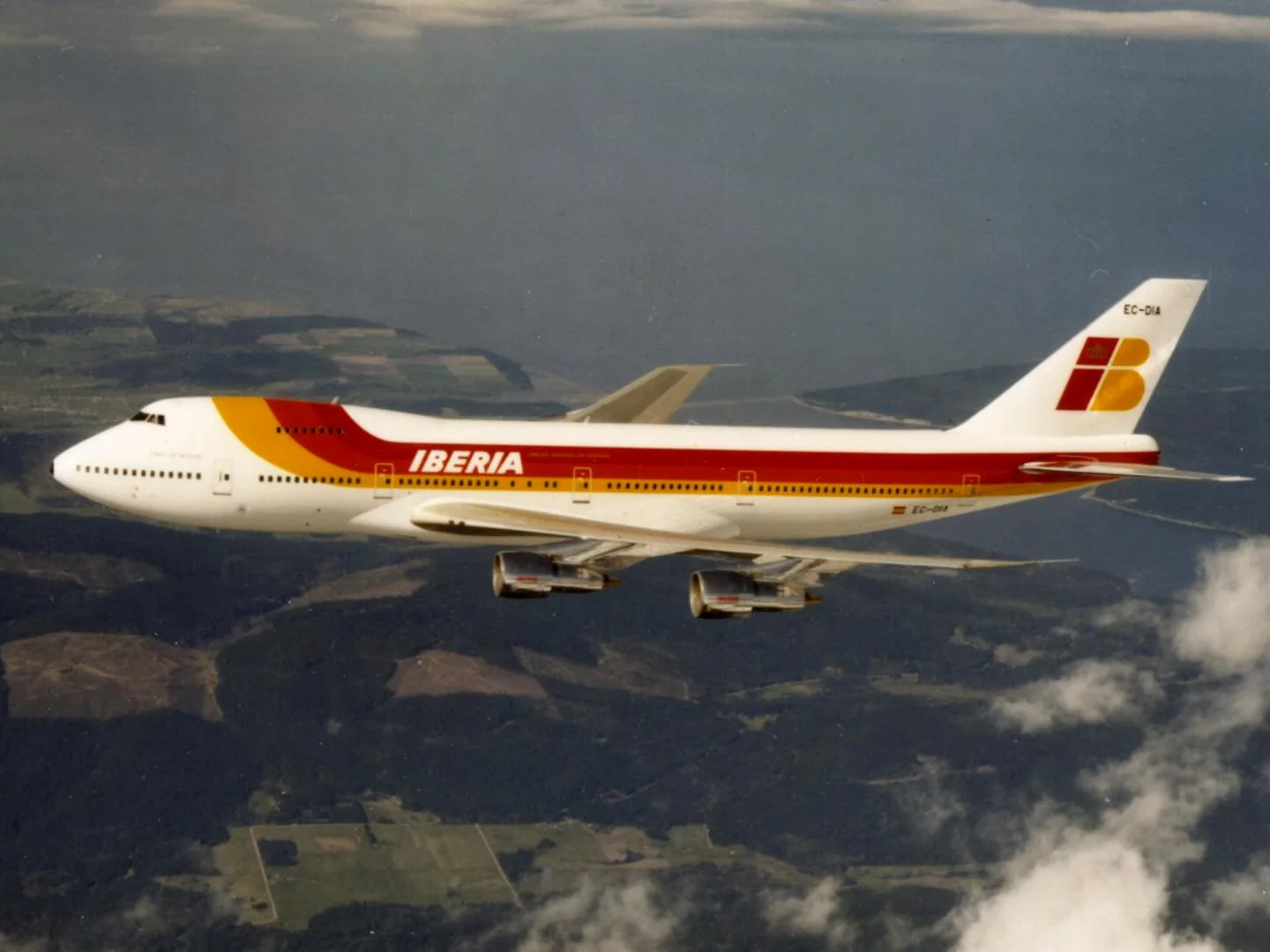
Boeing 747 familyIberia Airlines · CC BY 2.0 · Boeing 747 pictured

Boeing 747 family

Hydraulically powered controls with artificial yoke feel, autopilot backdrive and a stick shaker.
AirlinerB74814 profile choices

Know the plane

The 747 first flew in 1969 and entered airline service in 1970. Its broad main deck transformed the scale of passenger flying, while the elevated cockpit also suited a freighter with a nose-loading door. Passenger and cargo developments remained important throughout the programme.

The flight deck changed dramatically between classic three-crew 747s and later two-pilot aircraft. The 747-8 also brought a further wing and engine development. The simulator products cover several generations, including the classic 747-200 and modern 747-8.

Boeing 747-8 Intercontinental

Powerplant
4× GEnx-2B67, 66,500 lbf each↗
Seats
≈410 typical three-class↗
Max takeoff weight
987,000 lb (447,700 kg)↗
Wingspan
224 ft 7 in (68.45 m)↗
Length
250 ft 2 in (76.25 m), the longest airliner of its day↗
Max operating (Mmo)
M0.90↗
Typical cruise
M0.855↗
Max operating altitude
43,100 ft↗
Range
≈7,730 nm↗
Fuel capacity
≈63,034 US gal↗
Flight controls
Hydraulic with artificial feel, control column↗
First flight (747-8I)
2011↗

More about this aircraft on AirframeDB

How the upper-deck shape emerged

Boeing’s early concept archive shows that the familiar 747 shape was not the starting point. The development team studied several arrangements with two passenger decks. Problems with those configurations led Joe Sutter’s team toward a wide fuselage with most accommodation on one level. Moving the flight deck upstairs also left room for a cargo door in the nose below it.

A production story ending with a freighter

The 747 evolved through several generations, including the 747-400 and the later 747-8, while passenger and freight operations gave the family different careers. Boeing marked the final delivery on 31 January 2023 at Everett, handing a 747-8 freighter to Atlas Air. The manufacturer recorded 1,574 aircraft built over more than half a century.

People who had helped design and build the original aircraft returned for the ceremony. Atlas provided another link across generations: the company began with a converted 747-200 freighter and later operated types including the enlarged Dreamlifter, used to transport 787 components.

Sharing the coveted Kai Tak landing

Westerdijk recalls choosing a first-officer position on the 747 over an opportunity to command the DC-9. After earlier F27 and A310 flying, the prospect of long-haul operations appealed to him, and he eventually became a 747 captain. His recollections of the 200 and 300 include six-day rotations through Dubai and Bangkok to Hong Kong, with the return journey retracing those stops.

Kai Tak made those trips particularly memorable. He describes the transition from instrument guidance to the visual turn beside the city, with buildings close by and western winds sometimes adding turbulence. As a first officer, the allocation of flying duties determined whether he received that prized landing. When he later commanded the aircraft, he discussed the division of sectors with his first officer.

A childhood ambition waiting beside the employee car park

Osborne traces his fascination with the 747 to seeing Airport 1975 as a ten-year-old. Years later, as a US Air Force C-141 instructor, he would look across Frankfurt airport at newly arrived 747-400s and imagine flying one. After leaving the Air Force, his airline employer acquired the aircraft used in the film, and he eventually became part of its crew. The machine that had started the ambition became part of his working life.

Writing as a 747-400 captain, he describes another connection with that childhood excitement: the preserved N661US at the Delta Flight Museum. Passing it near the employee parking area at the beginning and end of trips brought back the same sense of wonder. The recollection is about a lasting attachment to the aircraft rather than a technical evaluation of its handling.

Acceptance flights, an old mentor and a family reunion

By the time of this 2022 interview, Vize had spent more than twenty-two years flying 747s for Atlas and visited more than a hundred destinations in the type. The cargo varied from cars and boats to holiday gifts and equipment for sports teams. Acceptance flights for two new 747-8 freighters gave that career a personal turn: while he flew the aircraft, Joe Masone carried out the functional checks and systems tests. Masone had trained him about twenty-five years earlier and helped him find his way to Atlas.

Vize also recalls a brief meeting with his son Brandon during a military deployment in 2010. His own arrival coincided with his son departing aboard another Atlas 747, flown by a colleague. Among the many journeys and loads he remembers, that chance encounter stands out as a moment when the aircraft joined his professional and family lives.

Flying a 747 with a Space Shuttle on its back

At Oshkosh in 1995, McMurtry stood beside his own Waco biplane and amused his interviewer by describing a much larger two-winged machine he flew: the 747 carrying a Space Shuttle. His route to that unusual assignment included naval aviation, test-pilot training and Lockheed U-2 flying before joining NASA in 1967. He became one of the original 747 project pilots for the Shuttle approach-and-landing test programme.

Asked how the carrier handled with the Shuttle aboard, he said the change was less dramatic than an observer might expect. The added vehicle nevertheless produced considerable drag, and disturbed airflow around it transmitted shaking to the 747’s tail and airframe. These handling observations concern the modified carrier combination.

Public sources 25
  1. Boeing 747Research background · Wikipedia revision 1373946440 · retrieved 2026-09-12
  2. Boeing 747-8i & 8f Instructions and Reference
  3. Microsoft Flight Simulator aircraft manuals
  4. MSFS 2024 FAQ and edition aircraft inventory
  5. Boeing 747 Global Supertanker Instructions and Reference
  6. Boeing 747 LCF Dreamlifter Instructions and Reference
  7. MSFS 2020 FAQ and edition aircraft inventory
  8. Boeing 747-400 POH
  9. X-Plane 11 Desktop Manual
  10. X-Plane aircraft and avionics manuals
  11. 747-200 passenger productOfficial developer / designated store catalogue · checked 2026-09-12
  12. 747-200F Classic CargoOfficial developer / designated store catalogue · checked 2026-09-12
  13. Gerhard Westerdijk on flying the 747 into Kai TakLieneke Koornstra interview · 17 December 2022
  14. 747 Memories: Captain Tony OsborneTony Osborne recollection · archive page dated 23 October 2024; recollection predates that page date
  15. Delivering the final 747s for our customersTailwinds · 24 October 2022 · captain Tom Vize
  16. Pilots: Tom McMurtryDecember 1995 profile · interview at Oshkosh 1995
  17. Early 747 Concept ModelBoeing historical caption · asset BI222911 / k16432
  18. Boeing and Atlas Air celebrate the final 747 deliveryManufacturer announcement · 31 January 2023
  19. Aircraft & Avionics Update 02 release notesMSFS 2020 · version 1.33.8.0 · 22 June 2023
  20. ICAO Doc 8643 — aircraft type designatorsPublic search data retrieved 2026-09-14; authority update 2026-09-03
  21. B 747-8 Intercontinental Prime Edition-FPS-747-8Product listing captured 2026-09-23; edition scope from the reviewed catalogue
  22. 747-400Product listing captured 2026-09-24; edition scope from the reviewed catalogue
  23. Boeing 747-8 documentationPrint or archived reference; no public link
  24. Boeing published dataPrint or archived reference; no public link
  25. FAA TCDS A20WEPrint or archived reference; no public link

How the profile models it

Boeing 747-8

Free + Pro
MSFS 2024MSFS 2020X-Plane 11X-Plane 12

The 747 first flew in 1969 and entered airline service in 1970. Its broad main deck transformed the scale of passenger flying, while the elevated cockpit also suited a freighter with a nose-loading door. Passenger and cargo developments remained important throughout the programme.

The factory starting point selects Boeing 747-8 across MSFS 2024, MSFS 2020, X-Plane 11, X-Plane 12.

Spring resistance builds with the selected airspeed response. Directed aerodynamic loading is omitted.

Pitch-trim relief is off. Autopilot following is enabled for supported control references.

This exact revision has not been enabled for public installation.

Controls and trim

The 747 family spans the classic -200, -400 and later -8, with separate avionics and engine installations. The cited -400 maintenance discussion reports breakout and full-aft column effort varying with trim; an early-747 handling account describes its wheel effort. These are related-type reports, not measured -8 force curves. Dreamlifter and Supertanker guides additionally describe specialized autopilot controls and mission configurations.

Boeing 747 LCF Dreamlifter Instructions and ReferenceBoeing 747 family reference

About the values

The gains are normalized profile settings. They describe the chosen effect balance; hand force depends on the device and its output limits. IAS references are tuning values rather than operating limits. Physical acceptance of this revision remains pending.

Master gain & control system

Master gain95%

The final overall output scale applied to everything the model produces, before the device cap.

More: everything (spring, loads, effects) gets stronger together.

Less: everything softens together.

Why here: Scales overall profile strength while preserving effect balance, subject to device and output limits.

Forces

Spring strength20%

The base centring force that pulls the stick back to centre. Every other force stacks on it. Too low and the stick feels limp in normal flight; too high and it fights your hand and masks the smaller cues layered above it.

More: firmer centring that resists your hand at all times.

Less: a limper stick that leans on aerodynamic load alone.

Why here: The powered-control response uses qualitative family feel context; older maintenance and handling accounts do not calibrate every -8 axis. The baseline spring is 0.2. Low-speed spring blending is off.

Boeing 747 LCF Dreamlifter Instructions and ReferenceBoeing 747 family reference
Spring deadband0%

A small neutral zone around centre where the spring stays quiet, so tiny movements at rest don't chatter. Wider is calmer but looser; narrower is more precise but can twitch around centre.

More: a calmer but looser centre with more free play.

Less: a tighter centre that may chatter at rest.

Why here: Sets travel around the centre before the baseline spring resists. Smaller values engage it sooner.

Forces · Center starting force0.12

Why here: Adds smoothly ramped resistance outside the centre deadband. Zero removes this preload.

Overall aerodynamic load0%

A master scale over both sustained axis loads, applied before their independent balance. Profiles normally leave this alone and tune the two axis loads instead.

More: both axes load up harder.

Less: both axes lighten together.

Why here: The 0 gain omits sustained directed airspeed loading. Spring resistance remains independent.

Spring engagement full122 kt

The airspeed where the spring reaches full strength. Between the start and this point, centring firms up progressively as airflow builds over the controls.

Why here: Sets the IAS where the low-speed blend reaches baseline strength; high-speed stiffening also uses it.

Centre firmness vs speed100%

How much the centring itself stiffens with speed, on top of the deflection loads. Zero keeps centre feel constant; more makes the stick centre harder at cruise and looser in the pattern.

More: a centre that hardens noticeably as you go faster.

Less: constant centre feel at every speed.

Why here: The high-speed spring-stiffening gain is 1. It strengthens the permitted spring response above 122 KIAS, with the squared-speed ratio capped at 7.8.

Centre stiffening cap7.8

The upper limit on speed-driven centre stiffening, so very fast flight can't wind the spring up without bound.

More: more total stiffening allowed at high speed.

Less: stiffening clamps off sooner.

Why here: Limits the squared airspeed ratio used for high-speed spring stiffening; it is not a device-force cap.

Aileron load155%

The sustained roll load from aileron deflection and airspeed, balanced independently of pitch. Together with the elevator load it sets the control-harmony ratio reviewers talk about.

More: heavier roll forces.

Less: lighter, quicker-feeling ailerons.

Why here: Roll and pitch aerodynamic scales are 1.55 and 0.9, respectively. These stored weights do not create directed aerodynamic loading while that term is inactive. No custom spring-travel curve is enabled.

Elevator load90%

The sustained pitch load from elevator deflection and airspeed, balanced independently of roll. This is the main lever behind a type's pitch weight. It does not touch aileron, spring, trim, or buffet forces.

More: heavier sustained pitch forces at speed.

Less: a lighter elevator that takes less muscle to hold.

Why here: Scales pitch aerodynamic loading; pitch spring travel and trim responses are separate settings.

Max output force65%

A cap on each steady pitch or roll force before it reaches the device, guarding against slamming or saturating the hardware in strong maneuvers.

More: stronger peak steady forces before clipping.

Less: a gentler ceiling; hard maneuvers flatten out sooner.

Why here: Caps directed-force output. Native spring effects and device limits remain separate.

Forces · Center starting force transition0.05

Why here: Sets the travel used to ramp in centre preload. Wider intervals make its onset more gradual.

Airspeed blendingFalse

Enables the low-speed spring engagement window (start/full knots above). Off, the spring is constant at all speeds.

Why here: Allows baseline spring strength to rise with indicated airspeed where the control law permits it.

Low-speed spring floor45%

How much of the spring survives at a standstill, before airspeed can build any aerodynamic force. A high floor keeps the parked stick firm; a low floor gives the loose, cable-slack feel of a parked light aircraft.

More: a firmer stick while parked and taxiing.

Less: a floppier parked stick that only wakes up with airspeed.

Why here: Sets low-speed spring strength as a fraction of baseline when blending is enabled. One keeps full strength.

Spring engagement start0 kt

The airspeed where the spring begins climbing from its low-speed floor toward full strength: the controls "coming alive" on the takeoff roll.

Why here: Sets the IAS where the low-speed spring blend starts rising. This is a feel threshold, not a flight limit.

Force tuning speed300

The indicated airspeed where aerodynamic load reaches its designed full level. It anchors the whole load curve to the aircraft's real speed range: a 172 loads up by 110 knots, a jet much later.

More: loads arrive later; the stick stays light up to a higher speed.

Less: loads arrive earlier and cruise feels heavier.

Why here: Sets the IAS reference for aerodynamic loading. It is an estimate, not published cruise TAS or a flight limit.

Trim

Trim relief (elevator)30%

How strongly elevator trim relieves held pitch force and shifts where the stick settles. At 100%, a properly trimmed aircraft needs no held pressure, the trim-away-the-load workflow of real flying.

More: trim removes more of the held pitch force; at 100% full trim zeroes it.

Less: you keep holding force even when trimmed.

Why here: Trim-sensitive column effort is family mechanism context, while the profile's exact trim authority remains a selected approximation. Pitch relief is off, with stored authority 0.3; roll authority is 0.09.

Boeing 747 LCF Dreamlifter Instructions and ReferenceBoeing 747 family reference
Trim relief (aileron)9%

The same relief for roll trim. Most GA types have no real aileron trim, so this stays at zero; types with roll trim get a matching value.

More: roll trim removes more held roll force.

Less: roll trim does less.

Why here: Scales supported roll-trim relief and permitted centre movement. Zero removes roll response.

Effect gains · ground

Runway rumble42%

Rolling surface vibration from wheel speed and surface type: pavement, grass, or gravel under the gear.

More: louder surface texture through the stick.

Less: a smoother taxi.

Why here: Sets rolling texture strength, modified by speed, surface and undercarriage configuration.

Gear bumps38%

Short discrete bumps from expansion joints, ruts, and rough surface, punctuating the continuous rumble.

More: sharper hits from joints and ruts.

Less: softer ground detail.

Why here: Sets gear-bump texture during ground motion, separate from touchdown impact.

Effect gains · airframe

Stick shaker90%

The dedicated stall stick-shaker buzz, fired by the aircraft's own stall-warning system. Only types with a real shaker get a value; everything else relies on aerodynamic buffet and the horn.

More: a harder stick-shaker buzz.

Less: a subtler shaker.

Why here: Sets triggered shaker strength; inactive while the shaker feature is disabled.

Stall buffet18%

Airframe shake approaching the stall and while the stall warning is active: how loudly this wing announces it is unhappy. Types with a crisp break get modest buffet and let the horn carry the warning.

More: a louder pre-stall shake.

Less: a quieter wing; the horn carries the warning.

Why here: Sets stall-buffet strength. Zero removes the cue without changing simulator stalls or warnings.

Mach buffet48%

Transonic buffet approaching the Mach limit. Meaningful for jets near MMO, zero for pistons and turboprops that never get there.

More: stronger transonic buffet near the Mach limit.

Less: a smoother high-Mach ride.

Why here: Sets high-Mach buffet strength; onset and full-strength thresholds are separate.

Flap buffet34%

Low-frequency airframe vibration with flaps extended into the airflow, in the speed window where they actually work the air.

More: a rougher ride with flaps working the air.

Less: smoother approach flap.

Why here: Sets flap buffet at the configured position and speed gates. Flap movement texture is separate.

Gear buffet34%

Airframe drumming from retractable gear hanging in the airstream. Zero for fixed-gear types, where the airframe never changes shape.

More: more drumming with the wheels hanging out.

Less: cleaner gear-down flight.

Why here: Sets gear aerodynamic buffet; movement and ground-contact cues are separate.

Effect gains · engine, mechanical & drag

Touchdown thump95%

The one-shot kick when the wheels meet the runway, scaled by sink rate: a greaser whispers, a firm arrival thumps.

More: a harder kick at touchdown.

Less: softer arrivals.

Why here: Sets landing-impact strength; landing telemetry and response shape determine the pulse.

Reverse rumble55%

Rollout vibration while reverse thrust or beta-range props are working. Zero for types without reverse.

More: a rougher rollout under reverse.

Less: quieter reverse.

Why here: Sets reverse-thrust vibration with valid reverser and engine conditions. Zero removes the cue.

Engine rumble11%

Continuous powerplant vibration following RPM between idle and full power, the ever-present reminder that something is burning fuel up front.

More: more engine through the stick.

Less: a quieter powerplant.

Why here: Sets estimated engine vibration using configured telemetry and response, not measured cockpit vibration.

Flap motion28%

Continuous vibration only while the sim reports the flap surfaces actually travelling. It follows real actuator motion and failures, not an estimated timer.

More: more vibration while the flap surfaces travel.

Less: quieter flap runs.

Why here: Sets texture from observed flap movement; a command without movement does not establish the cue.

Autopilot follow

AP follow authority100%

How far autopilot commands may physically move the stick. Kept tiny in MSFS, where a moved axis can read back as pilot input; zero disables following entirely.

More: the autopilot visibly moves your stick further.

Less: a barely perceptible follow.

Why here: Sets admitted AP-follow gain, not a percentage of travel. Runtime ownership and input limits still apply.

Autopilot

Autopilot · Follow enabledTrue

Whether this feature is active in this profile.

Why here: Following is on at 1 authority when a supported, valid autopilot control reference is available.

Autopilot · Neutral hold enabledFalse

Whether this feature is active in this profile.

Why here: Permits centering hold during a supported AP state, separate from following a moving target.

Autopilot · Neutral hold strength0.6

Why here: Sets admitted AP neutral-hold strength; inactive while neutral hold is disabled.

Stick feel

StickFeel · Trim feel enabledFalse

Whether this feature is active in this profile.

Why here: Retained for compatibility and group membership. Trim relief, rather than this flag, controls centre movement.

StickFeel · Trim relief enabledFalse

Whether this feature is active in this profile.

Why here: Allows trim relief with supported control law and valid telemetry. Axis authorities set its amount.

StickFeel · Force trim enabledFalse

Whether this feature is active in this profile.

Why here: Enables local force trim, separate from aircraft-owned trim and add-on integration qualification.

StickFeel · G load enabledFalse

Whether this feature is active in this profile.

Why here: Allows load-factor changes to modify permitted spring laws. Passive fly-by-wire feel can suppress it.

StickFeel · Rate damping enabledFalse

Whether this feature is active in this profile.

Why here: Enables rate damping with the configured coefficients and control law.

Aero

Aero · Max flap index6

Where this effect reaches full strength (or has fully faded, for washouts).

More: a more gradual build to a later peak.

Less: a quicker build.

Why here: Sets the final flap index for detent normalization. UP plus three detents uses maximum index3.

Aero · Min flap index1

Where this effect begins fading in.

More: the effect begins later.

Less: it begins earlier.

Why here: Sets the first flap detent that admits buffet; this is a handle index, not degrees.

Aero · EnabledTrue

Whether this feature is active in this profile.

Why here: Enables aerodynamic cues; each still needs nonzero strength and its simulator conditions.

Aero · Shaker enabledTrue

Whether this feature is active in this profile.

Why here: Permits shaker at supported warning conditions; the switch does not establish aircraft equipment.

Spring response

SpringResponse · Travel enabledFalse

Whether this feature is active in this profile.

Why here: Applies the configured pitch and roll spring travel curves.

SpringResponse · Output1

Why here: Sets response at the second pitch-curve point; it is an endpoint only if its input position is full travel.

SpringResponse · Output1

Why here: Sets response at the second roll-curve point; its input position and other points determine the travel law.

Ground

Ground · EnabledTrue

Whether this feature is active in this profile.

Why here: Enables ground effects; each still needs its own strength and contact or motion telemetry.

Engine

Engine · EnabledTrue

Whether this feature is active in this profile.

Why here: Enables engine cues with nonzero settings and valid running-engine telemetry.

Mechanical

Mechanical · EnabledTrue

Whether this feature is active in this profile.

Why here: Enables accessory cues with configured strengths and observed accessory movement.

Mechanical · Gain0.18

The strength of this effect.

More: a stronger effect.

Less: a weaker one.

Why here: Sets texture from observed gear movement, separate from aerodynamic and touchdown effects.

All profile settings
Estimated profile settings
ParameterValueWhat it controls and why
Spring strength0.2 The powered-control response uses qualitative family feel context; older maintenance and handling accounts do not calibrate every -8 axis. The baseline spring is 0.2. Low-speed spring blending is off.
Spring deadband0 Sets travel around the centre before the baseline spring resists. Smaller values engage it sooner.
Forces · Center starting force0.12 Adds smoothly ramped resistance outside the centre deadband. Zero removes this preload.
Force gain0 The 0 gain omits sustained directed airspeed loading. Spring resistance remains independent.
Master gain0.95 Scales overall profile strength while preserving effect balance, subject to device and output limits.
Spring full-strength speed122 ktSets the IAS where the low-speed blend reaches baseline strength; high-speed stiffening also uses it.
Airspeed spring stiffening1 The high-speed spring-stiffening gain is 1. It strengthens the permitted spring response above 122 KIAS, with the squared-speed ratio capped at 7.8.
Airspeed stiffening cap7.8 Limits the squared airspeed ratio used for high-speed spring stiffening; it is not a device-force cap.
Aileron force scale1.55 Roll and pitch aerodynamic scales are 1.55 and 0.9, respectively. These stored weights do not create directed aerodynamic loading while that term is inactive. No custom spring-travel curve is enabled.
Elevator force scale0.9 Scales pitch aerodynamic loading; pitch spring travel and trim responses are separate settings.
Maximum output force0.65 Caps directed-force output. Native spring effects and device limits remain separate.
Autopilot · Follow enabledTrue Following is on at 1 authority when a supported, valid autopilot control reference is available.
Autopilot · Follow authority1 Sets admitted AP-follow gain, not a percentage of travel. Runtime ownership and input limits still apply.
Autopilot · Neutral hold enabledFalse Permits centering hold during a supported AP state, separate from following a moving target.
Autopilot · Neutral hold strength0.6 Sets admitted AP neutral-hold strength; inactive while neutral hold is disabled.
StickFeel · Trim feel enabledFalse Retained for compatibility and group membership. Trim relief, rather than this flag, controls centre movement.
StickFeel · Trim relief enabledFalse Allows trim relief with supported control law and valid telemetry. Axis authorities set its amount.
Aero · Max flap index6 Sets the final flap index for detent normalization. UP plus three detents uses maximum index3.
Aero · Min flap index1 Sets the first flap detent that admits buffet; this is a handle index, not degrees.
Aero · Amplitude0.9 Sets triggered shaker strength; inactive while the shaker feature is disabled.
Forces · Center starting force transition0.05 Sets the travel used to ramp in centre preload. Wider intervals make its onset more gradual.
Dynamic-pressure blendFalse Allows baseline spring strength to rise with indicated airspeed where the control law permits it.
Minimum spring factor0.45 Sets low-speed spring strength as a fraction of baseline when blending is enabled. One keeps full strength.
Spring wake-up speed0 ktSets the IAS where the low-speed spring blend starts rising. This is a feel threshold, not a flight limit.
Force tuning speed300 ktSets the IAS reference for aerodynamic loading. It is an estimate, not published cruise TAS or a flight limit.
SpringResponse · Travel enabledFalse Applies the configured pitch and roll spring travel curves.
SpringResponse · Output1 Sets response at the second pitch-curve point; it is an endpoint only if its input position is full travel.
SpringResponse · Output1 Sets response at the second roll-curve point; its input position and other points determine the travel law.
StickFeel · Elevator authority0.3 Trim-sensitive column effort is family mechanism context, while the profile's exact trim authority remains a selected approximation. Pitch relief is off, with stored authority 0.3; roll authority is 0.09.
StickFeel · Aileron authority0.09 Scales supported roll-trim relief and permitted centre movement. Zero removes roll response.
StickFeel · Force trim enabledFalse Enables local force trim, separate from aircraft-owned trim and add-on integration qualification.
StickFeel · G load enabledFalse Allows load-factor changes to modify permitted spring laws. Passive fly-by-wire feel can suppress it.
StickFeel · Rate damping enabledFalse Enables rate damping with the configured coefficients and control law.
Aero · EnabledTrue Enables aerodynamic cues; each still needs nonzero strength and its simulator conditions.
Aero · Gain0.18 Sets stall-buffet strength. Zero removes the cue without changing simulator stalls or warnings.
Aero · Gain0.48 Sets high-Mach buffet strength; onset and full-strength thresholds are separate.
Aero · Gain0.34 Sets flap buffet at the configured position and speed gates. Flap movement texture is separate.
Aero · Gain0.34 Sets gear aerodynamic buffet; movement and ground-contact cues are separate.
Aero · Shaker enabledTrue Permits shaker at supported warning conditions; the switch does not establish aircraft equipment.
Ground · EnabledTrue Enables ground effects; each still needs its own strength and contact or motion telemetry.
Ground · Gain0.42 Sets rolling texture strength, modified by speed, surface and undercarriage configuration.
Ground · Gain0.38 Sets gear-bump texture during ground motion, separate from touchdown impact.
Ground · Gain0.95 Sets landing-impact strength; landing telemetry and response shape determine the pulse.
Ground · Gain0.55 Sets reverse-thrust vibration with valid reverser and engine conditions. Zero removes the cue.
Engine · EnabledTrue Enables engine cues with nonzero settings and valid running-engine telemetry.
Engine · Gain0.11 Sets estimated engine vibration using configured telemetry and response, not measured cockpit vibration.
Mechanical · EnabledTrue Enables accessory cues with configured strengths and observed accessory movement.
Mechanical · Gain0.28 Sets texture from observed flap movement; a command without movement does not establish the cue.
Mechanical · Gain0.18 Sets texture from observed gear movement, separate from aerodynamic and touchdown effects.
Public sources 26
  1. Boeing 747Research background · Wikipedia revision 1373946440 · retrieved 2026-09-12
  2. Boeing 747 LCF Dreamlifter Instructions and ReferenceBoeing 747 family
  3. Boeing 747 family referenceBoeing 747 family
  4. Boeing 747-8i & 8f Instructions and Reference
  5. Microsoft Flight Simulator aircraft manuals
  6. MSFS 2024 FAQ and edition aircraft inventory
  7. Boeing 747 Global Supertanker Instructions and Reference
  8. MSFS 2020 FAQ and edition aircraft inventory
  9. Boeing 747-400 POH
  10. X-Plane 11 Desktop Manual
  11. X-Plane aircraft and avionics manuals
  12. 747-200 passenger productOfficial developer / designated store catalogue · checked 2026-09-12
  13. 747-200F Classic CargoOfficial developer / designated store catalogue · checked 2026-09-12
  14. Gerhard Westerdijk on flying the 747 into Kai TakLieneke Koornstra interview · 17 December 2022
  15. 747 Memories: Captain Tony OsborneTony Osborne recollection · archive page dated 23 October 2024; recollection predates that page date
  16. Delivering the final 747s for our customersTailwinds · 24 October 2022 · captain Tom Vize
  17. Pilots: Tom McMurtryDecember 1995 profile · interview at Oshkosh 1995
  18. Early 747 Concept ModelBoeing historical caption · asset BI222911 / k16432
  19. Boeing and Atlas Air celebrate the final 747 deliveryManufacturer announcement · 31 January 2023
  20. Aircraft & Avionics Update 02 release notesMSFS 2020 · version 1.33.8.0 · 22 June 2023
  21. ICAO Doc 8643 — aircraft type designatorsPublic search data retrieved 2026-09-14; authority update 2026-09-03
  22. B 747-8 Intercontinental Prime Edition-FPS-747-8Product listing captured 2026-09-23; edition scope from the reviewed catalogue
  23. 747-400Product listing captured 2026-09-24; edition scope from the reviewed catalogue
  24. Boeing 747-8 documentationPrint or archived reference; no public link
  25. Boeing published dataPrint or archived reference; no public link
  26. FAA TCDS A20WEPrint or archived reference; no public link

Community & corrections

If your time in the type says this page got something wrong, correct it here.

Pilot corrections

Fly this aircraft? Correct this page.

This page is built from cited references, and real time in the type beats a citation. Quote the claim that reads wrong and tell us what the actual aircraft does. Corrections go to the maintainer for review and feed the next revision of this research.

Hangar talk

Open conversation about flying and tuning the Boeing 747 family, in the community forum. Corrections above go privately to the maintainer; hangar talk is public.

No hangar talk for the Boeing 747 family yet. Be the first.

Community

Community profiles for this aircraft

No community profiles for this aircraft yet. Tuned it your way? Share a profile and it will appear here.