A flight-test engineer remembers the Gazelle
Andrew Cranfield recalled a journey from Yeovil to London with Westland test pilot Don Farquharson, as well as Army exercise flying. His role on those flights is not established as pilot in command.
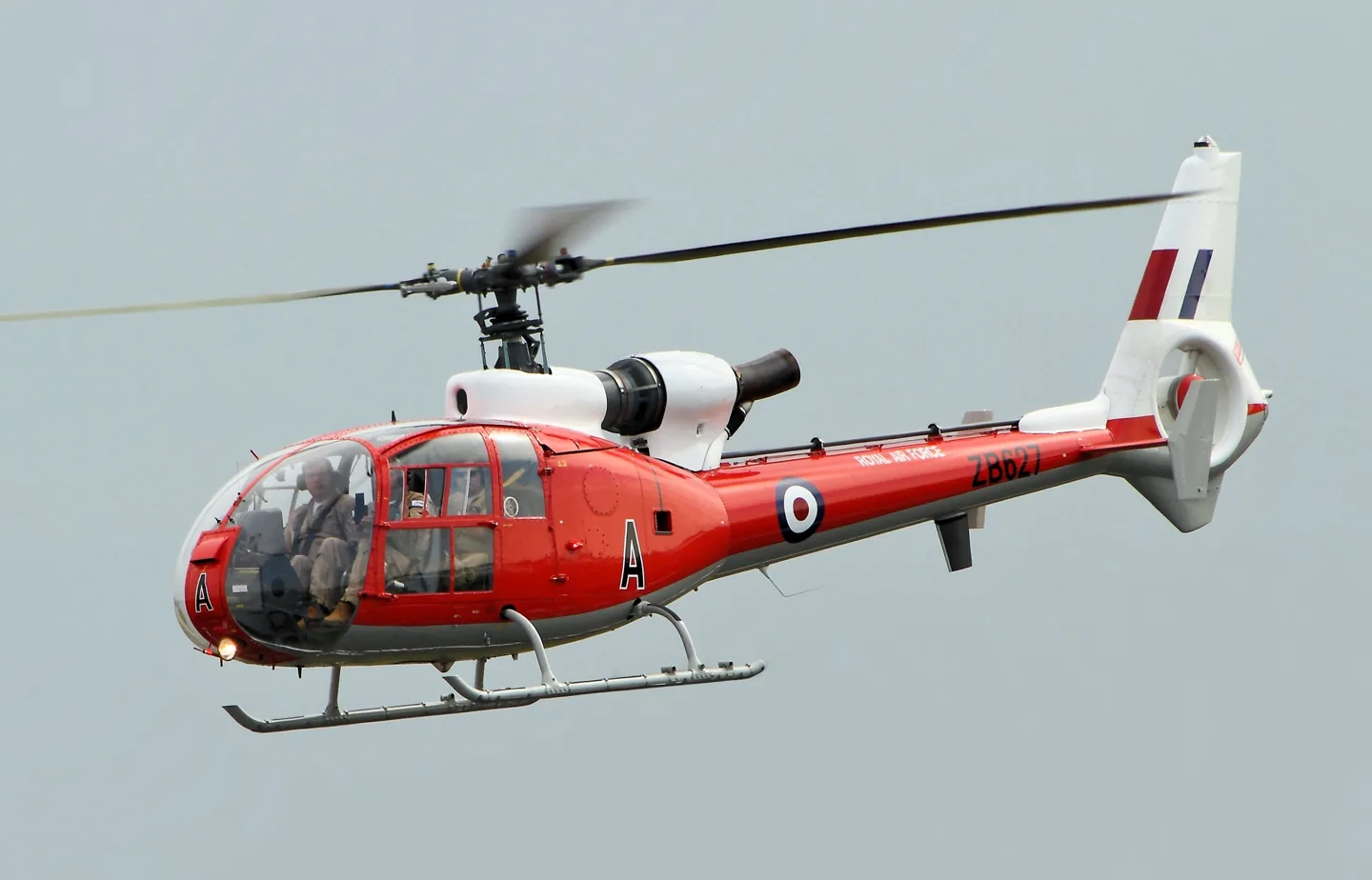 Tim Felce · CC BY-SA 2.0 · Aérospatiale Gazelle — real-aircraft reference photograph.
Sud Aviation developed the Gazelle as a light helicopter with room for five. The design passed into Aérospatiale's range and combined a streamlined cabin with an enclosed anti-torque rotor. Civil and military operators used the same compact airframe for different tasks; equipment and powerplant details depend on the version.
Aérospatiale Gazelle · Specifications (SA 341G) · real aircraft; source units retained
More about this aircraft on AirframeDB
Andrew Cranfield recalled a journey from Yeovil to London with Westland test pilot Don Farquharson, as well as Army exercise flying. His role on those flights is not established as pilot in command.
First flight: 7 April 1967 (SA.340)
Developed from: Aérospatiale Alouette III
A sightseeing flight in Belgium started van Zutphen thinking about learning to fly helicopters himself. He eventually trained on an R44 and later owned other types, but the Gazelle became his favourite. Interviewed at Teuge, he spoke about its appearance and the pleasure of flying with an enthusiasm that extended beyond using it as transport.
The helicopter also served a practical purpose, taking him to customers in Germany and Belgium. Away from work, he flew for Make-A-Wish and shared rides with people with disabilities. Those trips gave a different meaning to the same aircraft. His technical opinions are personal assessments, not independently verified specifications.
Accustomed to seeing the country from a business jet, the writer chose a Gazelle for a family holiday along the California coast. Preparation included helping with rotor-blade installation and checking whether the suitcases would fit. The baggage compartment proved a puzzle, and some belongings later travelled home by parcel delivery as the family made room.
Stops at Santa Barbara and Monterey turned the journey into a series of visits, while the approach to San Francisco offered a view very different from the author’s usual high-altitude flying. Friends shared time in the helicopter during the trip. At home, the family kept talking about the experience and soon proposed another outing. The diary preserves their enjoyment while its historical flying practices remain the author’s account.
After an injury ended his RAF flying career, McQuillan regained fixed-wing flying skills and began working towards helicopters. He recalled developing a pneumatic aid to operate the pedals, with the Gazelle among the aircraft flown during the work. His account also distinguishes the later Schweizer 300 training and check ride from those earlier Gazelle experiences.
Years afterwards, he returned to the type while planning a flight intended to raise awareness of veterans’ needs. A former acquaintance offered two dismantled Gazelles from which the project hoped to prepare an aircraft. McQuillan valued the low cabin height for access and described considerable preparation still ahead. The interview does not document a completed circumnavigation.
Sud Aviation developed the Gazelle as a light helicopter with room for five. The design passed into Aérospatiale's range and combined a streamlined cabin with an enclosed anti-torque rotor. Civil and military operators used the same compact airframe for different tasks; equipment and powerplant details depend on the version.
This starting point selects Aérospatiale Gazelle. Its aircraft-level settings do not select a particular developer’s custom systems.
Spring resistance builds with the selected airspeed response. A separate aerodynamic term adds speed-dependent control load.
Local force trim is off. Autopilot following is off.
Cyclic damping is on. Its configured gain is 0.35; it resists hardware motion separately from the spring and aircraft stabilization.
The Gazelle's enclosed Fenestron distinguishes its anti-torque system. JRX separates the military SA341B from the civil SA342J, with different engine, avionics and autopilot equipment. Its custom friction and hydraulic interactions belong to that implementation. FlyInside uses its own flight dynamics and systems. Civil SA342J type data should not be presented as direct military SA341B qualification.
The gains are normalized profile settings. They describe the chosen effect balance; hand force depends on the device and its output limits. IAS references are tuning values rather than operating limits. Physical acceptance of this revision remains pending.
The final overall output scale applied to everything the model produces, before the device cap.
More: everything (spring, loads, effects) gets stronger together.
Less: everything softens together.
Why here: Scales overall profile strength while preserving effect balance, subject to device and output limits.
The base centring force that pulls the stick back to centre. Every other force stacks on it. Too low and the stick feels limp in normal flight; too high and it fights your hand and masks the smaller cues layered above it.
More: firmer centring that resists your hand at all times.
Less: a limper stick that leans on aerodynamic load alone.
Why here: The profile provides cyclic resistance for the selected Gazelle; JRX friction controls and FlyInside dynamics remain separate simulator implementations. The baseline spring is 0. Its low-speed blend reaches baseline strength at 55 KIAS.
SA341B / SA342J GazelleGazelle 341A small neutral zone around centre where the spring stays quiet, so tiny movements at rest don't chatter. Wider is calmer but looser; narrower is more precise but can twitch around centre.
More: a calmer but looser centre with more free play.
Less: a tighter centre that may chatter at rest.
Why here: Sets travel around the centre before the baseline spring resists. Smaller values engage it sooner.
A master scale over both sustained axis loads, applied before their independent balance. Profiles normally leave this alone and tune the two axis loads instead.
More: both axes load up harder.
Less: both axes lighten together.
Why here: The aerodynamic-load gain is 0.35 with an indicated-speed reference of 110 KIAS. This supplies speed-dependent loading alongside the spring.
Enables the low-speed spring engagement window (start/full knots above). Off, the spring is constant at all speeds.
Why here: Allows baseline spring strength to rise with indicated airspeed where the control law permits it.
How much of the spring survives at a standstill, before airspeed can build any aerodynamic force. A high floor keeps the parked stick firm; a low floor gives the loose, cable-slack feel of a parked light aircraft.
More: a firmer stick while parked and taxiing.
Less: a floppier parked stick that only wakes up with airspeed.
Why here: Sets low-speed spring strength as a fraction of baseline when blending is enabled. One keeps full strength.
The airspeed where the spring begins climbing from its low-speed floor toward full strength: the controls "coming alive" on the takeoff roll.
Why here: Sets the IAS where the low-speed spring blend starts rising. This is a feel threshold, not a flight limit.
The airspeed where the spring reaches full strength. Between the start and this point, centring firms up progressively as airflow builds over the controls.
Why here: Sets the IAS where the low-speed blend reaches baseline strength; high-speed stiffening also uses it.
The indicated airspeed where aerodynamic load reaches its designed full level. It anchors the whole load curve to the aircraft's real speed range: a 172 loads up by 110 knots, a jet much later.
More: loads arrive later; the stick stays light up to a higher speed.
Less: loads arrive earlier and cruise feels heavier.
Why here: Sets the IAS reference for aerodynamic loading. It is an estimate, not published cruise TAS or a flight limit.
How much the centring itself stiffens with speed, on top of the deflection loads. Zero keeps centre feel constant; more makes the stick centre harder at cruise and looser in the pattern.
More: a centre that hardens noticeably as you go faster.
Less: constant centre feel at every speed.
Why here: Adds permitted spring resistance above the full-blend speed. Zero removes this high-speed increase.
The upper limit on speed-driven centre stiffening, so very fast flight can't wind the spring up without bound.
More: more total stiffening allowed at high speed.
Less: stiffening clamps off sooner.
Why here: Limits the squared airspeed ratio used for high-speed spring stiffening; it is not a device-force cap.
The sustained roll load from aileron deflection and airspeed, balanced independently of pitch. Together with the elevator load it sets the control-harmony ratio reviewers talk about.
More: heavier roll forces.
Less: lighter, quicker-feeling ailerons.
Why here: Roll and pitch aerodynamic scales are 1 and 1, respectively. They set the aerodynamic axis balance. No custom spring-travel curve is enabled.
The sustained pitch load from elevator deflection and airspeed, balanced independently of roll. This is the main lever behind a type's pitch weight. It does not touch aileron, spring, trim, or buffet forces.
More: heavier sustained pitch forces at speed.
Less: a lighter elevator that takes less muscle to hold.
Why here: Scales pitch aerodynamic loading; pitch spring travel and trim responses are separate settings.
A cap on each steady pitch or roll force before it reaches the device, guarding against slamming or saturating the hardware in strong maneuvers.
More: stronger peak steady forces before clipping.
Less: a gentler ceiling; hard maneuvers flatten out sooner.
Why here: Caps directed-force output. Native spring effects and device limits remain separate.
How strongly elevator trim relieves held pitch force and shifts where the stick settles. At 100%, a properly trimmed aircraft needs no held pressure, the trim-away-the-load workflow of real flying.
More: trim removes more of the held pitch force; at 100% full trim zeroes it.
Less: you keep holding force even when trimmed.
Why here: Scales supported pitch-trim relief and permitted centre movement. Zero removes pitch response.
The same relief for roll trim. Most GA types have no real aileron trim, so this stays at zero; types with roll trim get a matching value.
More: roll trim removes more held roll force.
Less: roll trim does less.
Why here: Scales supported roll-trim relief and permitted centre movement. Zero removes roll response.
Rolling surface vibration from wheel speed and surface type: pavement, grass, or gravel under the gear.
More: louder surface texture through the stick.
Less: a smoother taxi.
Why here: Sets rolling texture strength, modified by speed, surface and undercarriage configuration.
Short discrete bumps from expansion joints, ruts, and rough surface, punctuating the continuous rumble.
More: sharper hits from joints and ruts.
Less: softer ground detail.
Why here: Sets gear-bump texture during ground motion, separate from touchdown impact.
Airframe shake approaching the stall and while the stall warning is active: how loudly this wing announces it is unhappy. Types with a crisp break get modest buffet and let the horn carry the warning.
More: a louder pre-stall shake.
Less: a quieter wing; the horn carries the warning.
Why here: Sets stall-buffet strength. Zero removes the cue without changing simulator stalls or warnings.
Transonic buffet approaching the Mach limit. Meaningful for jets near MMO, zero for pistons and turboprops that never get there.
More: stronger transonic buffet near the Mach limit.
Less: a smoother high-Mach ride.
Why here: Sets high-Mach buffet strength; onset and full-strength thresholds are separate.
Low-frequency airframe vibration with flaps extended into the airflow, in the speed window where they actually work the air.
More: a rougher ride with flaps working the air.
Less: smoother approach flap.
Why here: Sets flap buffet at the configured position and speed gates. Flap movement texture is separate.
Airframe drumming from retractable gear hanging in the airstream. Zero for fixed-gear types, where the airframe never changes shape.
More: more drumming with the wheels hanging out.
Less: cleaner gear-down flight.
Why here: Sets gear aerodynamic buffet; movement and ground-contact cues are separate.
The dedicated stall stick-shaker buzz, fired by the aircraft's own stall-warning system. Only types with a real shaker get a value; everything else relies on aerodynamic buffet and the horn.
More: a harder stick-shaker buzz.
Less: a subtler shaker.
Why here: Sets triggered shaker strength; inactive while the shaker feature is disabled.
The one-shot kick when the wheels meet the runway, scaled by sink rate: a greaser whispers, a firm arrival thumps.
More: a harder kick at touchdown.
Less: softer arrivals.
Why here: Sets landing-impact strength; landing telemetry and response shape determine the pulse.
Rollout vibration while reverse thrust or beta-range props are working. Zero for types without reverse.
More: a rougher rollout under reverse.
Less: quieter reverse.
Why here: Sets reverse-thrust vibration with valid reverser and engine conditions. Zero removes the cue.
Continuous powerplant vibration following RPM between idle and full power, the ever-present reminder that something is burning fuel up front.
More: more engine through the stick.
Less: a quieter powerplant.
Why here: Sets estimated engine vibration using configured telemetry and response, not measured cockpit vibration.
Continuous vibration only while the sim reports the flap surfaces actually travelling. It follows real actuator motion and failures, not an estimated timer.
More: more vibration while the flap surfaces travel.
Less: quieter flap runs.
Why here: Sets texture from observed flap movement; a command without movement does not establish the cue.
How far autopilot commands may physically move the stick. Kept tiny in MSFS, where a moved axis can read back as pilot input; zero disables following entirely.
More: the autopilot visibly moves your stick further.
Less: a barely perceptible follow.
Why here: Sets admitted AP-follow gain, not a percentage of travel. Runtime ownership and input limits still apply.
Whether this feature is active in this profile.
Why here: Retained for compatibility and group membership. Trim relief, rather than this flag, controls centre movement.
Whether this feature is active in this profile.
Why here: Allows trim relief with supported control law and valid telemetry. Axis authorities set its amount.
Whether this feature is active in this profile.
Why here: A local force-trim latch is an approximation of a hardware neutral, not a complete representation of every Gazelle's friction, hydraulic or autopilot system. Local force trim is off. The stored latch parameters are inactive; the profile does not supply a local hold-where-left neutral.
SA341B / SA342J GazelleGazelle 341Whether this feature is active in this profile.
Why here: Allows load-factor changes to modify permitted spring laws. Passive fly-by-wire feel can suppress it.
Whether this feature is active in this profile.
Why here: Enables rate damping with the configured coefficients and control law.
Whether this feature is active in this profile.
Why here: Autopilot following is off; the configured spring and load retain the hardware feel.
Whether this feature is active in this profile.
Why here: Permits centering hold during a supported AP state, separate from following a moving target.
Why here: Sets admitted AP neutral-hold strength; inactive while neutral hold is disabled.
Whether this feature is active in this profile.
Why here: Enables aerodynamic cues; each still needs nonzero strength and its simulator conditions.
Where this effect reaches full strength (or has fully faded, for washouts).
More: a more gradual build to a later peak.
Less: a quicker build.
Why here: Sets the final flap index for detent normalization. UP plus three detents uses maximum index3.
Where this effect begins fading in.
More: the effect begins later.
Less: it begins earlier.
Why here: Sets the first flap detent that admits buffet; this is a handle index, not degrees.
Whether this feature is active in this profile.
Why here: Permits shaker at supported warning conditions; the switch does not establish aircraft equipment.
Whether this feature is active in this profile.
Why here: Enables ground effects; each still needs its own strength and contact or motion telemetry.
Whether this feature is active in this profile.
Why here: Enables engine cues with nonzero settings and valid running-engine telemetry.
Whether this feature is active in this profile.
Why here: Enables accessory cues with configured strengths and observed accessory movement.
The strength of this effect.
More: a stronger effect.
Less: a weaker one.
Why here: Sets texture from observed gear movement, separate from aerodynamic and touchdown effects.
| Parameter | Value | What it controls and why |
|---|---|---|
| Spring strength | 0 | The profile provides cyclic resistance for the selected Gazelle; JRX friction controls and FlyInside dynamics remain separate simulator implementations. The baseline spring is 0. Its low-speed blend reaches baseline strength at 55 KIAS. |
| Spring deadband | 0.02 | Sets travel around the centre before the baseline spring resists. Smaller values engage it sooner. |
| Force gain | 0.35 | The aerodynamic-load gain is 0.35 with an indicated-speed reference of 110 KIAS. This supplies speed-dependent loading alongside the spring. |
| Master gain | 0.85 | Scales overall profile strength while preserving effect balance, subject to device and output limits. |
| Dynamic-pressure blend | True | Allows baseline spring strength to rise with indicated airspeed where the control law permits it. |
| Minimum spring factor | 1 | Sets low-speed spring strength as a fraction of baseline when blending is enabled. One keeps full strength. |
| Spring wake-up speed | 15.4 kt | Sets the IAS where the low-speed spring blend starts rising. This is a feel threshold, not a flight limit. |
| Spring full-strength speed | 55.0 kt | Sets the IAS where the low-speed blend reaches baseline strength; high-speed stiffening also uses it. |
| Force tuning speed | 110.0 kt | Sets the IAS reference for aerodynamic loading. It is an estimate, not published cruise TAS or a flight limit. |
| Airspeed spring stiffening | 0 | Adds permitted spring resistance above the full-blend speed. Zero removes this high-speed increase. |
| Airspeed stiffening cap | 5 | Limits the squared airspeed ratio used for high-speed spring stiffening; it is not a device-force cap. |
| Aileron force scale | 1 | Roll and pitch aerodynamic scales are 1 and 1, respectively. They set the aerodynamic axis balance. No custom spring-travel curve is enabled. |
| Elevator force scale | 1 | Scales pitch aerodynamic loading; pitch spring travel and trim responses are separate settings. |
| Maximum output force | 0.55 | Caps directed-force output. Native spring effects and device limits remain separate. |
| StickFeel · Trim feel enabled | False | Retained for compatibility and group membership. Trim relief, rather than this flag, controls centre movement. |
| StickFeel · Trim relief enabled | False | Allows trim relief with supported control law and valid telemetry. Axis authorities set its amount. |
| StickFeel · Elevator authority | 0.3 | Scales supported pitch-trim relief and permitted centre movement. Zero removes pitch response. |
| StickFeel · Aileron authority | 0.3 | Scales supported roll-trim relief and permitted centre movement. Zero removes roll response. |
| StickFeel · Force trim enabled | False | A local force-trim latch is an approximation of a hardware neutral, not a complete representation of every Gazelle's friction, hydraulic or autopilot system. Local force trim is off. The stored latch parameters are inactive; the profile does not supply a local hold-where-left neutral. |
| StickFeel · G load enabled | False | Allows load-factor changes to modify permitted spring laws. Passive fly-by-wire feel can suppress it. |
| StickFeel · Rate damping enabled | True | Enables rate damping with the configured coefficients and control law. |
| Autopilot · Follow enabled | False | Autopilot following is off; the configured spring and load retain the hardware feel. |
| Autopilot · Follow authority | 0.05 | Sets admitted AP-follow gain, not a percentage of travel. Runtime ownership and input limits still apply. |
| Autopilot · Neutral hold enabled | False | Permits centering hold during a supported AP state, separate from following a moving target. |
| Autopilot · Neutral hold strength | 0.6 | Sets admitted AP neutral-hold strength; inactive while neutral hold is disabled. |
| Aero · Enabled | True | Enables aerodynamic cues; each still needs nonzero strength and its simulator conditions. |
| Aero · Gain | 0 | Sets stall-buffet strength. Zero removes the cue without changing simulator stalls or warnings. |
| Aero · Gain | 0 | Sets high-Mach buffet strength; onset and full-strength thresholds are separate. |
| Aero · Gain | 0 | Sets flap buffet at the configured position and speed gates. Flap movement texture is separate. |
| Aero · Max flap index | 1 | Sets the final flap index for detent normalization. UP plus three detents uses maximum index3. |
| Aero · Min flap index | 1 | Sets the first flap detent that admits buffet; this is a handle index, not degrees. |
| Aero · Gain | 0 | Sets gear aerodynamic buffet; movement and ground-contact cues are separate. |
| Aero · Shaker enabled | False | Permits shaker at supported warning conditions; the switch does not establish aircraft equipment. |
| Aero · Amplitude | 0.5 | Sets triggered shaker strength; inactive while the shaker feature is disabled. |
| Ground · Enabled | True | Enables ground effects; each still needs its own strength and contact or motion telemetry. |
| Ground · Gain | 0 | Sets rolling texture strength, modified by speed, surface and undercarriage configuration. |
| Ground · Gain | 0 | Sets gear-bump texture during ground motion, separate from touchdown impact. |
| Ground · Gain | 0.5 | Sets landing-impact strength; landing telemetry and response shape determine the pulse. |
| Ground · Gain | 0 | Sets reverse-thrust vibration with valid reverser and engine conditions. Zero removes the cue. |
| Engine · Enabled | True | Enables engine cues with nonzero settings and valid running-engine telemetry. |
| Engine · Gain | 0.06 | Sets estimated engine vibration using configured telemetry and response, not measured cockpit vibration. |
| Mechanical · Enabled | True | Enables accessory cues with configured strengths and observed accessory movement. |
| Mechanical · Gain | 0 | Sets texture from observed flap movement; a command without movement does not establish the cue. |
| Mechanical · Gain | 0 | Sets texture from observed gear movement, separate from aerodynamic and touchdown effects. |
If your time in the type says this page got something wrong, correct it here.
This page is built from cited references, and real time in the type beats a citation. Quote the claim that reads wrong and tell us what the actual aircraft does. Corrections go to the maintainer for review and feed the next revision of this research.
Open conversation about flying and tuning the Aérospatiale Gazelle, in the community forum. Corrections above go privately to the maintainer; hangar talk is public.