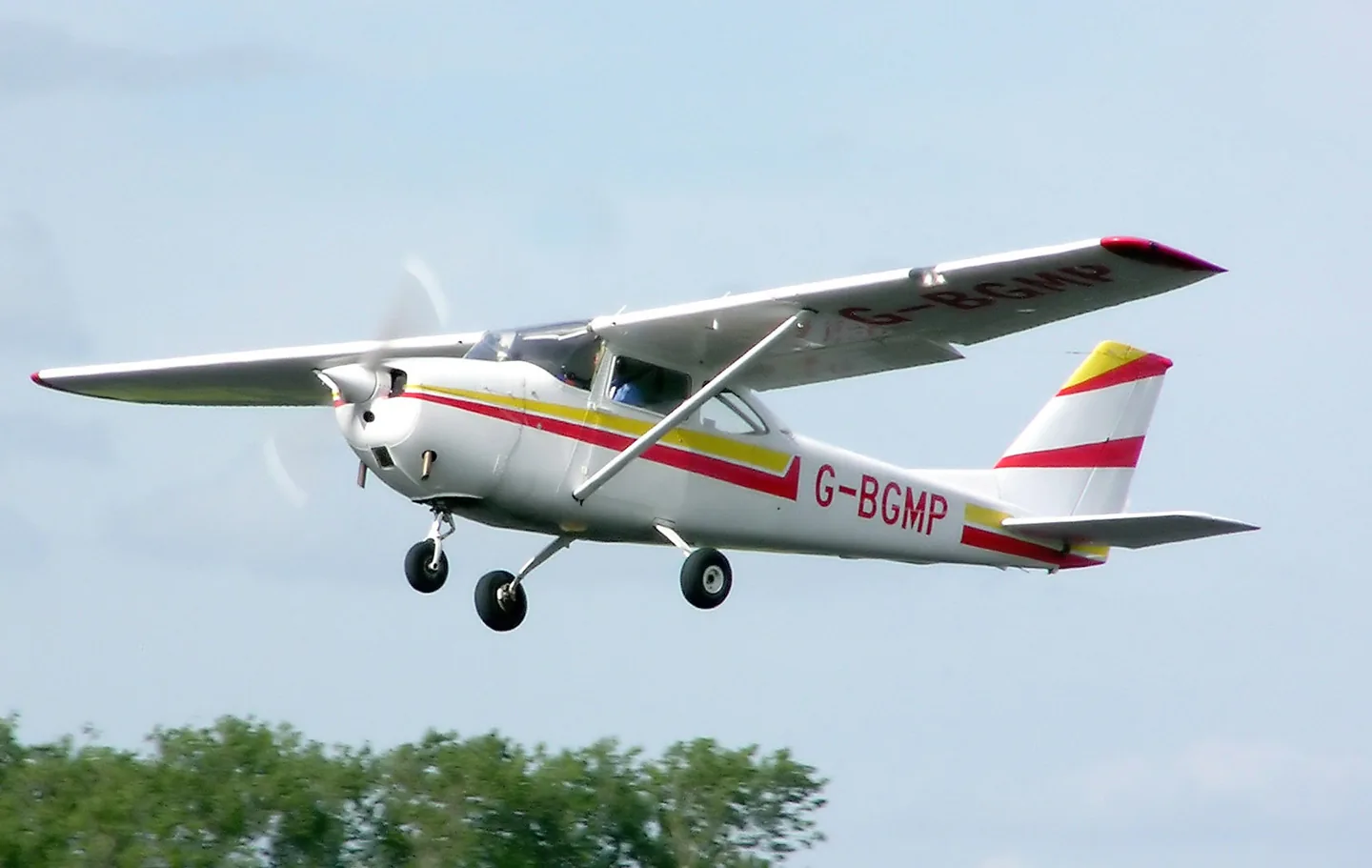
Aircraft library Cessna 172 Skyhawk G1000
Cessna 172 Skyhawk G1000 Photo: Tomás Del Coro, CC BY-SA 2.0, via Wikimedia Commons

Cessna 172 Skyhawk G1000

Deliberately heavy in pitch, markedly lighter ailerons, strong trim stability, and a docile, horn-first stall.

General aviationC172Cable/pushrod controlsStarter v2 · 2026-07-24

Know the plane

Powerplant
Lycoming IO-360-L2A, 180 hp
Seats
4
Max takeoff weight
2,550 lb (1,157 kg)
Wingspan
36 ft 1 in (11.0 m)
Length
27 ft 2 in (8.28 m)
Never exceed (Vne)
163 KIAS
Max structural cruise (Vno)
129 KIAS
Maneuvering (Va)
105 KIAS at 2,550 lb
Stall, landing config (Vs0)
40 KCAS
Cruise
≈124 KTAS at 75% power
Service ceiling
14,000 ft
Usable fuel
53 US gal

Sources: Cessna 172S POH; FAA TCDS 3A12.

The Cessna 172 Skyhawk is the most-produced aircraft in history and the default first aircraft for generations of pilots. The modern 172S pairs the airframe everyone knows with a fuel-injected 180 hp Lycoming and, in the G1000 variant this profile models, a full glass cockpit. That is why it is also the trainer you will actually meet at a flight school today.

For a simmer it is the calibration aircraft: forgiving, honest, and slow enough that everything that happens is something you can watch happen. If a control-feel model is wrong anywhere, the 172 is where you will notice. Nearly every pilot and reviewer has hands-on time in one, which is also why its feel evidence is unusually rich.

A little history

The 172 first flew in 1955 as, essentially, a Cessna 170 taildragger with a nosewheel, a modest change that made it dramatically easier to land and turned it into a phenomenon. Production has exceeded 45,000 airframes across seven decades, pausing only for the general-aviation liability crisis of the mid-1980s.

Cessna restarted the line in 1996–98 with the 172R and 172S: the same airframe philosophy carrying fuel injection in place of carburetors, and from 2005 the Garmin G1000 flight deck in place of steam gauges. The 172S G1000 modeled here is the aircraft as flight schools buy it now: old bones, current avionics, unchanged manners.

What the real one feels like

Each finding pairs our reading with the evidence it rests on. Fly the type and read something wrong? Every claim links straight to the corrections form.

01

Deliberately heavy in pitch per g

The 172's stick force per g is above 20 lb/g — high for the class, and heavier per g than a P-51 feels. Cessna built the type so that pulling hard is physically discouraging: a 3 g pull would take about 40 pounds of yoke force.

Fly the type? Correct this claim
04

Docile, straight-ahead stall — the horn is the warning

Clean and full-flap stalls break straight ahead, and the type is extremely difficult to spin by accident. No reviewer describes a pronounced pre-stall buffet through the yoke, so the buffet cue is present but modest; the stall horn is the primary warning.

Fly the type? Correct this claim

Published speeds

GateKnotsNotes
VsoStall, landing configuration 40 Cessna 172S NAV III POH (172SPHBUS-00)
VrRotation 55 liftoff 51–55 KIAS · Cessna 172S NAV III POH (172SPHBUS-00)
VyBest rate of climb 74 Cessna 172S NAV III POH (172SPHBUS-00)
VappApproach 65 60–70 KIAS, flaps FULL (§4 normal landing) · Cessna 172S NAV III POH (172SPHBUS-00)

How the profile models it

Starter JSON · v2

The complete starter profile, in the same order and with the same names as the desktop Tuning page. Highlighted rows cite evidence. Hover a row to see its profile-JSON path.

14 kt 110 kt 0.14
Pitch load at a constant elevator input, from standstill to the cruise reference.

Master gain & control system

Master gain 85%

The final overall output scale applied to everything the model produces, before the device cap.

▲ More: everything (spring, loads, effects) gets stronger together. ▼ Less: everything softens together.

Why here: Class default: 85% leaves you headroom to raise overall strength on your hardware without re-balancing the mix.

Forces

Spring strength 82%

The base centring force that pulls the stick back to centre. Every other force stacks on it. Too low and the stick feels limp in normal flight; too high and it fights your hand and masks the smaller cues layered above it.

▲ More: firmer centring that resists your hand at all times. ▼ Less: a limper stick that leans on aerodynamic load alone.

Why here: High for a light single: the 172's yoke centres positively behind its cable runs and big tail volume; 82% gives that solidity without masking the smaller cues.

Spring deadband 4%

A small neutral zone around centre where the spring stays quiet, so tiny movements at rest don't chatter. Wider is calmer but looser; narrower is more precise but can twitch around centre.

▲ More: a calmer but looser centre with more free play. ▼ Less: a tighter centre that may chatter at rest.

Why here: Wide enough to swallow the real yoke's cable slack and ramp jitter; much narrower would read as a pushrod aircraft, which this is not.

Low-speed spring floor 50%

How much of the spring survives at a standstill, before airspeed can build any aerodynamic force. A high floor keeps the parked stick firm; a low floor gives the loose, cable-slack feel of a parked light aircraft.

▲ More: a firmer stick while parked and taxiing. ▼ Less: a floppier parked stick that only wakes up with airspeed.

Why here: A parked 172 yoke is loose but not dead; cable tension keeps half the centring. The controls then come alive between 15 and 55 kt, so they are fully firm right at rotation speed.

QBlend enabled on · QSpring start knots 15 · QSpring full knots 55
Elevator load 100%

The sustained pitch load from elevator deflection and airspeed, balanced independently of roll. This is the main lever behind a type's pitch weight. It does not touch aileron, spring, trim, or buffet forces.

▲ More: heavier sustained pitch forces at speed. ▼ Less: a lighter elevator that takes less muscle to hold.

Why here: Pitch is the reference axis at 100%. The heaviness the claims describe comes from the load curve and G-stiffening, and roll is set relative to this.

Aileron load 65%

The sustained roll load from aileron deflection and airspeed, balanced independently of pitch. Together with the elevator load it sets the control-harmony ratio reviewers talk about.

▲ More: heavier roll forces. ▼ Less: lighter, quicker-feeling ailerons.

Pitch is the heaviest axis; the ailerons sit at roughly 0.65 of the elevator, the classical light-GA harmony.

Overall aerodynamic load 80%

A master scale over both sustained axis loads, applied before their independent balance. Profiles normally leave this alone and tune the two axis loads instead.

▲ More: both axes load up harder. ▼ Less: both axes lighten together.

Why here: Slightly under unity so the axis balance (elevator 100% / aileron 65%) lands in the device's comfortable range at the 110 kt reference.

Cruise reference (kt) 110

The indicated airspeed where aerodynamic load reaches its designed full level. It anchors the whole load curve to the aircraft's real speed range: a 172 loads up by 110 knots, a jet much later.

▲ More: loads arrive later; the stick stays light up to a higher speed. ▼ Less: loads arrive earlier and cruise feels heavier.

Why here: The 172S actually cruises around 110 KIAS, so loads reach their designed level exactly where the real aircraft spends its time.

Airspeed curve 2.0

How sharply stick load builds with airspeed. 1.0 is linear; about 2.0 matches real aerodynamics, where dynamic pressure grows with the square of speed, so controls are much lighter slow and firm up fast. Felt when holding the stick off centre, not at rest.

▲ More: lighter at low speed with a steeper rise toward cruise. ▼ Less: a more linear build that loads up earlier.

Direct cable controls feel the raw hinge moment, which scales with dynamic pressure (≈ V²). The force at the 110 kt cruise reference is unchanged — the exponent renormalizes there — while the sub-cruise band lightens, matching "comes alive at rotation, firm at cruise".

Centre firmness vs speed 15%

How much the centring itself stiffens with speed, on top of the deflection loads. Zero keeps centre feel constant; more makes the stick centre harder at cruise and looser in the pattern.

▲ More: a centre that hardens noticeably as you go faster. ▼ Less: constant centre feel at every speed.

The yoke keeps firming above 55 kt instead of going flat — about 1.45× the centering force at cruise versus rotation speed.

Spring airspeed stiffen cap 5
Max output force 55%

A cap on each steady pitch or roll force before it reaches the device, guarding against slamming or saturating the hardware in strong maneuvers.

▲ More: stronger peak steady forces before clipping. ▼ Less: a gentler ceiling; hard maneuvers flatten out sooner.

Why here: A trainer must not slam consumer hardware: 55% keeps the strongest steady pull near half device authority so buffet cues stay readable on top of it.

Hydraulic load factor 60%

For hydraulically-boosted or fly-by-wire types: how much of the raw aerodynamic load actually reaches the pilot's hand. 1.0 is a fully manual control run; lower values model the artificial-feel systems that isolate the pilot from true surface loads.

▲ More: more raw aerodynamic load reaching your hand. ▼ Less: more isolation, closer to pure artificial feel.

Why here: Inert here: only hydraulic and fly-by-wire control systems read this; the 172's manual run passes full loads regardless.

Trim

Elevator strength 30%

How strongly elevator trim relieves held pitch force and shifts where the stick settles. At 100%, a properly trimmed aircraft needs no held pressure, the trim-away-the-load workflow of real flying.

▲ More: trim removes more of the held pitch force; at 100% full trim zeroes it. ▼ Less: you keep holding force even when trimmed.

Why here: The trim wheel is powerful but a 172 pilot still flies through pressure changes, so 30% relieves meaningfully without the set-and-forget feel of jet trim. The resting-point bias (trim feel 70%) is what makes the strong trim stability claim tangible.

Trim feel enabled on · Elevator authority 0.7 · Trim relief enabled on

Stick feel

G-load gain 20%

Extra spring stiffness as positive G rises above 1G: the pull-up loads your arm as well as the wing. Too little and steep turns feel weightless; too much and maneuvering becomes tiring.

▲ More: pull-ups and steep turns stiffen the stick more per g. ▼ Less: g has less effect; maneuvering stays light.

The >20 lb/g anchor. The G-load stiffening curve is firm, not token.

GLoad enabled on · Min factor 0.22 · Max factor 1.3
Deadband low-speed widening 8%

Extra centre deadband added at parked and taxi speeds, narrowing away as airflow builds. It keeps the stick calm on the ramp without costing precision in flight.

▲ More: a calmer, looser stick on the ground. ▼ Less: ground handling as precise as flight, and as twitchy.

Why here: Keeps the yoke calm on the ramp; the widening is gone by 55 kt, matching the spring engagement window.

Dynamic deadband enabled on · Full speed ref knots 55
Control-edge trigger 85%

How far through the travel the edge-of-throw spring boost begins. High values leave most of the range linear and put a firm wall only near full deflection.

▲ More: the end-of-travel wall starts later, leaving more linear throw. ▼ Less: the wall begins earlier in the travel.

Why here: Cable circuits reach firm stops near full throw. The wall starts at 85% travel so normal flying never touches it.

Control edge enabled on
Control-edge gain 20%

How strong that edge-of-travel boost is once triggered: a soft warning versus a hard stop near full throw.

▲ More: a harder stop near full deflection. ▼ Less: a softer edge you can push through.

Why here: A modest wall: full-deflection slips should feel bounded, not spring-loaded.

Effect gains · Ground

Runway rumble 40%

Rolling surface vibration from wheel speed and surface type: pavement, grass, or gravel under the gear.

▲ More: louder surface texture through the stick. ▼ Less: a smoother taxi.

Why here: A light fixed-gear single telegraphs every surface: 40% keeps pavement texture present under the aero cues.

Enabled on · Min speed kt 2 · Full speed kt 50 · Surface scaling enabled on · Undercarriage 0
Gear bumps 25%

Short discrete bumps from expansion joints, ruts, and rough surface, punctuating the continuous rumble.

▲ More: sharper hits from joints and ruts. ▼ Less: softer ground detail.

Why here: Modest: the 172's spring-steel gear soaks small joints; the rumble carries most of the story.

Start speed kt 10 · Full speed kt 50
Brake shudder 35%

Vibration under brake pressure while rolling. Invisible braking feels wrong; too much makes every stop feel like an anti-skid event.

▲ More: more shudder under braking. ▼ Less: quieter stops.

Why here: Toe brakes on a light single give clear pedal-adjacent shudder; 0.35 makes braking legible without anti-skid drama it does not have.

Min speed kt 3 · Full speed kt 25 · Brake deadband 0.05
Nosewheel shimmy 30%

The rapid side-to-side wobble through the roll axis at taxi-rotation speeds, the classic worn-nosegear shimmy this type is or isn't known for.

▲ More: a livelier shimmy on the rollout. ▼ Less: a calmer nosewheel.

Why here: The type's documented shimmy (see the claims) earns a deliberate 30%. Rental-fleet 172s are famous for it.

Min speed kt 15 · Full speed kt 45
Ground accel 16%

The fore-aft pull on the pitch axis from acceleration on the ground. The takeoff surge draws the column aft; braking pushes it forward.

▲ More: a stronger fore-aft pull under acceleration and braking. ▼ Less: a subtler surge cue.

Why here: A gentle takeoff-surge cue scaled to a 180 hp roll, not a jet's shove.

Deadband g 0.03

Effect gains · Airframe

Stall buffet 35%

Airframe shake approaching the stall and while the stall warning is active: how loudly this wing announces it is unhappy. Types with a crisp break get modest buffet and let the horn carry the warning.

▲ More: a louder pre-stall shake. ▼ Less: a quieter wing; the horn carries the warning.

Docile type, horn-first warning — the buffet stays modest so the horn remains the primary cue.

Enabled on
Overspeed buffet 45%

Airframe shake past the overspeed warning, the airframe's own protest at exceeding Vne/VMO.

▲ More: a harsher protest past the redline. ▼ Less: a gentler overspeed warning.

Why here: Vne is 163 KIAS and the type's warning culture is horn-first, so buffet arrives as the airframe's own protest past the warning.

Flap buffet 18%

Low-frequency airframe vibration with flaps extended into the airflow, in the speed window where they actually work the air.

▲ More: a rougher ride with flaps working the air. ▼ Less: smoother approach flap.

Why here: Those big Fowler flaps buffet modestly in the white arc. The window (50 to 85 kt) is the real full-flap operating range.

Max flap index 4 · Min flap index 2 · Min speed kt 50 · Full speed kt 85

Effect gains · Engine, mechanical & drag

Turbulence 45%

Random shake from short-term G variation in rough air, so bumpy air is felt and not just seen.

▲ More: rough air hits the stick harder. ▼ Less: calmer chop.

Why here: Light wing loading: a 172 bounces in any afternoon thermal, and the ambient floor is set high for the class so calm air still breathes.

Min stddev 0.02 · Full stddev 0.25 · Ambient gain 0.7 · Turbulence window samples 20
Engine rumble 20%

Continuous powerplant vibration following RPM between idle and full power, the ever-present reminder that something is burning fuel up front.

▲ More: more engine through the stick. ▼ Less: a quieter powerplant.

Why here: The IO-360 four-cylinder thrum is present but kept under the aerodynamic cues. Engine buzz must never drown the wing.

Enabled on · Idle rpm pct 0.2 · Full rpm pct 1
Touchdown thump 65%

The one-shot kick when the wheels meet the runway, scaled by sink rate: a greaser whispers, a firm arrival thumps.

▲ More: a harder kick at touchdown. ▼ Less: softer arrivals.

Why here: Trainer landings are the lesson: a sink-rate-scaled 65% grades the arrival honestly, greaser to firm.

Reference sink fps 6 · Min sink fps 1
Flap movement 12%

Continuous vibration only while the sim reports the flap surfaces actually travelling. It follows real actuator motion and failures, not an estimated timer.

▲ More: more vibration while the flap surfaces travel. ▼ Less: quieter flap runs.

Why here: The electric flap motor's travel is audible and faintly tactile in the real aircraft, a small continuous cue while the surfaces run.

Minimum position delta 0.001 · Packet hold seconds 0.12 · Arrival settle seconds 0.25
Flap arrival 14%

The small airframe settle when flap-surface travel completes, driven by the surface arriving, not the handle command.

▲ More: a firmer settle as flaps reach the notch. ▼ Less: a softer arrival.

Why here: The settle when the surfaces reach the notch. Small, like the aircraft.

Flap step 35%

The short mechanical click on each flap-handle detent. The handle, not the surfaces.

▲ More: a sharper detent click. ▼ Less: a fainter click.

Why here: The flap switch detents are a distinct mechanical click worth reproducing at 35%.

Enabled on
Flap drag 15%

The sustained pitch-force change from flap drag at airspeed. Extending flaps should change what your hand holds, not just make noise.

▲ More: a bigger stick-load change when the flaps come out. ▼ Less: less trim shift from flap.

Why here: Flap extension changes what your hand holds: the 172's mild nose-down trim change, not an airliner's reconfiguration.

Enabled on · Max flap index 4 · Min knots 30 · Full knots 85
Propwash pitch 18%

Power-on pitch bias from propwash over the elevator: why adding power on a prop aircraft nudges the nose and the stick. Zero for jets.

▲ More: a stronger power-on pitch nudge. ▼ Less: power changes feel more neutral.

Why here: Prop over the tail: power changes nudge pitch. It is the go-around push every 172 pilot knows.

Min rpm 0.4 · Washout knots 80

Rate damping

Pitch gain 6%

Resistance proportional to the aircraft's pitch rotation rate. It settles the stick after abrupt pitch inputs; zero on both axes turns rate damping off.

▲ More: the stick settles harder against pitch rotation. ▼ Less: less resistance to quick pitch changes.

Why here: Small: the 172's own strong pitch damping does the talking; this only settles the light yoke after abrupt inputs.

Rate damping enabled on · Max force 0.2
Roll gain 4%

The roll-axis counterpart: damping against roll rate to stop post-input wobble.

▲ More: more resistance to roll rate. ▼ Less: a livelier roll axis.

Why here: Smaller still: roll is the light, lively axis and should stay that way.

Stick drop

Force 25%

How hard the elevator falls forward at rest, the parked slump of an unpowered control run. Zero disables it.

▲ More: a heavier forward slump at rest. ▼ Less: a lighter parked lean.

Why here: A parked 172 elevator slumps against its down-stop; 25% reproduces that dead-yoke lean (evidence-flagged in the claims).

Stick drop on

Whether this feature is active in this profile.

A parked cable yoke falls forward under its own weight; the effect was built for exactly this airframe class.

Fade airspeed 30

The airspeed where the forward slump has fully faded, typically almost as soon as airflow builds on the takeoff roll.

▲ More: the slump lingers further into the takeoff roll. ▼ Less: it vanishes almost as soon as you roll.

Why here: Gone by 30 kt. Airflow picks the elevator up almost as soon as the roll starts.

Autopilot follow

Authority 10%

How far autopilot commands may physically move the stick. Kept tiny in MSFS, where a moved axis can read back as pilot input; zero disables following entirely.

▲ More: the autopilot visibly moves your stick further. ▼ Less: a barely perceptible follow.

Why here: The GFC700's servos move the real yoke; authority stays tiny because MSFS can read a moved axis back as pilot input.

Follow enabled on
Strength 20%

How firmly the stick holds the autopilot's commanded position while following is active.

▲ More: a firmer hold on the AP's commanded position. ▼ Less: softer, easy to override.

Why here: Just enough hold to feel the autopilot flying without fighting a takeover.

Starter history

Version 22026-07-24

Research retune from cited feel data: V²-load shaping, airspeed spring stiffening above 55 kt, a firmer G-load anchor for the >20 lb/g figure, and stick drop enabled.

Version 12026-05-30

Initial starter baseline.

Community & corrections

If your time in the type says this page got something wrong, correct it here.

Pilot corrections

Fly this aircraft? Correct this page.

This page is built from cited references, and real time in the type beats a citation. Quote the claim that reads wrong and tell us what the actual aircraft does. Corrections go to the maintainer for review and feed the next revision of this research.

Help wanted

What the research could not pin down. If you fly the type, or can point at a source, a correction on any of these feeds the next revision directly.

  • Absolute spring and gain magnitudes are device-relative and bench-set — no published figure maps yoke pounds to a consumer device.

  • Breakout and friction values — no citable measurement found.

  • Trim-wheel sensitivity and power-change trim forces — no citable quantification found.

Hangar talk

Open conversation about flying and tuning the Cessna 172 Skyhawk G1000, in the community forum. Corrections above go privately to the maintainer; hangar talk is public.

No hangar talk for the Cessna 172 Skyhawk G1000 yet. Be the first.

Community

Community profiles for this aircraft

No community profiles for this aircraft yet. Tuned it your way? Share a profile and it will appear here.