VliegtuigbibliotheekBeechcraft Starship
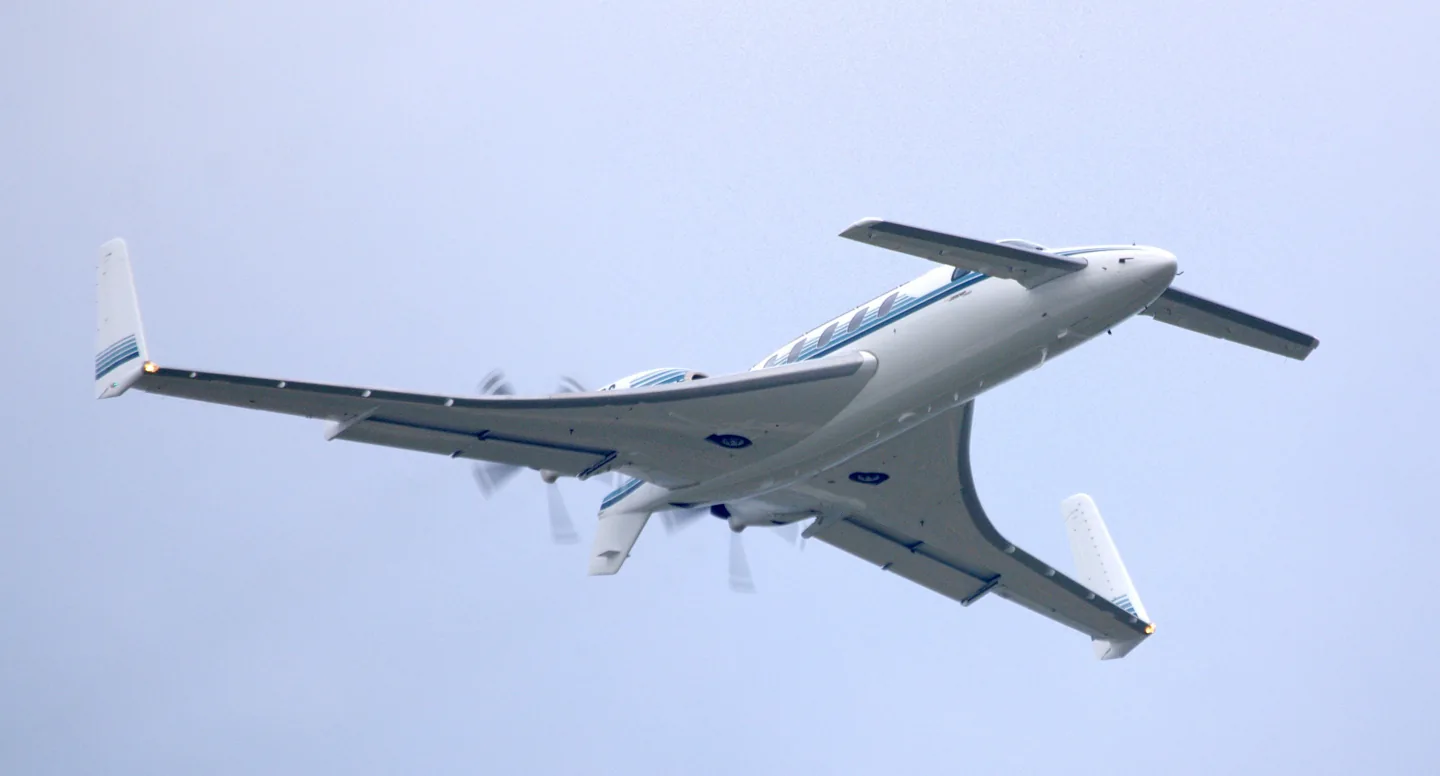
Beechcraft StarshipKen Mist · CC BY 2.0 · Beechcraft Starship in flight at AirVenture, Oshkosh, 2011.

Beechcraft Starship

A pressurised twin turboprop with a canard, composite airframe and rear-facing propellers.
Turboprop2 profielkeuzes

Ken het vliegtuig

Beechcraft's Starship departed sharply from the conventional King Air outline. The main wing sits aft, a small forward wing provides the canard arrangement, and two pusher propellers turn behind the cabin. Extensive carbon-fibre construction was another defining part of the programme.

Its avionics were equally ambitious for the period. Black Square's simulation centres on the AMS-850 flight deck, including display reversion and supporting systems such as avionics cooling.

Aircraft / family

Propulsion
Twin turboprop↗
Configuration
Canard · Pusher propellers↗

Beechcraft Starship · Specifications (2000A) · real aircraft; source units retained

Length
46 ft 1 in (14.05 m)↗
Wingspan
54 ft 5.70 in (16.6 m)↗
Height
12 ft 1.3 in (3.94 m)↗
Wing area
281 sq ft (26.1 m² )↗
Empty weight
10,085 lb (4,574 kg) standard empty weight↗
Gross weight
15,010 lb (6,808 kg) max ramp weight↗
Max takeoff weight
14,900 lb (6,759 kg)↗
Powerplant
2 × Pratt & Whitney Canada PT6A-67A turboprop, 1,200 shp (890 kW) each↗
Propellers
5-bladed McCauley, 8 ft 8 in (2.64 m) diameter↗
Maximum speed
385 mph (620 km/h, 335 kn)↗

Meer over dit vliegtuig op AirframeDB

The smaller aircraft that tested the idea

Before Beech committed to the production Starship, Scaled Composites built a smaller demonstrator to provide performance and handling information quickly. Model 115 was an 85-percent-scale version of the proposed full-size aircraft, with registration N2000S. Scaled dates its first flight to 29 August 1983.

The company describes a nine-month fabrication effort followed by the first 100 flight-test hours in 35 days. That compressed programme explains the purpose of the smaller aircraft: it was a flying development tool used to inform Beech’s production decision. Photographs and accounts of Model 115 therefore concern a different airframe from the later full-size production Starships.

An ambitious successor

Beech explored the Starship as a successor to its King Air turboprops. Scaled Composites built a smaller proof-of-concept aircraft before the full-size prototypes flew. Composite construction, forward lifting surfaces and rear-facing propellers made the production aircraft unmistakable. The development aircraft and production Model 2000 were materially different, so their dates and specifications should not be treated as interchangeable.

Living with NC-51

Scherer describes flying his own Starship as a surprisingly familiar activity despite the aircraft's unusual outline. In his owner-written FAQ, he says the control inputs work as they do in a conventional aeroplane and praises the spacious flight deck. His strongest impressions concern the ride and sound: he recalls a gentle rocking motion in turbulence and a cabin quiet enough for ordinary conversation. Up front, he notices cooling fans and airflow more than the propeller noise a visitor might expect.

The attachment is personal as well as practical. Checking in with air traffic control brings interested responses, and the aircraft attracts a crowd on the ramp. Scherer also reports exceptionally reliable dispatch during his own years operating NC-51. That is his experience with one maintained aircraft, expressed by an enthusiastic owner. His account conveys why somebody would keep flying a rare type after its manufacturer had withdrawn from supporting the fleet.

A test pilot remembers the difficult early years

Carr's recollections come from unusually broad experience of the Starship programme. In Huber's 2004 report, the Beech test pilot says he flew 30 of the 53 airframes and spent hundreds of hours training customers. He remembers the first full-scale aircraft's February 1986 flight with Bud Francis, including a Valentine's decoration intended for Olive Ann Beech. Those memories place the aircraft alongside the people trying to bring it into service.

His assessment of the programme is candid. Early reliability problems damaged the Starship's reputation, while later examples benefited from improvements that customers did not necessarily recognise. Looking back, he thought another year spent reducing weight and resolving reliability and handling issues might have changed its prospects. He regarded the announcement that production would stop at NC-53 as particularly damaging. These are a participant's retrospective judgments about a troubled introduction, alongside his extensive direct experience flying the aircraft.

Burt Rutan finally flies the production aircraft

Hansen recounts an unexpected visit to Mojave in July 2003. Robert Scherer arrived in NC-51 and offered Burt Rutan a flight in a production Starship. Rutan had flown the smaller proof-of-concept aircraft but, according to Hansen, had not yet flown the full-size production version. A meeting ended as engineers and pilots went outside to see it, reconnecting with a design on which some had worked years earlier.

Rutan flew with Scherer, and members of the White Knight and SpaceShipOne pilot team also went along. Hansen describes their delighted return and records Rutan's later enthusiastic assessment of how the aircraft flew. The visit led to Scherer's invitation to fly Starship chase missions for SpaceShipOne. This is a reported recollection of a particular encounter, with the appeal of the aircraft expressed through its designer and the people who flew it that day.

Openbare bronnen 9
  1. Beechcraft StarshipResearch background · Wikipedia revision 1373917801 · retrieved 2026-09-12
  2. Microsoft Flight Simulator aircraft manuals
  3. Starship operations manual
  4. StarshipOfficial developer / designated store catalogue · checked 2026-09-12
  5. Starship frequently asked questionsOwner account · NC-51 · undated
  6. Beached StarshipMark Huber · September 2004 · Tom Carr interview
  7. Beechcraft Starship 1 at MojaveCathy Hansen · 13 April 2019 · July 2003 recollection
  8. Starship: Model 115Manufacturer programme history · Model 115 demonstrator
  9. ICAO Doc 8643 — aircraft type designatorsPublic search data retrieved 2026-09-14; authority update 2026-09-03

Hoe het profiel het modelleert

Beechcraft Starship

Free + Pro
MSFS 2024MSFS 2020

Beechcraft's Starship departed sharply from the conventional King Air outline. The main wing sits aft, a small forward wing provides the canard arrangement, and two pusher propellers turn behind the cabin. Extensive carbon-fibre construction was another defining part of the programme.

This starting point selects Beechcraft Starship. Its aircraft-level settings do not select a particular developer’s custom systems.

Spring resistance builds with the selected airspeed response. A separate aerodynamic term adds speed-dependent control load.

Valid trim provides the configured pressure relief. Autopilot following is enabled for supported control references.

Controls and trim

The Starship combines a canard layout with twin pusher turboprops. Black Square documents separate trim arming and mode circuits and dual flight-control computers. Its mistrim flags approximate opposition because ordinary desktop torque cannot be measured; input displacement can prevent autopilot engagement. Autopilot pitch and roll knobs select attitude and bank. Shaker and column-pusher functions are distinct from an ordinary stall-buffet cue.

Starship operations manual

About the values

The gains are normalized profile settings. They describe the chosen effect balance; hand force depends on the device and its output limits. IAS references are tuning values rather than operating limits. Physical acceptance of this revision remains pending.

Master gain & control system

Master gain85%

De uiteindelijke totaalschaal over alles wat het model produceert, vóór de apparaatbegrenzing.

Meer: alles (veer, belastingen, effecten) wordt samen sterker.

Minder: alles wordt samen zachter.

Waarom hier: Scales overall profile strength while preserving effect balance, subject to device and output limits.

Forces

Spring strength74%

De basiscentreerkracht die de stick terug naar het midden trekt. Elke andere kracht stapelt hierop. Te laag en de stick voelt slap in normale vlucht; te hoog en hij vecht tegen je hand en maskeert de kleinere signalen erbovenop.

Meer: een steviger centreren dat de hand meer weerstaat.

Minder: een slappere stick die alleen op aerodynamische belasting leunt.

Waarom hier: The selected canard-aircraft yoke response remains a force approximation; attitude/bank selections and mistrim annunciations are not physical hand-force measurements. The baseline spring is 0.74. Its low-speed blend reaches baseline strength at 90 KIAS.

Starship operations manual
Spring deadband5%

Een kleine neutrale zone rond het midden waar de veer stil blijft, zodat minieme bewegingen in rust niet ratelen. Breder is rustiger maar losser; smaller is preciezer maar kan rond het midden trillen.

Meer: een rustiger maar losser midden, met meer speling.

Minder: een strakker midden dat in rust kan trillen.

Waarom hier: Sets travel around the centre before the baseline spring resists. Smaller values engage it sooner.

Overall aerodynamic load68%

Een masterschaal over beide aangehouden asbelastingen, toegepast vóór hun onafhankelijke balans. Profielen laten dit normaal met rust en stemmen de twee asbelastingen af.

Meer: beide assen laden zwaarder.

Minder: beide assen worden samen lichter.

Waarom hier: The aerodynamic-load gain is 0.68 with an indicated-speed reference of 220 KIAS. This supplies speed-dependent loading alongside the spring.

Airspeed blendingTrue

Schakelt het lage-snelheidsvenster van de veeraangrijping in (start/vol-knopen hierboven). Uit betekent een constante veer op alle snelheden.

Waarom hier: Allows baseline spring strength to rise with indicated airspeed where the control law permits it.

Low-speed spring floor55%

Hoeveel van de veer overleeft bij stilstand, voordat luchtsnelheid aerodynamische kracht kan opbouwen. Een hoge vloer houdt de geparkeerde stick stevig; een lage geeft het losse, kabelslappe gevoel van een geparkeerd licht vliegtuig.

Meer: een stevigere stick geparkeerd en tijdens taxiën.

Minder: een slappe stick geparkeerd die pas met snelheid ontwaakt.

Waarom hier: Sets low-speed spring strength as a fraction of baseline when blending is enabled. One keeps full strength.

Spring engagement start20 kt

De snelheid waarbij de veer vanaf zijn lage-snelheidsvloer richting volle sterkte begint te klimmen: de besturing die 'tot leven komt' tijdens de startrol.

Waarom hier: Sets the IAS where the low-speed spring blend starts rising. This is a feel threshold, not a flight limit.

Spring engagement full90 kt

De snelheid waarbij de veer volle sterkte bereikt. Tussen het begin en dit punt wordt het centreren geleidelijk steviger naarmate de luchtstroom over de roeren groeit.

Waarom hier: Sets the IAS where the low-speed blend reaches baseline strength; high-speed stiffening also uses it.

Snelheid voor krachtafstemming220

De aangewezen snelheid waarbij de aerodynamische belasting haar ontworpen volle niveau bereikt. Hij verankert de hele belastingscurve aan het echte snelheidsbereik van het vliegtuig: een 172 laadt op tegen 110 knopen, een jet veel later.

Meer: belastingen komen later; de stick blijft langer licht.

Minder: belastingen komen eerder en de kruisvlucht weegt zwaarder.

Waarom hier: Sets the IAS reference for aerodynamic loading. It is an estimate, not published cruise TAS or a flight limit.

Centre firmness vs speed10%

Hoeveel het centreren zelf met snelheid verstijft, bovenop de uitslagbelastingen. Nul houdt het middengevoel constant; meer laat de stick harder centreren op kruissnelheid en losser in het circuit.

Meer: een midden dat duidelijk verhardt met snelheid.

Minder: een constant middengevoel op elke snelheid.

Waarom hier: The high-speed spring-stiffening gain is 0.1. It strengthens the permitted spring response above 90 KIAS, with the squared-speed ratio capped at 5.

Centre stiffening cap5

De bovengrens van snelheidsgedreven centreerverstijving, zodat zeer snelle vlucht de veer niet onbegrensd kan opwinden.

Meer: meer totale verstijving toegestaan op hoge snelheid.

Minder: de verstijving stopt eerder.

Waarom hier: Limits the squared airspeed ratio used for high-speed spring stiffening; it is not a device-force cap.

Aileron load72%

De aangehouden rolbelasting uit rolroeruitslag en snelheid, onafhankelijk van pitch gebalanceerd. Samen met de hoogteroerbelasting bepaalt dit de stuurharmonie waar recensenten het over hebben.

Meer: zwaardere rolkrachten.

Minder: lichtere, levendigere rolroeren.

Waarom hier: Roll and pitch aerodynamic scales are 0.72 and 1, respectively. They set the aerodynamic axis balance. No custom spring-travel curve is enabled.

Elevator load100%

De aangehouden pitchbelasting uit hoogteroeruitslag en snelheid, onafhankelijk van rol gebalanceerd. Dit is de hoofdhendel achter het pitchgewicht van een type. Hij raakt rolroer-, veer-, trim- of buffetkrachten niet.

Meer: zwaardere aangehouden pitchkrachten op snelheid.

Minder: een lichter hoogteroer, minder spierkracht om vast te houden.

Waarom hier: Scales pitch aerodynamic loading; pitch spring travel and trim responses are separate settings.

Max output force55%

Een plafond op elke gestage pitch- of rolkracht voordat die het apparaat bereikt, ter bescherming tegen beuken of verzadigen van de hardware bij stevige manoeuvres.

Meer: hogere gestage krachtpieken vóór afkapping.

Minder: een zachter plafond; harde manoeuvres vlakken eerder af.

Waarom hier: Caps directed-force output. Native spring effects and device limits remain separate.

Trim

Trim relief (elevator)30%

Hoe sterk hoogteroertrim de vastgehouden pitchkracht verlicht en verschuift waar de stick tot rust komt. Op 100 % heeft een goed getrimd vliegtuig geen vastgehouden druk nodig, de trim-de-last-weg-werkwijze van echt vliegen.

Meer: trim neemt meer vastgehouden kracht weg; op 100 % heft volle trim hem op.

Minder: je blijft kracht houden, zelfs getrimd.

Waarom hier: Trim setup is documented on pitch, roll and yaw, but the profile's trim relief does not reproduce dual-FCC trim arming or simulated mistrim logic. Pitch authority 0.3 provides load relief and permitted centre movement; roll authority is 0.14.

Starship operations manual
Trim relief (aileron)14%

Dezelfde verlichting voor roltrim. De meeste GA-types hebben geen echte rolroertrim, dus dit blijft op nul; types met roltrim krijgen een passende waarde.

Meer: roltrim neemt meer vastgehouden kracht weg.

Minder: roltrim doet minder.

Waarom hier: Scales supported roll-trim relief and permitted centre movement. Zero removes roll response.

Effect gains · Ground

Runway rumble42%

Rollende oppervlaktetrilling uit wielsnelheid en ondergrondtype: asfalt, gras of grind onder het onderstel.

Meer: een sterkere oppervlaktetextuur in de stick.

Minder: gladder taxiën.

Waarom hier: Sets rolling texture strength, modified by speed, surface and undercarriage configuration.

Gear bumps32%

Korte losse stoten van uitzetvoegen, sporen en ruw oppervlak, die het doorlopende gerommel accentueren.

Meer: scherpere stoten van voegen en sporen.

Minder: zachtere gronddetails.

Waarom hier: Sets gear-bump texture during ground motion, separate from touchdown impact.

Effect gains · Airframe

Stall buffet28%

Casco-schudden bij het naderen van de overtrek en terwijl de overtrekwaarschuwing actief is: hoe luid deze vleugel aankondigt dat hij ontevreden is. Types met een scherpe afbreek krijgen bescheiden buffet en laten de hoorn de waarschuwing dragen.

Meer: een sterker trillen vóór de overtrek.

Minder: een discretere vleugel; de hoorn draagt de waarschuwing.

Waarom hier: Sets stall-buffet strength. Zero removes the cue without changing simulator stalls or warnings.

Mach buffet0%

Transsoon buffet bij het naderen van de Machlimiet. Betekenisvol voor jets nabij MMO, nul voor zuigers en turboprops die er nooit komen.

Meer: een sterker transsoon buffet nabij de Machlimiet.

Minder: gladder vliegen op hoge Mach.

Waarom hier: Sets high-Mach buffet strength; onset and full-strength thresholds are separate.

Flap buffet14%

Laagfrequente casco-trilling met kleppen uitgeslagen in de luchtstroom, in het snelheidsvenster waar ze de lucht echt bewerken.

Meer: ruwer vliegen met werkende kleppen.

Minder: zachtere naderingskleppen.

Waarom hier: Sets flap buffet at the configured position and speed gates. Flap movement texture is separate.

Gear buffet10%

Casco-getrommel van intrekbaar onderstel dat in de luchtstroom hangt. Nul voor types met vast onderstel, waar het casco nooit van vorm verandert.

Meer: meer getrommel met het onderstel uit.

Minder: schoner vliegen met onderstel uit.

Waarom hier: Sets gear aerodynamic buffet; movement and ground-contact cues are separate.

Stick shaker50%

De speciale stall-stickshakerzoem, geactiveerd door het eigen overtrekwaarschuwingssysteem van het vliegtuig. Alleen types met een echte shaker krijgen een waarde; de rest steunt op aerodynamisch buffet en de hoorn.

Meer: een hardere shaker.

Minder: een discretere shaker.

Waarom hier: Sets triggered shaker strength; inactive while the shaker feature is disabled.

Effect gains · Engine, mechanical & drag

Touchdown thump82%

De eenmalige dreun als de wielen de baan raken, geschaald op daalsnelheid: een zachte landing fluistert, een stevige aankomst bonkt.

Meer: een hardere dreun bij de landing.

Minder: zachtere aankomsten.

Waarom hier: Sets landing-impact strength; landing telemetry and response shape determine the pulse.

Reverse rumble48%

Uitroltrilling terwijl reverse thrust of props in beta werken. Nul voor types zonder reverse.

Meer: ruwer uitrollen onder reverse.

Minder: een discretere reverse.

Waarom hier: Sets reverse-thrust vibration with valid reverser and engine conditions. Zero removes the cue.

Engine rumble6%

Doorlopende motortrilling die het toerental volgt tussen stationair en vol vermogen, de altijd aanwezige herinnering dat er voorin iets brandstof verbrandt.

Meer: meer motor in de stick.

Minder: een discretere motor.

Waarom hier: Sets estimated engine vibration using configured telemetry and response, not measured cockpit vibration.

Flap motion12%

Doorlopende trilling alleen terwijl de sim meldt dat de klepvlakken daadwerkelijk bewegen. Volgt echte actuatorbeweging en storingen, geen geschatte timer.

Meer: meer trilling met bewegende kleppen.

Minder: discretere klepbewegingen.

Waarom hier: Sets texture from observed flap movement; a command without movement does not establish the cue.

Autopilot follow

AP follow authority10%

Hoe ver autopilootcommando's de stick fysiek mogen bewegen. Piepklein gehouden in MSFS, waar een bewogen as kan worden teruggelezen als pilooteninvoer; nul schakelt volgen volledig uit.

Meer: de autopiloot beweegt je stick zichtbaar meer.

Minder: een nauwelijks merkbaar volgen.

Waarom hier: Sets admitted AP-follow gain, not a percentage of travel. Runtime ownership and input limits still apply.

Stick feel

StickFeel · Trim feel enabledTrue

Whether this feature is active in this profile.

Waarom hier: Retained for compatibility and group membership. Trim relief, rather than this flag, controls centre movement.

StickFeel · Trim relief enabledTrue

Whether this feature is active in this profile.

Waarom hier: Allows trim relief with supported control law and valid telemetry. Axis authorities set its amount.

StickFeel · Force trim enabledFalse

Whether this feature is active in this profile.

Waarom hier: Enables local force trim, separate from aircraft-owned trim and add-on integration qualification.

StickFeel · G load enabledTrue

Whether this feature is active in this profile.

Waarom hier: Allows load-factor changes to modify permitted spring laws. Passive fly-by-wire feel can suppress it.

StickFeel · Rate damping enabledTrue

Whether this feature is active in this profile.

Waarom hier: Enables rate damping with the configured coefficients and control law.

Autopilot

Autopilot · Follow enabledTrue

Whether this feature is active in this profile.

Waarom hier: Following is on at 0.1 authority when a supported, valid autopilot control reference is available.

Autopilot · Neutral hold enabledFalse

Whether this feature is active in this profile.

Waarom hier: Permits centering hold during a supported AP state, separate from following a moving target.

Autopilot · Neutral hold strength0.6

Waarom hier: Sets admitted AP neutral-hold strength; inactive while neutral hold is disabled.

Aero

Aero · EnabledTrue

Whether this feature is active in this profile.

Waarom hier: Enables aerodynamic cues; each still needs nonzero strength and its simulator conditions.

Aero · Max flap index3

Where this effect reaches full strength (or has fully faded, for washouts).

Meer: a more gradual build to a later peak.

Minder: a quicker build.

Waarom hier: Sets the final flap index for detent normalization. UP plus three detents uses maximum index3.

Aero · Min flap index2

Where this effect begins fading in.

Meer: the effect begins later.

Minder: it begins earlier.

Waarom hier: Sets the first flap detent that admits buffet; this is a handle index, not degrees.

Aero · Shaker enabledFalse

Whether this feature is active in this profile.

Waarom hier: Permits shaker at supported warning conditions; the switch does not establish aircraft equipment.

Ground

Ground · EnabledTrue

Whether this feature is active in this profile.

Waarom hier: Enables ground effects; each still needs its own strength and contact or motion telemetry.

Engine

Engine · EnabledTrue

Whether this feature is active in this profile.

Waarom hier: Enables engine cues with nonzero settings and valid running-engine telemetry.

Mechanical

Mechanical · EnabledTrue

Whether this feature is active in this profile.

Waarom hier: Enables accessory cues with configured strengths and observed accessory movement.

Mechanical · Gain0.12

The strength of this effect.

Meer: a stronger effect.

Minder: a weaker one.

Waarom hier: Sets texture from observed gear movement, separate from aerodynamic and touchdown effects.

Alle profielinstellingen
Geschatte profielinstellingen
ParameterWaardeWat het regelt en waarom
Spring strength0.74 The selected canard-aircraft yoke response remains a force approximation; attitude/bank selections and mistrim annunciations are not physical hand-force measurements. The baseline spring is 0.74. Its low-speed blend reaches baseline strength at 90 KIAS.
Spring deadband0.05 Sets travel around the centre before the baseline spring resists. Smaller values engage it sooner.
Force gain0.68 The aerodynamic-load gain is 0.68 with an indicated-speed reference of 220 KIAS. This supplies speed-dependent loading alongside the spring.
Master gain0.85 Scales overall profile strength while preserving effect balance, subject to device and output limits.
Dynamic-pressure blendTrue Allows baseline spring strength to rise with indicated airspeed where the control law permits it.
Minimum spring factor0.55 Sets low-speed spring strength as a fraction of baseline when blending is enabled. One keeps full strength.
Spring wake-up speed20 ktSets the IAS where the low-speed spring blend starts rising. This is a feel threshold, not a flight limit.
Spring full-strength speed90 ktSets the IAS where the low-speed blend reaches baseline strength; high-speed stiffening also uses it.
Snelheid voor krachtafstemming220.0 ktSets the IAS reference for aerodynamic loading. It is an estimate, not published cruise TAS or a flight limit.
Airspeed spring stiffening0.1 The high-speed spring-stiffening gain is 0.1. It strengthens the permitted spring response above 90 KIAS, with the squared-speed ratio capped at 5.
Airspeed stiffening cap5 Limits the squared airspeed ratio used for high-speed spring stiffening; it is not a device-force cap.
Aileron force scale0.72 Roll and pitch aerodynamic scales are 0.72 and 1, respectively. They set the aerodynamic axis balance. No custom spring-travel curve is enabled.
Elevator force scale1.0 Scales pitch aerodynamic loading; pitch spring travel and trim responses are separate settings.
Maximum output force0.55 Caps directed-force output. Native spring effects and device limits remain separate.
StickFeel · Trim feel enabledTrue Retained for compatibility and group membership. Trim relief, rather than this flag, controls centre movement.
StickFeel · Trim relief enabledTrue Allows trim relief with supported control law and valid telemetry. Axis authorities set its amount.
StickFeel · Elevator authority0.3 Trim setup is documented on pitch, roll and yaw, but the profile's trim relief does not reproduce dual-FCC trim arming or simulated mistrim logic. Pitch authority 0.3 provides load relief and permitted centre movement; roll authority is 0.14.
StickFeel · Aileron authority0.14 Scales supported roll-trim relief and permitted centre movement. Zero removes roll response.
StickFeel · Force trim enabledFalse Enables local force trim, separate from aircraft-owned trim and add-on integration qualification.
StickFeel · G load enabledTrue Allows load-factor changes to modify permitted spring laws. Passive fly-by-wire feel can suppress it.
StickFeel · Rate damping enabledTrue Enables rate damping with the configured coefficients and control law.
Autopilot · Follow enabledTrue Following is on at 0.1 authority when a supported, valid autopilot control reference is available.
Autopilot · Follow authority0.1 Sets admitted AP-follow gain, not a percentage of travel. Runtime ownership and input limits still apply.
Autopilot · Neutral hold enabledFalse Permits centering hold during a supported AP state, separate from following a moving target.
Autopilot · Neutral hold strength0.6 Sets admitted AP neutral-hold strength; inactive while neutral hold is disabled.
Aero · EnabledTrue Enables aerodynamic cues; each still needs nonzero strength and its simulator conditions.
Aero · Gain0.28 Sets stall-buffet strength. Zero removes the cue without changing simulator stalls or warnings.
Aero · Gain0 Sets high-Mach buffet strength; onset and full-strength thresholds are separate.
Aero · Gain0.14 Sets flap buffet at the configured position and speed gates. Flap movement texture is separate.
Aero · Max flap index3 Sets the final flap index for detent normalization. UP plus three detents uses maximum index3.
Aero · Min flap index2 Sets the first flap detent that admits buffet; this is a handle index, not degrees.
Aero · Gain0.1 Sets gear aerodynamic buffet; movement and ground-contact cues are separate.
Aero · Shaker enabledFalse Permits shaker at supported warning conditions; the switch does not establish aircraft equipment.
Aero · Amplitude0.5 Sets triggered shaker strength; inactive while the shaker feature is disabled.
Ground · EnabledTrue Enables ground effects; each still needs its own strength and contact or motion telemetry.
Ground · Gain0.42 Sets rolling texture strength, modified by speed, surface and undercarriage configuration.
Ground · Gain0.32 Sets gear-bump texture during ground motion, separate from touchdown impact.
Ground · Gain0.82 Sets landing-impact strength; landing telemetry and response shape determine the pulse.
Ground · Gain0.48 Sets reverse-thrust vibration with valid reverser and engine conditions. Zero removes the cue.
Engine · EnabledTrue Enables engine cues with nonzero settings and valid running-engine telemetry.
Engine · Gain0.06 Sets estimated engine vibration using configured telemetry and response, not measured cockpit vibration.
Mechanical · EnabledTrue Enables accessory cues with configured strengths and observed accessory movement.
Mechanical · Gain0.12 Sets texture from observed flap movement; a command without movement does not establish the cue.
Mechanical · Gain0.12 Sets texture from observed gear movement, separate from aerodynamic and touchdown effects.
Openbare bronnen 9
  1. Beechcraft StarshipResearch background · Wikipedia revision 1373917801 · retrieved 2026-09-12
  2. Starship operations manualStarship manual introduction, autopilot mistrim p.27, FCC850/APP85D and pitch/roll trim failure sections
  3. Microsoft Flight Simulator aircraft manuals
  4. StarshipOfficial developer / designated store catalogue · checked 2026-09-12
  5. Starship frequently asked questionsOwner account · NC-51 · undated
  6. Beached StarshipMark Huber · September 2004 · Tom Carr interview
  7. Beechcraft Starship 1 at MojaveCathy Hansen · 13 April 2019 · July 2003 recollection
  8. Starship: Model 115Manufacturer programme history · Model 115 demonstrator
  9. ICAO Doc 8643 — aircraft type designatorsPublic search data retrieved 2026-09-14; authority update 2026-09-03

Community en correcties

Zegt jouw ervaring op het type dat deze pagina iets fout heeft? Corrigeer het hier.

Pilotencorrecties

Vlieg je dit toestel? Corrigeer deze pagina.

Deze pagina is gebouwd op geciteerde bronnen, en echte ervaring op het type verslaat elke bron. Citeer de foute bewering en vertel ons wat het echte toestel doet. Correcties gaan ter beoordeling naar de maintainer en voeden de volgende revisie van dit onderzoek.

Hangarpraat

Open gesprek over het vliegen en afstellen van de Beechcraft Starship, op het communityforum. Correcties hierboven gaan privé naar de maintainer; hangarpraat is openbaar.

Nog geen hangarpraat over de Beechcraft Starship. Wees de eerste.

Community

Communityprofielen voor dit toestel

Nog geen communityprofielen voor dit toestel. Op jouw manier afgesteld? Deel een profiel en het verschijnt hier.