An early post-war jet fighter
The Soviet MiG-15 entered service in 1949. Production of the improved MiG-15bis began in 1950, and both versions were used extensively during the Korean War.
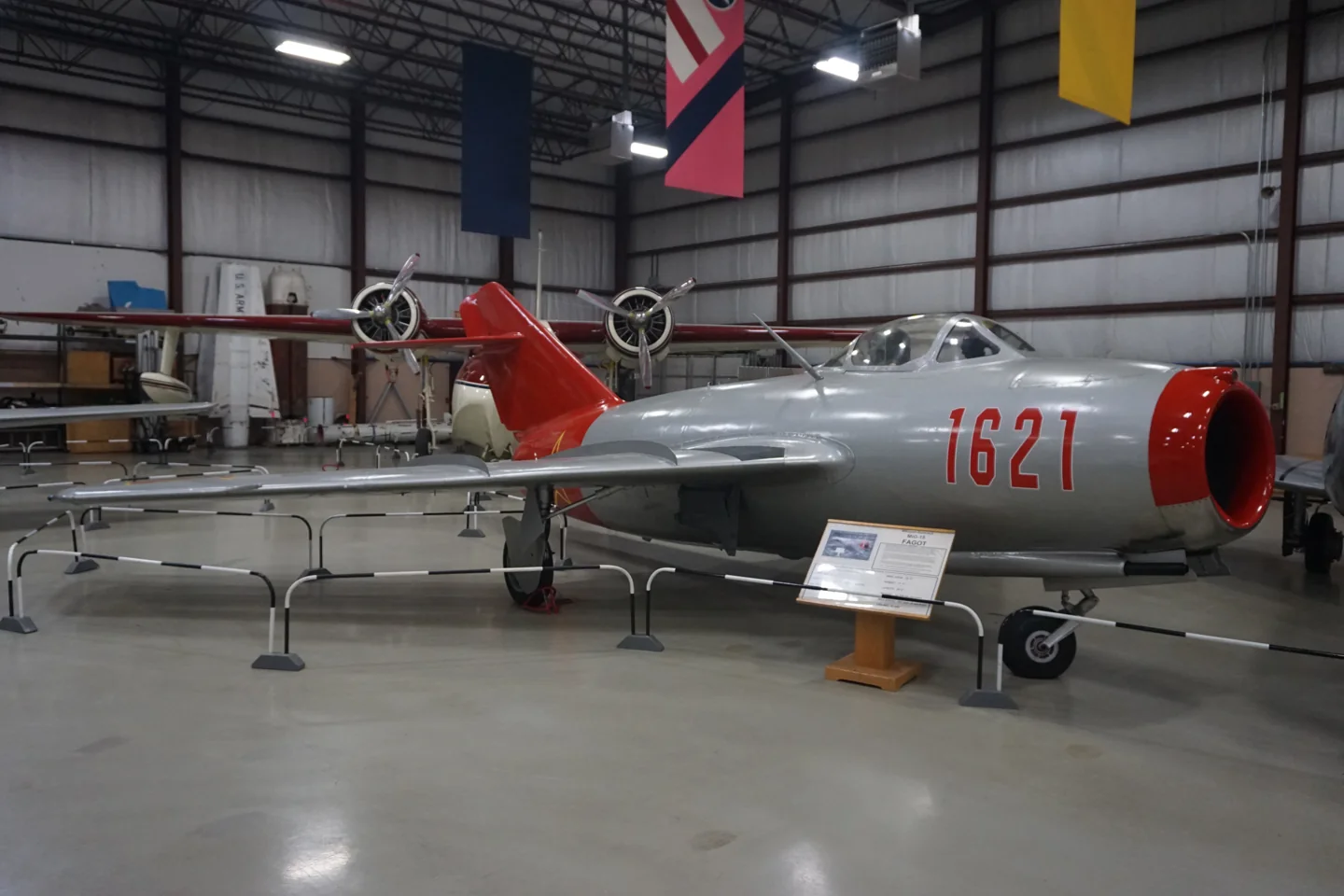 Michael Barera · CC BY-SA 4.0 · Mikoyan-Gurevich MiG-15.
The MiG-15 was an early swept-wing Soviet jet fighter that first flew in 1947.
MiG-15bis museum reference
The Soviet MiG-15 entered service in 1949. Production of the improved MiG-15bis began in 1950, and both versions were used extensively during the Korean War.
A North Korean pilot flew the museum’s MiG-15bis to Kimpo on 21 September 1953. It underwent extensive American flight testing before entering the museum collection in 1957.
The MiG-15bis combined a more powerful engine with hydraulically boosted ailerons. That distinction matters when reading accounts of roll control: the earlier MiG-15 and the bis do not have identical control arrangements.
The museum’s dimensions, thrust and weight describe its MiG-15bis reference. They provide context for that variant, rather than measured stick-force calibration or a specification shared by every MiG-15 model.
Bear Studios MiG-15bis is the selected Bear Studios configuration.
Spring resistance builds with the selected airspeed response. A separate aerodynamic term adds speed-dependent control load.
Pitch-trim relief is off. Autopilot following is off.
The MiG-15 was an early swept-wing Soviet jet fighter that first flew in 1947.
Strengths are normalized hardware-feel settings. They set the effect balance; hand force depends on the device and its limits. The IAS reference is a tuning value.
施加於模型產出的一切、在裝置上限之前的最終整體輸出縮放。
調高: 一切(彈簧、載荷、效果)一同增強。
調低: 一切一同變柔。
設定理由: Scales overall profile strength while preserving effect balance, subject to device and output limits.
把搖桿拉回中央的基礎回中力。其他所有力都疊加在它之上。太低,正常飛行中搖桿會發軟;太高,它會與你的手較勁,並掩蓋疊加其上的細微提示。
調高: 更硬的回中,更抗手。
調低: 更軟的桿,只靠氣動載荷。
設定理由: This profile uses reversible-control loading for Mikoyan-Gurevich MiG-15. The baseline spring is 0.74. Its low-speed blend reaches baseline strength at 65 KIAS.
中央附近彈簧保持安靜的小中立區,讓靜止時的微小移動不會咔嗒作響。更寬更安穩但更松,更窄更精確但可能在中央附近抖動。
調高: 更安靜但更松的中央,曠量更大。
調低: 更緊的中央,靜止時可能抖動。
設定理由: Sets travel around the centre before the baseline spring resists. Smaller values engage it sooner.
作用於兩條持續軸載荷的主縮放,在它們各自的獨立平衡之前施加。設定檔通常不動它,而是調校兩條軸載荷。
調高: 兩軸載荷一同加重。
調低: 兩軸一同減輕。
設定理由: The aerodynamic-load gain is 0.8 with an indicated-speed reference of 230 KIAS. This supplies speed-dependent loading alongside the spring.
啟用低速彈簧介入視窗(上面的起始/全強度節數)。關閉時彈簧在所有速度下恆定。
設定理由: Allows baseline spring strength to rise with indicated airspeed where the control law permits it.
在靜止、空速尚未產生氣動力之前,彈簧還剩多少。下限高,停機時搖桿結實;下限低,則是停放輕型飛機那種鋼索鬆弛的感覺。
調高: 停機和滑行時桿更結實。
調低: 停機時桿發軟,只隨速度甦醒。
設定理由: Sets low-speed spring strength as a fraction of baseline when blending is enabled. One keeps full strength.
彈簧從低速下限開始向全強度攀升的空速:起飛滑跑中操縱面"甦醒"的那一刻。
設定理由: Sets the IAS where the low-speed spring blend starts rising. This is a feel threshold, not a flight limit.
彈簧達到全強度的空速。從起點到這裡,隨著氣流在操縱面上增強,回中逐漸變硬。
設定理由: Sets the IAS where the low-speed blend reaches baseline strength; high-speed stiffening also uses it.
氣動載荷達到設計滿值的指示空速。它把整條載荷曲線錨定在飛機真實的速度範圍:172在110節就載滿,噴氣機要晚得多。
調高: 載荷來得更晚;桿輕到更高速度。
調低: 載荷來得更早,巡航更沉。
設定理由: Sets the IAS reference for aerodynamic loading. It is an estimate, not published cruise TAS or a flight limit.
在偏轉載荷之外,回中本身隨速度變硬的程度。零則中央手感恆定;越大,巡航時回中越硬,起落航線上越松。
調高: 中央隨速度明顯變硬。
調低: 任何速度下中央手感恆定。
設定理由: The high-speed spring-stiffening gain is 0.15. It strengthens the permitted spring response above 65 KIAS, with the squared-speed ratio capped at 5.
速度驅動的中央變硬上限,防止高速飛行把彈簧無限上緊。
調高: 高速允許更多總硬化。
調低: 硬化更早封頂。
設定理由: Limits the squared airspeed ratio used for high-speed spring stiffening; it is not a device-force cap.
由副翼偏轉和空速產生的持續橫滾載荷,獨立於俯仰調校。與升降舵載荷一起,決定評測中常說的操縱協調比。
調高: 橫滾力更重。
調低: 副翼更輕更靈。
設定理由: Roll and pitch aerodynamic scales are 0.72 and 1, respectively. They set the aerodynamic axis balance. No custom spring-travel curve is enabled.
由升降舵偏轉和空速產生的持續俯仰載荷,獨立於橫滾調校。這是決定機型俯仰重量的主槓桿。它不影響副翼、彈簧、配平或抖振力。
調高: 速度下持續俯仰力更重。
調低: 升降舵更輕,握持更省力。
設定理由: Scales pitch aerodynamic loading; pitch spring travel and trim responses are separate settings.
每個穩態俯仰或橫滾力到達裝置前的上限,防止猛烈機動中砸擊或飽和硬體。
調高: 削波前更高的穩態力峰值。
調低: 更柔的上限;猛烈機動更早被抹平。
設定理由: Caps directed-force output. Native spring effects and device limits remain separate.
升降舵配平緩解持續俯仰力、移動桿的安定位置的強度。在100 %時,配平得當的飛機不需要保持壓力——正是真實飛行中"用配平消掉載荷"的流程。
調高: 配平消掉更多持續力;100 %時滿配平可完全抵消。
調低: 即使配平也仍要持續用力。
設定理由: The profile uses the trim behaviour configured below. Pitch relief is off, with stored authority 0; roll authority is 0.
橫滾配平的同類緩解。多數通航機型沒有真正的副翼配平,所以保持為零;有橫滾配平的機型獲得相應的值。
調高: 橫滾配平消掉更多持續力。
調低: 橫滾配平作用更小。
設定理由: Scales supported roll-trim relief and permitted centre movement. Zero removes roll response.
由輪速和地面型別(鋪裝、草地、礫石)產生的滾動振動。
調高: 桿上更強的地面質感。
調低: 更平滑的滑行。
設定理由: Sets rolling texture strength, modified by speed, surface and undercarriage configuration.
來自伸縮縫、車轍和粗糙地面的短促離散顛簸,為持續隆隆聲打上標點。
調高: 接縫與車轍的衝擊更清晰。
調低: 更柔的地面細節。
設定理由: Sets gear-bump texture during ground motion, separate from touchdown impact.
接近失速及失速警告響起時的機體抖動:這副機翼宣告不滿的音量。斷失乾脆的機型抖振收斂,讓喇叭承擔警告。
調高: 更強的失速前顫抖。
調低: 更含蓄的機翼;警告交給喇叭。
設定理由: Sets stall-buffet strength. Zero removes the cue without changing simulator stalls or warnings.
接近馬赫極限的跨音速抖振。對接近MMO的噴氣機有意義,對到不了那裡的活塞機和渦槳機為零。
調高: 接近馬赫極限時更強的跨音速抖振。
調低: 高馬赫下更平滑的飛行。
設定理由: Sets high-Mach buffet strength; onset and full-strength thresholds are separate.
襟翼伸入氣流後機體的低頻振動,發生在它們真正做功的速度視窗內。
調高: 襟翼做功時更粗糙的飛行。
調低: 更柔的進近襟翼。
設定理由: Sets flap buffet at the configured position and speed gates. Flap movement texture is separate.
可收放起落架懸在氣流中引起的機體鼓振。固定起落架機型為零,它們的機體外形從不改變。
調高: 放起落架時更多鼓振。
調低: 放起落架飛行更乾淨。
設定理由: Sets gear aerodynamic buffet; movement and ground-contact cues are separate.
由飛機自身失速警告系統觸發的專用抖桿器振動。只有真有抖桿器的機型才有值;其餘全靠氣動抖振和喇叭。
調高: 更硬的抖桿器。
調低: 更含蓄的抖桿器。
設定理由: Sets triggered shaker strength; inactive while the shaker feature is disabled.
機輪觸及跑道那一下的單次衝擊,按下沉率縮放:輕柔著陸是耳語,結實到達是一記悶響。
調高: 觸地時更硬的一擊。
調低: 更柔的到達。
設定理由: Sets landing-impact strength; landing telemetry and response shape determine the pulse.
反推或槳葉beta區工作時的滑跑振動。無反推機型為零。
調高: 反推下更粗糙的滑跑。
調低: 更含蓄的反推。
設定理由: Sets reverse-thrust vibration with valid reverser and engine conditions. Zero removes the cue.
從慢車到全功率跟隨轉速的持續動力裝置振動——前方有東西在燒油的永恆提醒。
調高: 桿裡更多引擎。
調低: 更含蓄的引擎。
設定理由: Sets estimated engine vibration using configured telemetry and response, not measured cockpit vibration.
僅在模擬器報告襟翼舵面確實移動時的持續振動。它跟隨真實作動器的運動和故障,而非估算的計時器。
調高: 襟翼移動中更多振動。
調低: 更含蓄的襟翼行程。
設定理由: Sets texture from observed flap movement; a command without movement does not establish the cue.
自動駕駛指令可以讓桿實際移動多遠。在MSFS中保持極小,因為移動的軸可能被讀回為飛行員輸入;零則完全停用跟隨。
調高: 自動駕駛讓你的桿移動得明顯更多。
調低: 幾乎察覺不到的跟隨。
設定理由: Sets admitted AP-follow gain, not a percentage of travel. Runtime ownership and input limits still apply.
Whether this feature is active in this profile.
設定理由: Retained for compatibility and group membership. Trim relief, rather than this flag, controls centre movement.
Whether this feature is active in this profile.
設定理由: Allows trim relief with supported control law and valid telemetry. Axis authorities set its amount.
Whether this feature is active in this profile.
設定理由: Enables local force trim, separate from aircraft-owned trim and add-on integration qualification.
Whether this feature is active in this profile.
設定理由: Allows load-factor changes to modify permitted spring laws. Passive fly-by-wire feel can suppress it.
Whether this feature is active in this profile.
設定理由: Enables rate damping with the configured coefficients and control law.
Whether this feature is active in this profile.
設定理由: Autopilot following is off; the configured spring and load retain the hardware feel.
Whether this feature is active in this profile.
設定理由: Permits centering hold during a supported AP state, separate from following a moving target.
設定理由: Sets admitted AP neutral-hold strength; inactive while neutral hold is disabled.
Whether this feature is active in this profile.
設定理由: Enables aerodynamic cues; each still needs nonzero strength and its simulator conditions.
Where this effect reaches full strength (or has fully faded, for washouts).
調高: a more gradual build to a later peak.
調低: a quicker build.
設定理由: Sets the final flap index for detent normalization. UP plus three detents uses maximum index3.
Where this effect begins fading in.
調高: the effect begins later.
調低: it begins earlier.
設定理由: Sets the first flap detent that admits buffet; this is a handle index, not degrees.
Whether this feature is active in this profile.
設定理由: Permits shaker at supported warning conditions; the switch does not establish aircraft equipment.
Whether this feature is active in this profile.
設定理由: Enables ground effects; each still needs its own strength and contact or motion telemetry.
Whether this feature is active in this profile.
設定理由: Enables engine cues with nonzero settings and valid running-engine telemetry.
Whether this feature is active in this profile.
設定理由: Enables accessory cues with configured strengths and observed accessory movement.
The strength of this effect.
調高: a stronger effect.
調低: a weaker one.
設定理由: Sets texture from observed gear movement, separate from aerodynamic and touchdown effects.
| 引數 | 數值 | 控制作用及原因 |
|---|---|---|
| Spring strength | 0.74 | This profile uses reversible-control loading for Mikoyan-Gurevich MiG-15. The baseline spring is 0.74. Its low-speed blend reaches baseline strength at 65 KIAS. |
| Spring deadband | 0.04 | Sets travel around the centre before the baseline spring resists. Smaller values engage it sooner. |
| Force gain | 0.8 | The aerodynamic-load gain is 0.8 with an indicated-speed reference of 230 KIAS. This supplies speed-dependent loading alongside the spring. |
| Master gain | 0.85 | Scales overall profile strength while preserving effect balance, subject to device and output limits. |
| Dynamic-pressure blend | True | Allows baseline spring strength to rise with indicated airspeed where the control law permits it. |
| Minimum spring factor | 0.55 | Sets low-speed spring strength as a fraction of baseline when blending is enabled. One keeps full strength. |
| Spring wake-up speed | 8 kt | Sets the IAS where the low-speed spring blend starts rising. This is a feel threshold, not a flight limit. |
| Spring full-strength speed | 65 kt | Sets the IAS where the low-speed blend reaches baseline strength; high-speed stiffening also uses it. |
| 力回饋調校速度 | 230 kt | Sets the IAS reference for aerodynamic loading. It is an estimate, not published cruise TAS or a flight limit. |
| Airspeed spring stiffening | 0.15 | The high-speed spring-stiffening gain is 0.15. It strengthens the permitted spring response above 65 KIAS, with the squared-speed ratio capped at 5. |
| Airspeed stiffening cap | 5 | Limits the squared airspeed ratio used for high-speed spring stiffening; it is not a device-force cap. |
| Aileron force scale | 0.72 | Roll and pitch aerodynamic scales are 0.72 and 1, respectively. They set the aerodynamic axis balance. No custom spring-travel curve is enabled. |
| Elevator force scale | 1.0 | Scales pitch aerodynamic loading; pitch spring travel and trim responses are separate settings. |
| Maximum output force | 0.55 | Caps directed-force output. Native spring effects and device limits remain separate. |
| StickFeel · Trim feel enabled | False | Retained for compatibility and group membership. Trim relief, rather than this flag, controls centre movement. |
| StickFeel · Trim relief enabled | False | Allows trim relief with supported control law and valid telemetry. Axis authorities set its amount. |
| StickFeel · Elevator authority | 0 | The profile uses the trim behaviour configured below. Pitch relief is off, with stored authority 0; roll authority is 0. |
| StickFeel · Aileron authority | 0 | Scales supported roll-trim relief and permitted centre movement. Zero removes roll response. |
| StickFeel · Force trim enabled | False | Enables local force trim, separate from aircraft-owned trim and add-on integration qualification. |
| StickFeel · G load enabled | True | Allows load-factor changes to modify permitted spring laws. Passive fly-by-wire feel can suppress it. |
| StickFeel · Rate damping enabled | True | Enables rate damping with the configured coefficients and control law. |
| Autopilot · Follow enabled | False | Autopilot following is off; the configured spring and load retain the hardware feel. |
| Autopilot · Follow authority | 0.1 | Sets admitted AP-follow gain, not a percentage of travel. Runtime ownership and input limits still apply. |
| Autopilot · Neutral hold enabled | False | Permits centering hold during a supported AP state, separate from following a moving target. |
| Autopilot · Neutral hold strength | 0.6 | Sets admitted AP neutral-hold strength; inactive while neutral hold is disabled. |
| Aero · Enabled | True | Enables aerodynamic cues; each still needs nonzero strength and its simulator conditions. |
| Aero · Gain | 0.35 | Sets stall-buffet strength. Zero removes the cue without changing simulator stalls or warnings. |
| Aero · Gain | 0 | Sets high-Mach buffet strength; onset and full-strength thresholds are separate. |
| Aero · Gain | 0 | Sets flap buffet at the configured position and speed gates. Flap movement texture is separate. |
| Aero · Max flap index | 3 | Sets the final flap index for detent normalization. UP plus three detents uses maximum index3. |
| Aero · Min flap index | 2 | Sets the first flap detent that admits buffet; this is a handle index, not degrees. |
| Aero · Gain | 0 | Sets gear aerodynamic buffet; movement and ground-contact cues are separate. |
| Aero · Shaker enabled | False | Permits shaker at supported warning conditions; the switch does not establish aircraft equipment. |
| Aero · Amplitude | 0.5 | Sets triggered shaker strength; inactive while the shaker feature is disabled. |
| Ground · Enabled | True | Enables ground effects; each still needs its own strength and contact or motion telemetry. |
| Ground · Gain | 0.4 | Sets rolling texture strength, modified by speed, surface and undercarriage configuration. |
| Ground · Gain | 0.25 | Sets gear-bump texture during ground motion, separate from touchdown impact. |
| Ground · Gain | 0.65 | Sets landing-impact strength; landing telemetry and response shape determine the pulse. |
| Ground · Gain | 0 | Sets reverse-thrust vibration with valid reverser and engine conditions. Zero removes the cue. |
| Engine · Enabled | True | Enables engine cues with nonzero settings and valid running-engine telemetry. |
| Engine · Gain | 0.12 | Sets estimated engine vibration using configured telemetry and response, not measured cockpit vibration. |
| Mechanical · Enabled | True | Enables accessory cues with configured strengths and observed accessory movement. |
| Mechanical · Gain | 0.12 | Sets texture from observed flap movement; a command without movement does not establish the cue. |
| Mechanical · Gain | 0.025 | Sets texture from observed gear movement, separate from aerodynamic and touchdown effects. |
如果你的真機經驗表明本頁有誤,請在此指正。
本頁基於引用資料構建,而真機經驗勝過任何引用。 請引用有誤的主張,並告訴我們真機的實際表現。糾錯 將交由維護者稽核,並納入本研究的下一次修訂。