Biblioteca de aeronavesBeechcraft Bonanza family
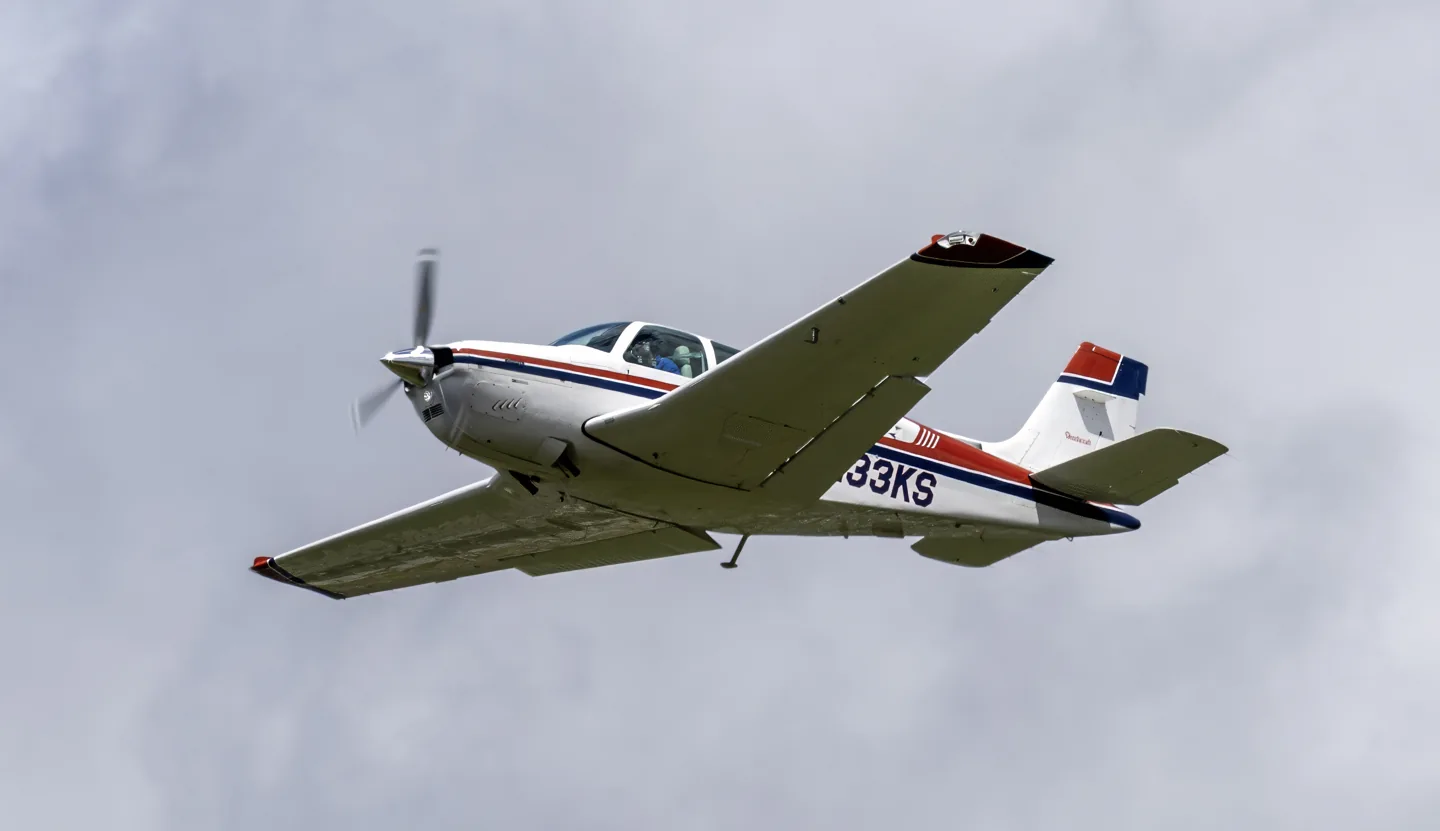
Beechcraft Bonanza familyAcroterion · CC BY-SA 4.0 · Beechcraft F33 Bonanza in flight; an example of the Bonanza family.

Beechcraft Bonanza family

A long-running touring single, familiar in both V-tail and conventional-tail forms.
General aviation20 opciones de perfil

Conoce el avión

The Bonanza appeared in 1947 as an all-metal aircraft with retractable landing gear. Its distinctive early V-tail became one of general aviation's best-known silhouettes. Conventional-tail versions also developed into a major branch of the family, including the longer Model 36.

Tail arrangement, fuselage and equipment distinguish the V35 and G36 branches. Simulator products range from conventional instruments to integrated glass cockpits.

Aircraft / family

Propulsion
Single piston↗
Configuration
V-tail and conventional-tail branches↗

Beechcraft Bonanza · Specifications (2011 model G36) · real aircraft; source units retained

Length
27 ft 6 in (8.38 m)↗
Wingspan
33 ft 6 in (10.21 m)↗
Height
8 ft 7 in (2.62 m)↗
Wing area
181 sq ft (16.8 m² )↗
Empty weight
2,517 lb (1,142 kg)↗
Gross weight
3,650 lb (1,656 kg)↗
Powerplant
1 × Continental IO-550-B , 300 hp (220 kW)↗
Propellers
three-bladed Hartzell Propeller , 6 ft 8 in (2.03 m) diameter↗
Cruise speed
176 kn (203 mph, 326 km/h)↗
Range
716 nmi (824 mi, 1,326 km) with full passenger load↗

Más sobre esta aeronave en AirframeDB

Postwar ideas, several tails

The original Model 35 combined a low wing, retractable tricycle landing gear and a V-tail in a fast personal aircraft. Its two tail surfaces combined pitch and yaw functions through ruddervators. Later Bonanzas also used conventional tails: the Model 33 began as the Debonair, while the longer Model 36 developed the family into a six-seat aircraft. “Bonanza” therefore describes a family with distinct layouts and equipment.

A first aircraft becomes a travelling companion

Ovad bought his F33A as a relatively new private pilot looking for an aircraft that could take him places. He started instrument training before collecting it, then spent the following years using it for both work and exploration. Interviewed after more than 600 hours of ownership, he valued the comfortable cabin and the flexibility of its additional tip-tank fuel. He sometimes flew long days and preferred economical reduced-power cruising to extracting the last few knots.

The Bonanza carried Ovad and his fiancée Deb Mathein to places including Nova Scotia, Belize and Colorado. Shorter trips took clients sightseeing or delivered urgently needed electrical supplies for his business. His attachment went hand in hand with close attention to maintenance: he tracked oil-analysis results and engine data, and found being without the aircraft during a propeller replacement particularly difficult. His range and operating experience concern his specifically equipped F33A.

Across the Pacific in a specially prepared A36TC

Cox ferried Barry Andrews' A36TC from California to Singapore after its owner accepted an overseas posting. Fuel shortages at intended Pacific stops forced a longer route through island destinations and northern Australia. The aircraft had additional ferry tanks, substantially more fuel than a standard Bonanza and a recently overhauled engine. Cox remembers the long ocean legs as hours of repetitive flying punctuated by the relief of seeing the next island.

Andrews joined him in Darwin for the final leg. With two people, luggage, ferry fuel and tropical heat, the overloaded aircraft climbed slowly, making the departure a very different experience from an ordinary lightly loaded demonstration. Later, Cox used the Stormscope while working around thunderstorms toward Singapore. After roughly 65 flying hours over a week, he delivered the Bonanza at Seletar. His account conveys both confidence in the aeroplane and his continuing awareness of the water beneath it; the special ferry configuration is essential context for the distances and handling he describes.

Around the world with Lucy

Maeda completed a six-week circumnavigation in June 2021 in Lucy, his 1963 P-model V-tail Bonanza. Speaking to David Tulis after returning to Washington, he recalled a journey complicated by fuel availability, altered routes, paperwork and pandemic restrictions. Weather added its own challenges, from desert dust to Russian fog and an encounter with icing. He also remembers the loneliness of parts of the trip and the help of a support network following his progress.

One particularly vivid memory was flying over Greenland alongside mentor Adrian Eichhorn in another Bonanza. Clear skies revealed an extraordinary landscape, but looking down at the glaciers also made Maeda intensely conscious of depending on a single engine. He found himself talking encouragingly to Lucy. Elsewhere, welcoming airport staff and strangers helped keep the mission moving. His account ends with a return to his family and a renewed appreciation for the people along the route, giving the long-distance Bonanza journey a distinctly personal scale.

Fuentes públicas 21
  1. Beechcraft BonanzaResearch background · Wikipedia revision 1372209707 · retrieved 2026-09-12
  2. Microsoft Flight Simulator aircraft manuals
  3. MSFS 2024 FAQ and edition aircraft inventory
  4. MSFS 2020 FAQ and edition aircraft inventory
  5. Bonanza ProfessionalOfficial developer / designated store catalogue · checked 2026-09-12
  6. Steam Gauge Overhaul - Analog BonanzaOfficial developer / designated store catalogue · checked 2026-09-12
  7. Thranda V35B Bonanza DGS+ SeriesOfficial developer / designated store catalogue · checked 2026-09-12
  8. F33A Bonanza DGS+ SeriesOfficial developer / designated store catalogue · checked 2026-09-12
  9. Reality Expansion Pack · PAE A36 BonanzaOfficial developer / designated store catalogue · checked 2026-09-12
  10. Reality Expansion Pack · PAE G36 BonanzaOfficial developer / designated store catalogue · checked 2026-09-12
  11. Reality Expansion Pack · Beech Bonanza F33AOfficial developer / designated store catalogue · checked 2026-09-12
  12. Reality Expansion Pack · Beech Bonanza V35BOfficial developer / designated store catalogue · checked 2026-09-12
  13. Famous Flyer III: Beechcraft Bonanza V352022-08-18 · release and package scope
  14. Bonanza F33A: Ticket to AdventureSeptember 1998 · David Ovad owner interview
  15. Singapore By BonanzaBill Cox · 26 May 2009
  16. Maeda completes circumnavigation in BonanzaDavid Tulis · 17 June 2021 · Shinji Maeda interview
  17. PAE Beechcraft Bonanza A36 -- Powered by the Reality ExpansiOfficial developer / designated-store reference · checked 2026-09-14
  18. PAE Beechcraft Bonanza G36 -- Powered by the Reality ExpansiOfficial developer / designated-store reference · checked 2026-09-14
  19. ICAO Doc 8643 — aircraft type designatorsPublic search data retrieved 2026-09-14; authority update 2026-09-03
  20. F33A MSFS2020 – CarenadoProduct listing captured 2026-09-23; edition scope from the reviewed catalogue
  21. F33A MSFS2024 – CarenadoProduct listing captured 2026-09-23; edition scope from the reviewed catalogue

Cómo lo modela el perfil

PAE / SimCoders Bonanza A36

Free + Pro
X-Plane 12PAE Addons

The Bonanza appeared in 1947 as an all-metal aircraft with retractable landing gear. Its distinctive early V-tail became one of general aviation's best-known silhouettes. Conventional-tail versions also developed into a major branch of the family, including the longer Model 36.

This profile selects PAE / SimCoders Bonanza A36 for X-Plane 12.

Spring resistance builds with the selected airspeed response. A separate aerodynamic term adds speed-dependent control load.

Valid trim provides the configured pressure relief. Autopilot following is off.

Controls and trim

Later A36/G36 Bonanzas use adjustable aileron trim tabs and an electromechanical retractable-gear system. The manufacturer's control-system material should not be replaced by an earlier throw-over-column trimmer description. Black Square separates normally aspirated, turbonormalized and turbine configurations; its Professional manual names KFC150 equipment but also uses Century IV wording in its FAQ. That unresolved label conflict does not establish an autopilot interface.

Operating ManualBeechcraft-authored G36 POH archived copyABS authored Bonanza controls/trim serial applicability

The selected implementation

PAE/REP A36 offers analog/G5/G500 with S-TEC55X/GFC500 options and separately licensed displays. Manufacturer/checklist evidence supports electromechanical gear despite conflicting product prose.

Beechcraft-authored G36 POH archived copyABS authored Bonanza controls/trim serial applicabilityA36 normal procedures and reference chartsA36 REP manualBeechcraft-authored Bonanza shop manualA36 native REP developer pagePAE Beechcraft Bonanza A36 -- Powered by the Reality Expansi

About the values

The gains are normalized profile settings. They describe the chosen effect balance; hand force depends on the device and its output limits. IAS references are tuning values rather than operating limits. Physical acceptance of this revision remains pending.

Master gain & control system

Master gain85%

La escala final de salida global aplicada a todo lo que produce el modelo, antes del tope del dispositivo.

Más: todo (muelle, cargas, efectos) se refuerza a la vez.

Menos: todo se suaviza a la vez.

Por qué aquí: Scales overall profile strength while preserving effect balance, subject to device and output limits.

Forces

Spring strength70%

La fuerza base de centrado que devuelve la palanca al centro. Todas las demás fuerzas se apilan sobre ella. Demasiado baja y la palanca se siente floja en vuelo normal; demasiado alta y lucha contra tu mano y enmascara las señales más pequeñas superpuestas.

Más: un centrado más firme que resiste más la mano.

Menos: una palanca más blanda que depende solo de la carga aerodinámica.

Por qué aquí: The selected reversible-control response accompanies the named Bonanza; engine conversion and panel options do not establish a new force law by themselves. The baseline spring is 0.7. Its low-speed blend reaches baseline strength at 75 KIAS.

Operating ManualBeechcraft-authored G36 POH archived copyABS authored Bonanza controls/trim serial applicability
Spring deadband4%

Una pequeña zona neutra alrededor del centro donde el muelle queda en silencio, para que los movimientos mínimos en reposo no traqueteen. Más ancha es más tranquila pero más suelta; más estrecha es más precisa pero puede vibrar en el centro.

Más: un centro más tranquilo pero más suelto, con más holgura.

Menos: un centro más apretado que puede vibrar en reposo.

Por qué aquí: Sets travel around the centre before the baseline spring resists. Smaller values engage it sooner.

Overall aerodynamic load65%

Una escala maestra sobre ambas cargas sostenidas de eje, aplicada antes de su equilibrio independiente. Los perfiles normalmente la dejan quieta y ajustan las dos cargas de eje.

Más: ambos ejes cargan más fuerte.

Menos: ambos ejes se aligeran a la vez.

Por qué aquí: The aerodynamic-load gain is 0.65 with an indicated-speed reference of 150 KIAS. This supplies speed-dependent loading alongside the spring.

Airspeed blendingTrue

Activa la ventana de acoplamiento del muelle a baja velocidad (nudos de inicio/pleno de arriba). Apagado, el muelle es constante a todas las velocidades.

Por qué aquí: Allows baseline spring strength to rise with indicated airspeed where the control law permits it.

Low-speed spring floor50%

Cuánto del muelle sobrevive con el avión parado, antes de que la velocidad pueda generar fuerza aerodinámica. Un suelo alto mantiene firme la palanca aparcada; uno bajo da la sensación suelta, de cables con holgura, de una avioneta estacionada.

Más: una palanca más firme aparcado y rodando.

Menos: una palanca floja aparcado que solo despierta con la velocidad.

Por qué aquí: Sets low-speed spring strength as a fraction of baseline when blending is enabled. One keeps full strength.

Spring engagement start20 kt

La velocidad a la que el muelle empieza a subir desde su suelo de baja velocidad hacia la fuerza plena: los mandos «cobrando vida» en la carrera de despegue.

Por qué aquí: Sets the IAS where the low-speed spring blend starts rising. This is a feel threshold, not a flight limit.

Spring engagement full75 kt

La velocidad a la que el muelle alcanza su fuerza plena. Entre el inicio y este punto, el centrado se endurece progresivamente a medida que el flujo de aire crece sobre los mandos.

Por qué aquí: Sets the IAS where the low-speed blend reaches baseline strength; high-speed stiffening also uses it.

Velocidad de ajuste de fuerza150

La velocidad indicada a la que la carga aerodinámica alcanza su nivel pleno de diseño. Ancla toda la curva de carga al rango real de velocidades del avión: un 172 carga hacia 110 nudos, un jet mucho después.

Más: las cargas llegan más tarde; la palanca sigue ligera hasta más velocidad.

Menos: las cargas llegan antes y el crucero pesa más.

Por qué aquí: Sets the IAS reference for aerodynamic loading. It is an estimate, not published cruise TAS or a flight limit.

Centre firmness vs speed15%

Cuánto se endurece el propio centrado con la velocidad, además de las cargas por deflexión. Cero mantiene constante la sensación de centro; más hace que la palanca centre más duro en crucero y más suelta en el circuito.

Más: un centro que endurece claramente con la velocidad.

Menos: una sensación de centro constante a cualquier velocidad.

Por qué aquí: The high-speed spring-stiffening gain is 0.15. It strengthens the permitted spring response above 75 KIAS, with the squared-speed ratio capped at 5.

Centre stiffening cap5

El límite superior del endurecimiento de centro por velocidad, para que el vuelo muy rápido no pueda tensar el muelle sin freno.

Más: más endurecimiento total permitido a alta velocidad.

Menos: el endurecimiento se corta antes.

Por qué aquí: Limits the squared airspeed ratio used for high-speed spring stiffening; it is not a device-force cap.

Aileron load78%

La carga sostenida de alabeo por deflexión de alerones y velocidad, equilibrada con independencia del cabeceo. Junto con la carga del timón de profundidad fija la relación de armonía de mandos de la que hablan las reseñas.

Más: esfuerzos de alabeo más pesados.

Menos: alerones más ligeros y vivos.

Por qué aquí: Roll and pitch aerodynamic scales are 0.78 and 1, respectively. They set the aerodynamic axis balance. No custom spring-travel curve is enabled.

Elevator load100%

La carga sostenida de cabeceo por deflexión del timón de profundidad y velocidad, equilibrada con independencia del alabeo. Es la palanca principal detrás del peso de cabeceo de un tipo. No toca alerones, muelle, compensador ni fuerzas de bataneo.

Más: esfuerzos sostenidos de cabeceo más pesados a velocidad.

Menos: una profundidad más ligera, con menos músculo que sostener.

Por qué aquí: Scales pitch aerodynamic loading; pitch spring travel and trim responses are separate settings.

Max output force55%

Un tope sobre cada fuerza estable de cabeceo o alabeo antes de llegar al dispositivo, protegiendo contra golpes o saturación del hardware en maniobras fuertes.

Más: picos de fuerza estable más altos antes del recorte.

Menos: un techo más suave; las maniobras duras se aplanan antes.

Por qué aquí: Caps directed-force output. Native spring effects and device limits remain separate.

Trim

Trim relief (elevator)25%

Con qué fuerza el compensador de profundidad alivia el esfuerzo de cabeceo mantenido y desplaza dónde se asienta la palanca. Al 100 %, un avión bien compensado no necesita presión mantenida: el flujo de trabajo de compensar la carga del vuelo real.

Más: el compensador quita más esfuerzo mantenido; al 100 %, compensado del todo lo anula.

Menos: sigues sosteniendo esfuerzo aun compensado.

Por qué aquí: Elevator trim and flight-adjustable aileron trim support separate pitch and roll relief. The profile's authorities remain selected approximations. Pitch authority 0.25 provides load relief and permitted centre movement; roll authority is 0.1.

Operating ManualBeechcraft-authored G36 POH archived copyABS authored Bonanza controls/trim serial applicability
Trim relief (aileron)10%

El mismo alivio para el compensador de alabeo. La mayoría de los tipos de aviación general no tienen compensador de alerones real, así que se queda a cero; los tipos con compensador de alabeo reciben un valor acorde.

Más: el compensador de alabeo quita más esfuerzo mantenido.

Menos: el compensador de alabeo hace menos.

Por qué aquí: Scales supported roll-trim relief and permitted centre movement. Zero removes roll response.

Effect gains · Ground

Runway rumble26%

Vibración de rodadura según la velocidad de las ruedas y el tipo de superficie: asfalto, hierba o grava bajo el tren.

Más: una textura de superficie más fuerte en la palanca.

Menos: un rodaje más liso.

Por qué aquí: Sets rolling texture strength, modified by speed, surface and undercarriage configuration.

Gear bumps18%

Golpes cortos y discretos de juntas de dilatación, surcos y superficie irregular, que puntúan el retumbo continuo.

Más: golpes más nítidos de juntas y surcos.

Menos: detalles de suelo más suaves.

Por qué aquí: Sets gear-bump texture during ground motion, separate from touchdown impact.

Effect gains · Airframe

Stall buffet23%

Sacudida de la célula al acercarse a la pérdida y mientras suena el aviso: cuán fuerte anuncia esta ala que está incómoda. Los tipos con entrada en pérdida seca reciben bataneo modesto y dejan que la bocina lleve el aviso.

Más: un temblor previo a la pérdida más fuerte.

Menos: un ala más discreta; la bocina lleva el aviso.

Por qué aquí: Sets stall-buffet strength. Zero removes the cue without changing simulator stalls or warnings.

Mach buffet0%

Bataneo transónico al acercarse al límite de Mach. Significativo para jets cerca de MMO, cero para pistones y turbohélices que nunca llegan.

Más: un bataneo transónico más fuerte cerca del límite de Mach.

Menos: un vuelo más liso a Mach alto.

Por qué aquí: Sets high-Mach buffet strength; onset and full-strength thresholds are separate.

Flap buffet0%

Vibración de baja frecuencia de la célula con los flaps extendidos al flujo, en la ventana de velocidad donde realmente trabajan el aire.

Más: un vuelo más áspero con flaps trabajando.

Menos: flaps de aproximación más suaves.

Por qué aquí: Sets flap buffet at the configured position and speed gates. Flap movement texture is separate.

Gear buffet4%

Tamborileo de la célula por el tren retráctil colgando en la corriente. Cero para tipos de tren fijo, donde la célula nunca cambia de forma.

Más: más tamborileo con el tren fuera.

Menos: un vuelo con tren fuera más limpio.

Por qué aquí: Sets gear aerodynamic buffet; movement and ground-contact cues are separate.

Stick shaker50%

El zumbido dedicado del stick shaker de pérdida, disparado por el propio sistema de aviso del avión. Solo los tipos con shaker real reciben un valor; el resto confía en el bataneo aerodinámico y la bocina.

Más: un shaker más duro.

Menos: un shaker más discreto.

Por qué aquí: Sets triggered shaker strength; inactive while the shaker feature is disabled.

Effect gains · Engine, mechanical & drag

Touchdown thump38%

El golpe único cuando las ruedas tocan la pista, escalado por la velocidad vertical: un aterrizaje fino susurra, una llegada firme golpea.

Más: un golpe más duro en la toma.

Menos: llegadas más suaves.

Por qué aquí: Sets landing-impact strength; landing telemetry and response shape determine the pulse.

Reverse rumble0%

Vibración de rodadura mientras trabajan la reversa o las hélices en rango beta. Cero para tipos sin reversa.

Más: un rodaje más áspero con reversa.

Menos: una reversa más discreta.

Por qué aquí: Sets reverse-thrust vibration with valid reverser and engine conditions. Zero removes the cue.

Engine rumble6%

Vibración continua del grupo motopropulsor siguiendo las RPM entre ralentí y plena potencia, el recordatorio siempre presente de que algo quema combustible delante.

Más: más motor en la palanca.

Menos: un motor más discreto.

Por qué aquí: Sets estimated engine vibration using configured telemetry and response, not measured cockpit vibration.

Flap motion4%

Vibración continua solo mientras el simulador informa de que las superficies de flap se mueven realmente. Sigue el movimiento y las averías reales del actuador, no un temporizador estimado.

Más: más vibración con los flaps en movimiento.

Menos: recorridos de flap más discretos.

Por qué aquí: Sets texture from observed flap movement; a command without movement does not establish the cue.

Autopilot follow

AP follow authority10%

Cuánto pueden mover físicamente la palanca las órdenes del piloto automático. Se mantiene minúsculo en MSFS, donde un eje movido puede leerse de vuelta como entrada del piloto; cero desactiva el seguimiento por completo.

Más: el piloto automático mueve tu palanca visiblemente más.

Menos: un seguimiento apenas perceptible.

Por qué aquí: Sets admitted AP-follow gain, not a percentage of travel. Runtime ownership and input limits still apply.

Stick feel

StickFeel · Trim feel enabledTrue

Whether this feature is active in this profile.

Por qué aquí: Retained for compatibility and group membership. Trim relief, rather than this flag, controls centre movement.

StickFeel · Trim relief enabledTrue

Whether this feature is active in this profile.

Por qué aquí: Allows trim relief with supported control law and valid telemetry. Axis authorities set its amount.

StickFeel · Force trim enabledFalse

Whether this feature is active in this profile.

Por qué aquí: Enables local force trim, separate from aircraft-owned trim and add-on integration qualification.

StickFeel · G load enabledTrue

Whether this feature is active in this profile.

Por qué aquí: Allows load-factor changes to modify permitted spring laws. Passive fly-by-wire feel can suppress it.

StickFeel · Rate damping enabledTrue

Whether this feature is active in this profile.

Por qué aquí: Enables rate damping with the configured coefficients and control law.

Autopilot

Autopilot · Follow enabledFalse

Whether this feature is active in this profile.

Por qué aquí: Autopilot following is off; the configured spring and load retain the hardware feel.

Autopilot · Neutral hold enabledFalse

Whether this feature is active in this profile.

Por qué aquí: Permits centering hold during a supported AP state, separate from following a moving target.

Autopilot · Neutral hold strength0.6

Por qué aquí: Sets admitted AP neutral-hold strength; inactive while neutral hold is disabled.

Aero

Aero · EnabledTrue

Whether this feature is active in this profile.

Por qué aquí: Enables aerodynamic cues; each still needs nonzero strength and its simulator conditions.

Aero · Max flap index2

Where this effect reaches full strength (or has fully faded, for washouts).

Más: a more gradual build to a later peak.

Menos: a quicker build.

Por qué aquí: Sets the final flap index for detent normalization. UP plus three detents uses maximum index3.

Aero · Min flap index2

Where this effect begins fading in.

Más: the effect begins later.

Menos: it begins earlier.

Por qué aquí: Sets the first flap detent that admits buffet; this is a handle index, not degrees.

Aero · Shaker enabledFalse

Whether this feature is active in this profile.

Por qué aquí: Permits shaker at supported warning conditions; the switch does not establish aircraft equipment.

Ground

Ground · EnabledTrue

Whether this feature is active in this profile.

Por qué aquí: Enables ground effects; each still needs its own strength and contact or motion telemetry.

Engine

Engine · EnabledTrue

Whether this feature is active in this profile.

Por qué aquí: Enables engine cues with nonzero settings and valid running-engine telemetry.

Mechanical

Mechanical · EnabledTrue

Whether this feature is active in this profile.

Por qué aquí: Enables accessory cues with configured strengths and observed accessory movement.

Mechanical · Gain0.05

The strength of this effect.

Más: a stronger effect.

Menos: a weaker one.

Por qué aquí: Sets texture from observed gear movement, separate from aerodynamic and touchdown effects.

Todos los ajustes del perfil
Ajustes estimados del perfil
ParámetroValorQué controla y por qué
Spring strength0.7 The selected reversible-control response accompanies the named Bonanza; engine conversion and panel options do not establish a new force law by themselves. The baseline spring is 0.7. Its low-speed blend reaches baseline strength at 75 KIAS.
Spring deadband0.045 Sets travel around the centre before the baseline spring resists. Smaller values engage it sooner.
Force gain0.65 The aerodynamic-load gain is 0.65 with an indicated-speed reference of 150 KIAS. This supplies speed-dependent loading alongside the spring.
Master gain0.85 Scales overall profile strength while preserving effect balance, subject to device and output limits.
Dynamic-pressure blendTrue Allows baseline spring strength to rise with indicated airspeed where the control law permits it.
Minimum spring factor0.5 Sets low-speed spring strength as a fraction of baseline when blending is enabled. One keeps full strength.
Spring wake-up speed20 ktSets the IAS where the low-speed spring blend starts rising. This is a feel threshold, not a flight limit.
Spring full-strength speed75 ktSets the IAS where the low-speed blend reaches baseline strength; high-speed stiffening also uses it.
Velocidad de ajuste de fuerza150 ktSets the IAS reference for aerodynamic loading. It is an estimate, not published cruise TAS or a flight limit.
Airspeed spring stiffening0.15 The high-speed spring-stiffening gain is 0.15. It strengthens the permitted spring response above 75 KIAS, with the squared-speed ratio capped at 5.
Airspeed stiffening cap5 Limits the squared airspeed ratio used for high-speed spring stiffening; it is not a device-force cap.
Aileron force scale0.78 Roll and pitch aerodynamic scales are 0.78 and 1, respectively. They set the aerodynamic axis balance. No custom spring-travel curve is enabled.
Elevator force scale1 Scales pitch aerodynamic loading; pitch spring travel and trim responses are separate settings.
Maximum output force0.55 Caps directed-force output. Native spring effects and device limits remain separate.
StickFeel · Trim feel enabledTrue Retained for compatibility and group membership. Trim relief, rather than this flag, controls centre movement.
StickFeel · Trim relief enabledTrue Allows trim relief with supported control law and valid telemetry. Axis authorities set its amount.
StickFeel · Elevator authority0.25 Elevator trim and flight-adjustable aileron trim support separate pitch and roll relief. The profile's authorities remain selected approximations. Pitch authority 0.25 provides load relief and permitted centre movement; roll authority is 0.1.
StickFeel · Aileron authority0.1 Scales supported roll-trim relief and permitted centre movement. Zero removes roll response.
StickFeel · Force trim enabledFalse Enables local force trim, separate from aircraft-owned trim and add-on integration qualification.
StickFeel · G load enabledTrue Allows load-factor changes to modify permitted spring laws. Passive fly-by-wire feel can suppress it.
StickFeel · Rate damping enabledTrue Enables rate damping with the configured coefficients and control law.
Autopilot · Follow enabledFalse Autopilot following is off; the configured spring and load retain the hardware feel.
Autopilot · Follow authority0.1 Sets admitted AP-follow gain, not a percentage of travel. Runtime ownership and input limits still apply.
Autopilot · Neutral hold enabledFalse Permits centering hold during a supported AP state, separate from following a moving target.
Autopilot · Neutral hold strength0.6 Sets admitted AP neutral-hold strength; inactive while neutral hold is disabled.
Aero · EnabledTrue Enables aerodynamic cues; each still needs nonzero strength and its simulator conditions.
Aero · Gain0.23 Sets stall-buffet strength. Zero removes the cue without changing simulator stalls or warnings.
Aero · Gain0 Sets high-Mach buffet strength; onset and full-strength thresholds are separate.
Aero · Gain0 Sets flap buffet at the configured position and speed gates. Flap movement texture is separate.
Aero · Max flap index2 Sets the final flap index for detent normalization. UP plus three detents uses maximum index3.
Aero · Min flap index2 Sets the first flap detent that admits buffet; this is a handle index, not degrees.
Aero · Gain0.045 Sets gear aerodynamic buffet; movement and ground-contact cues are separate.
Aero · Shaker enabledFalse Permits shaker at supported warning conditions; the switch does not establish aircraft equipment.
Aero · Amplitude0.5 Sets triggered shaker strength; inactive while the shaker feature is disabled.
Ground · EnabledTrue Enables ground effects; each still needs its own strength and contact or motion telemetry.
Ground · Gain0.26 Sets rolling texture strength, modified by speed, surface and undercarriage configuration.
Ground · Gain0.18 Sets gear-bump texture during ground motion, separate from touchdown impact.
Ground · Gain0.38 Sets landing-impact strength; landing telemetry and response shape determine the pulse.
Ground · Gain0 Sets reverse-thrust vibration with valid reverser and engine conditions. Zero removes the cue.
Engine · EnabledTrue Enables engine cues with nonzero settings and valid running-engine telemetry.
Engine · Gain0.06 Sets estimated engine vibration using configured telemetry and response, not measured cockpit vibration.
Mechanical · EnabledTrue Enables accessory cues with configured strengths and observed accessory movement.
Mechanical · Gain0.045 Sets texture from observed flap movement; a command without movement does not establish the cue.
Mechanical · Gain0.05 Sets texture from observed gear movement, separate from aerodynamic and touchdown effects.
Fuentes públicas 27
  1. Beechcraft BonanzaResearch background · Wikipedia revision 1372209707 · retrieved 2026-09-12
  2. Operating ManualBonanza Professional introduction, KFC150 section, B36TP supplement and FAQ pp.201-204
  3. Beechcraft-authored G36 POH archived copyG36 POH PDF pp269-270,275-276; older A36 applicability separately checked; G36 POH p55 speed table, , p161
  4. ABS authored Bonanza controls/trim serial applicabilityABS guide PDF pp23,41-42
  5. A36 normal procedures and reference chartsA36 PDF p35 / G36 p38; climb p10
  6. A36 REP manualA36 pp38-39/54/70-72; G36 pp38-39/51-53/69-71
  7. Beechcraft-authored Bonanza shop manualBeechcraft Bonanza family
  8. A36 native REP developer pageOfficial developer / designated store catalogue ·Official developer / designated store catalogue · checked 2026-09-12
  9. PAE Beechcraft Bonanza A36 -- Powered by the Reality ExpansiOfficial developer / designated-store reference ·Official developer / designated-store reference · checked 2026-09-14
  10. Microsoft Flight Simulator aircraft manuals
  11. MSFS 2024 FAQ and edition aircraft inventory
  12. MSFS 2020 FAQ and edition aircraft inventory
  13. Bonanza ProfessionalOfficial developer / designated store catalogue · checked 2026-09-12
  14. Steam Gauge Overhaul - Analog BonanzaOfficial developer / designated store catalogue · checked 2026-09-12
  15. Thranda V35B Bonanza DGS+ SeriesOfficial developer / designated store catalogue · checked 2026-09-12
  16. F33A Bonanza DGS+ SeriesOfficial developer / designated store catalogue · checked 2026-09-12
  17. Reality Expansion Pack · PAE G36 BonanzaOfficial developer / designated store catalogue · checked 2026-09-12
  18. Reality Expansion Pack · Beech Bonanza F33AOfficial developer / designated store catalogue · checked 2026-09-12
  19. Reality Expansion Pack · Beech Bonanza V35BOfficial developer / designated store catalogue · checked 2026-09-12
  20. Famous Flyer III: Beechcraft Bonanza V352022-08-18 · release and package scope
  21. Bonanza F33A: Ticket to AdventureSeptember 1998 · David Ovad owner interview
  22. Singapore By BonanzaBill Cox · 26 May 2009
  23. Maeda completes circumnavigation in BonanzaDavid Tulis · 17 June 2021 · Shinji Maeda interview
  24. PAE Beechcraft Bonanza G36 -- Powered by the Reality ExpansiOfficial developer / designated-store reference · checked 2026-09-14
  25. ICAO Doc 8643 — aircraft type designatorsPublic search data retrieved 2026-09-14; authority update 2026-09-03
  26. F33A MSFS2020 – CarenadoProduct listing captured 2026-09-23; edition scope from the reviewed catalogue
  27. F33A MSFS2024 – CarenadoProduct listing captured 2026-09-23; edition scope from the reviewed catalogue

Comunidad y correcciones

Si tu experiencia en el tipo dice que esta página se equivoca, corrígela aquí.

Correcciones de pilotos

¿Vuelas esta aeronave? Corrige esta página.

Esta página se construye con referencias citadas, y la experiencia real en el tipo vale más que una cita. Cita la afirmación errónea y cuéntanos qué hace la aeronave real. Las correcciones van al mantenedor para revisión y alimentan la próxima revisión de esta investigación.

Charla de hangar

Conversación abierta sobre volar y ajustar el Beechcraft Bonanza family, en el foro de la comunidad. Las correcciones de arriba van en privado al mantenedor; la charla de hangar es pública.

Aún no hay charla de hangar sobre el Beechcraft Bonanza family. Sé quien la empiece.

Comunidad

Perfiles de la comunidad para esta aeronave

Aún no hay perfiles de la comunidad para esta aeronave. ¿Lo ajustaste a tu manera? Comparte un perfil y aparecerá aquí.