FlugzeugbibliothekRobin DR400/100 Cadet
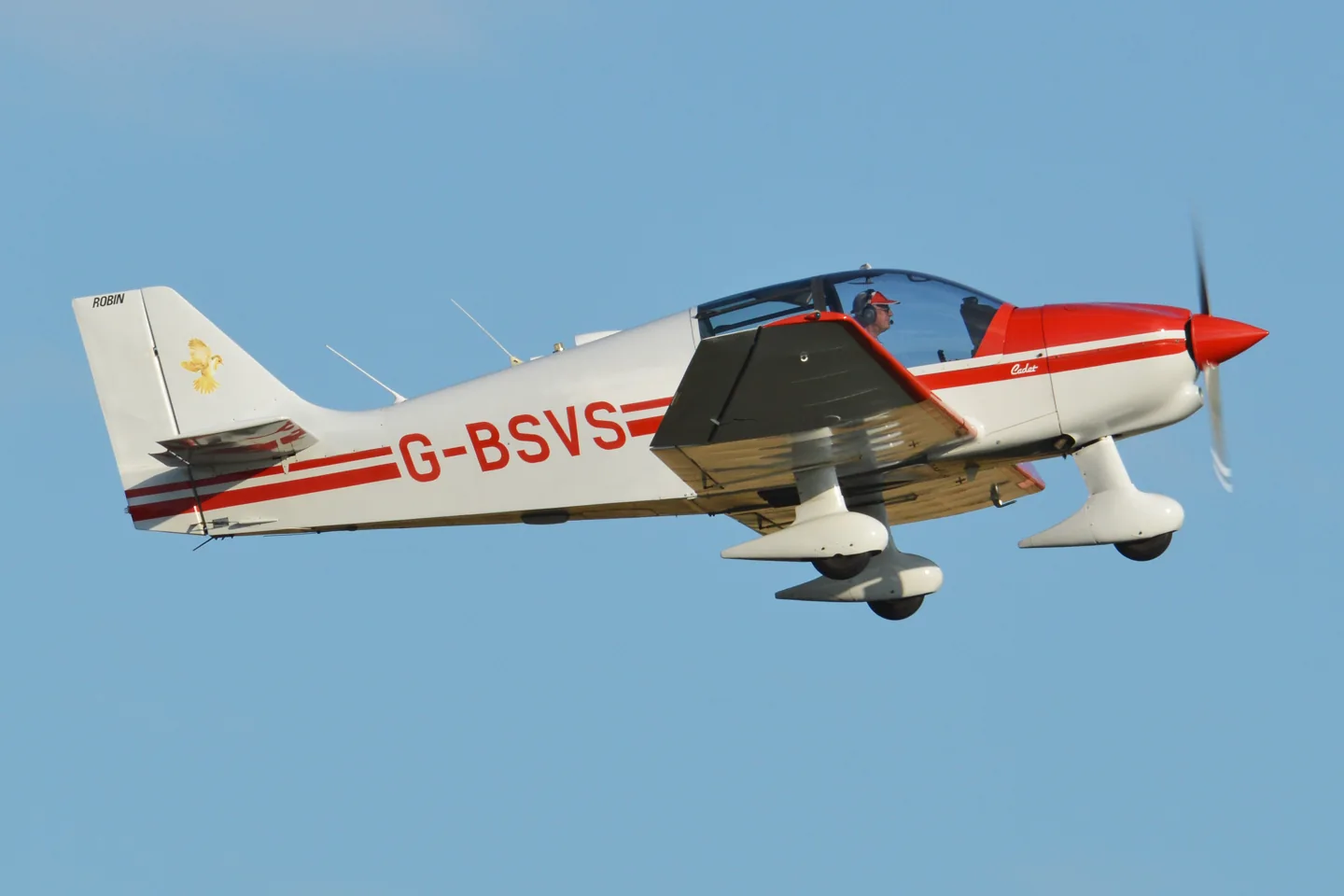
Robin DR400/100 CadetAlan Wilson from Stilton, Peterborough, Cambs, UK · CC BY-SA 2.0 · Robin DR400-100 Cadet ‘G-BSVS’.

Robin DR400/100 Cadet

A wooden touring-aircraft family recognisable by the upward-angled outer wing panels.
General aviation5 Profiloptionen

Kenne das Flugzeug

The wooden DR400 has a side-by-side cabin under a large canopy and outer wing panels angled upward. French flying clubs have used it widely for instruction and personal flying.

Engines and roles vary across the family, including towing versions. The DR400/100 Cadet is a lower-powered development; photographs and specifications of larger-engined Robins describe those versions.

Aircraft / family

Propulsion
Single piston↗
Configuration
Wooden structure · Cranked wing↗

Mehr über dieses Flugzeug auf AirframeDB

Production returns after the Apex closure

Borchert’s 2012 report describes Robin New Aircraft restarting production after Apex’s 2008 closure. It distinguishes that restart from the intervening support work: CEAPR had retained the type certificates and continued supplying parts.

A familiar glider tug gets a closer look

Unwin already knew the DR400 through glider towing, so this flight offered a chance to pay closer attention to an aircraft that was familiar in daily work. Departing Saltby in the Regent, he set out for a photographic flight with Steve Waddy’s Cessna 172. The late-afternoon meeting near the former RAF Cottesmore and the surrounding landscape gave the assessment a pleasant travelling setting.

Familiarity did not prevent him noticing small irritations. The harness arrangement and lack of an opening window mattered, and for formation work he preferred the more open view of the Remorqueur’s bubble canopy. Nevertheless, the older Regent remained a comfortable and enjoyable aircraft to fly, with the outing revealing details that ordinary towing duties could leave in the background.

An old club aircraft tries a different engine

Briand encountered a Robin with more than ten thousand hours behind it that nevertheless looked remarkably fresh after restoration. Nogaro Aviation’s Gilles Aurensan and Karine Baillou were exploring a different future for such club aircraft through a Rotax engine conversion. The quieter start and revised engine display made the change apparent before the flying began.

The report compares the converted Dauphin with a conventional Lycoming-powered club Robin, using loads chosen for a comparable two-person travelling mission. Briand found the lighter conversion more playful in its responses. The appeal lay in giving an established club aeroplane a new working life, while the prototype status and differing loads make this a particular development-stage comparison rather than a result for every DR400.

A hot-day flight attracts interest back at the airport

Borchert’s Ecoflyer flight began with a simple turn of the key, one of the diesel installation’s conspicuous differences from earlier Robins. With three people aboard on a hot day, he felt there was adequate power for the outing. In the air, he appreciated the direct stick controls and the wide view through the low window line.

The cabin still involved compromises, particularly in rear-seat legroom, and the report gives those practical details space alongside its enthusiasm. After returning, Borchert went to the airport restaurant and looked back to find people already gathering around the aircraft.

Öffentliche Quellen 12
  1. Robin DR400Research background · Wikipedia revision 1348740052 · retrieved 2026-09-12
  2. Microsoft Flight Simulator aircraft manuals
  3. MSFS 2024 FAQ and edition aircraft inventory
  4. MSFS 2020 FAQ and edition aircraft inventory
  5. Robin DR400 (X-Plane 12)Official developer / designated store catalogue · checked 2026-09-12
  6. Robin DR400 (X-Plane 11)Official developer / designated store catalogue · checked 2026-09-12
  7. Robin DR401Official developer / designated store catalogue · checked 2026-09-12
  8. Reality Expansion Pack · JustFlight Robin DR400Official developer / designated store catalogue · checked 2026-09-12
  9. Flight Test: Robin DR400/180Dave Unwin · 12 September 2018
  10. Robin DR400: Rotax 912 iS Sport flight testChristian Briand · web publication 5 December 2022; early conversion-prototype account
  11. Pilot Report: Robin Ecoflyer 2.0SThomas Borchert · 1 October 2012
  12. ICAO Doc 8643 — aircraft type designatorsPublic search data retrieved 2026-09-14; authority update 2026-09-03

Wie das Profil es modelliert

Robin DR401 CDI155

Free + Pro
MSFS 2020MSFS 2024X-Plane 12

A wooden touring-aircraft family recognisable by the upward-angled outer wing panels.

Spring resistance builds with the selected airspeed response. A separate aerodynamic term adds speed-dependent control load.

Valid trim provides the configured pressure relief. Autopilot following is off.

Diese genaue Revision wurde noch nicht für die öffentliche Installation freigegeben.

Aircraft and configuration

Fixed tricycle gear, Centurion CDI155 diesel/FADEC installation and electric flaps.

Related-model mechanical source is explicit, not exact155hand-force evidence.

Robin DR4011002853 Rev 1 Manuel de vol DR400 120 12 Oct 2018.pdfBEA2017 0504.en.pdf

About the values

Strengths are normalized hardware-feel settings. They set the effect balance; hand force depends on the device and its limits. The IAS reference is a tuning value.

Master gain & control system

Master gain85%

Die letzte Gesamtskalierung über alles, was das Modell erzeugt, vor der Gerätegrenze.

Mehr: alles (Feder, Lasten, Effekte) wird gemeinsam stärker.

Weniger: alles wird gemeinsam weicher.

Warum hier: Scales overall profile strength while preserving effect balance, subject to device and output limits.

Forces

Spring strength74%

Die Grundzentrierkraft, die den Stick zur Mitte zieht. Jede andere Kraft baut darauf auf. Zu niedrig fühlt sich der Stick im Normalflug schlaff an; zu hoch kämpft er gegen deine Hand und überdeckt die feineren Signale.

Mehr: festere Zentrierung, die der Hand jederzeit mehr widersteht.

Weniger: ein schlafferer Stick, der sich allein auf die aerodynamische Last stützt.

Warum hier: This profile uses reversible-control loading for Robin DR400/100 Cadet. The baseline spring is 0.74. Its low-speed blend reaches baseline strength at 65 KIAS.

Overall aerodynamic load80%

Ein Gesamtmaß über beide anhaltenden Achslasten, vor ihrer Einzelbalance angewendet. Profile lassen es normalerweise stehen und stimmen die beiden Achslasten ab.

Mehr: beide Achsen laden härter auf.

Weniger: beide Achsen werden gemeinsam leichter.

Warum hier: The aerodynamic-load gain is 0.8 with an indicated-speed reference of 120 KIAS. This supplies speed-dependent loading alongside the spring.

Elevator load100%

Die anhaltende Nicklast aus Höhenruderausschlag und Fahrt, unabhängig von der Rollachse balanciert. Der Haupthebel für das Nickgewicht eines Musters. Er verändert weder Querruder, Feder, Trimmung noch Schüttelkräfte.

Mehr: schwerere anhaltende Nickkräfte bei Fahrt.

Weniger: ein leichteres Höhenruder, das weniger Muskel braucht.

Warum hier: Scales pitch aerodynamic loading; pitch spring travel and trim responses are separate settings.

Aileron load75%

Die anhaltende Rolllast aus Querruderausschlag und Fahrt, unabhängig vom Nick balanciert. Zusammen mit der Höhenruderlast bestimmt sie die Ruderharmonie, von der Testberichte sprechen.

Mehr: schwerere Rollkräfte.

Weniger: leichtere, quirligere Querruder.

Warum hier: Roll and pitch aerodynamic scales are 0.75 and 1, respectively. They set the aerodynamic axis balance. No custom spring-travel curve is enabled.

Max output force55%

Eine Kappe je stetiger Nick- oder Rollkraft vor dem Gerät. Der Schutz davor, die Hardware in harten Manövern zu überfahren oder zu sättigen.

Mehr: stärkere Spitzenkräfte vor dem Abschneiden.

Weniger: eine sanftere Decke; harte Manöver flachen früher ab.

Warum hier: Caps directed-force output. Native spring effects and device limits remain separate.

Geschwindigkeit zur Kraftabstimmung120

Die angezeigte Fahrt, bei der die aerodynamische Last ihr ausgelegtes Vollniveau erreicht. Sie verankert die gesamte Lastkurve am realen Geschwindigkeitsbereich: eine 172 lädt bis 110 Knoten auf, ein Jet viel später.

Mehr: Lasten kommen später; der Stick bleibt bis zu höherer Fahrt leicht.

Weniger: Lasten kommen früher, und die Reise fühlt sich schwerer an.

Warum hier: Sets the IAS reference for aerodynamic loading. It is an estimate, not published cruise TAS or a flight limit.

Spring deadband4%

Eine kleine neutrale Zone um die Mitte, in der die Feder ruhig bleibt, damit kleinste Bewegungen im Stand nicht flattern. Breiter ist ruhiger, aber lockerer; enger ist präziser, kann aber um die Mitte zittern.

Mehr: eine ruhigere, aber lockerere Mitte mit mehr Spiel.

Weniger: eine straffere Mitte, die in Ruhe zittern kann.

Warum hier: Sets travel around the centre before the baseline spring resists. Smaller values engage it sooner.

Airspeed blendingTrue

Aktiviert das Niedrigfahrt-Einblendfenster der Feder (Beginn/Voll in Knoten oben). Aus bleibt die Feder bei jeder Fahrt konstant.

Warum hier: Allows baseline spring strength to rise with indicated airspeed where the control law permits it.

Low-speed spring floor55%

Wie viel Feder im Stillstand übrig bleibt, bevor Fahrt überhaupt aerodynamische Kraft aufbauen kann. Ein hoher Sockel hält den geparkten Stick straff; ein niedriger ergibt das lose Seilzuggefühl eines geparkten Leichtflugzeugs.

Mehr: ein festerer Stick beim Parken und Rollen.

Weniger: ein schlaffer geparkter Stick, der erst mit Fahrt aufwacht.

Warum hier: Sets low-speed spring strength as a fraction of baseline when blending is enabled. One keeps full strength.

Spring engagement start20 kt

Die Fahrt, ab der die Feder vom Niedrigfahrt-Sockel Richtung volle Stärke steigt: der Beginn des "Lebendigwerdens" der Ruder im Startlauf.

Warum hier: Sets the IAS where the low-speed spring blend starts rising. This is a feel threshold, not a flight limit.

Spring engagement full65 kt

Die Fahrt, bei der die Feder volle Stärke erreicht. Zwischen Beginn und diesem Punkt strafft sich die Zentrierung zunehmend mit der Anströmung.

Warum hier: Sets the IAS where the low-speed blend reaches baseline strength; high-speed stiffening also uses it.

Centre firmness vs speed15%

Wie stark sich die Zentrierung selbst mit der Fahrt strafft, zusätzlich zu den Ausschlaglasten. Null hält das Mittengefühl konstant; mehr lässt den Stick im Reiseflug härter und im Anflug lockerer zentrieren.

Mehr: eine Mitte, die mit Fahrt spürbar härter wird.

Weniger: konstantes Mittengefühl bei jeder Fahrt.

Warum hier: The high-speed spring-stiffening gain is 0.15. It strengthens the permitted spring response above 65 KIAS, with the squared-speed ratio capped at 5.

Centre stiffening cap5

Die Obergrenze der fahrtabhängigen Mittenstraffung, damit sehr hohe Fahrt die Feder nicht grenzenlos aufzieht.

Mehr: mehr Gesamtstraffung bei hoher Fahrt erlaubt.

Weniger: die Straffung klemmt früher ab.

Warum hier: Limits the squared airspeed ratio used for high-speed spring stiffening; it is not a device-force cap.

Trim

Trim relief (elevator)30%

Wie stark Höhenrudertrimmung die gehaltene Nickkraft abbaut und den Ruhepunkt des Sticks verschiebt. Bei 100 % braucht ein sauber getrimmtes Flugzeug keinen gehaltenen Druck: das Wegtrimmen der Last wie im echten Fliegen.

Mehr: Trimmung nimmt mehr der gehaltenen Nickkraft; bei 100 % nullt volle Trimmung sie.

Weniger: du hältst auch getrimmt weiter Kraft.

Warum hier: The profile uses the trim behaviour configured below. Pitch authority 0.3 provides load relief and permitted centre movement; roll authority is 0.

Trim relief (aileron)0%

Dieselbe Entlastung für Rolltrimmung. Die meisten GA-Muster haben keine echte Querrudertrimmung, daher bleibt sie bei null; Muster mit Rolltrimmung bekommen einen passenden Wert.

Mehr: Rolltrimmung nimmt mehr gehaltene Rollkraft.

Weniger: Rolltrimmung bewirkt weniger.

Warum hier: Scales supported roll-trim relief and permitted centre movement. Zero removes roll response.

Effect gains · Ground

Runway rumble40%

Rollende Untergrundvibration aus Radgeschwindigkeit und Oberflächenart: die Textur von Asphalt, Gras oder Schotter unter dem Fahrwerk.

Mehr: lautere Oberflächentextur durch den Stick.

Weniger: ruhigeres Rollen.

Warum hier: Sets rolling texture strength, modified by speed, surface and undercarriage configuration.

Gear bumps25%

Kurze einzelne Stöße von Dehnfugen, Spurrillen und rauem Belag: die Interpunktion über dem kontinuierlichen Rumpeln.

Mehr: schärfere Stöße von Fugen und Rillen.

Weniger: weichere Bodendetails.

Warum hier: Sets gear-bump texture during ground motion, separate from touchdown impact.

Effect gains · Airframe

Stall buffet35%

Zellenschütteln vor dem Überziehen und bei aktiver Überziehwarnung: wie laut diese Fläche ihr Unbehagen ankündigt. Muster mit sauberem Abriss bekommen moderates Schütteln, das Horn trägt die Warnung.

Mehr: lauteres Schütteln vor dem Überziehen.

Weniger: eine leisere Fläche; das Horn trägt die Warnung.

Warum hier: Sets stall-buffet strength. Zero removes the cue without changing simulator stalls or warnings.

Mach buffet0%

Transsonisches Schütteln nahe der Machgrenze. Relevant für Jets nahe MMO, null für Kolben und Turboprops, die nie dort ankommen.

Mehr: stärkeres transsonisches Schütteln nahe der Machgrenze.

Weniger: ruhigerer Flug bei hohem Mach.

Warum hier: Sets high-Mach buffet strength; onset and full-strength thresholds are separate.

Flap buffet0%

Niederfrequente Zellenvibration mit Klappen im Fahrtwind, im Fenster, in dem sie wirklich Luft arbeiten.

Mehr: ein rauerer Lauf mit arbeitenden Klappen.

Weniger: ruhigere Anflugklappen.

Warum hier: Sets flap buffet at the configured position and speed gates. Flap movement texture is separate.

Gear buffet0%

Zellentrommeln vom ausgefahrenen Einziehfahrwerk im Fahrtwind. Null für Festfahrwerke, deren Zelle nie die Form ändert.

Mehr: mehr Trommeln mit hängendem Fahrwerk.

Weniger: saubererer Flug mit Fahrwerk.

Warum hier: Sets gear aerodynamic buffet; movement and ground-contact cues are separate.

Stick shaker50%

Der dedizierte Stall-Stickshaker-Buzz, ausgelöst von der Überziehwarnanlage des Flugzeugs. Nur Muster mit echtem Shaker bekommen einen Wert; alle anderen verlassen sich auf Schütteln und Horn.

Mehr: ein härterer Shaker-Buzz.

Weniger: ein dezenterer Shaker.

Warum hier: Sets triggered shaker strength; inactive while the shaker feature is disabled.

Effect gains · Engine, mechanical & drag

Engine rumble12%

Kontinuierliche Triebwerksvibration, die der Drehzahl von Leerlauf bis Volllast folgt: die allgegenwärtige Erinnerung, dass vorn etwas Kraftstoff verbrennt.

Mehr: mehr Triebwerk im Stick.

Weniger: ein leiseres Triebwerk.

Warum hier: Gasoline Cadet engine assumptions, retracting-gear motion and reverse-thrust cues are excluded.

Touchdown thump65%

Der Einmalstoß beim Aufsetzen, skaliert mit der Sinkrate: ein Butterlander flüstert, ein fester Aufsetzer wummst.

Mehr: ein härterer Tritt beim Aufsetzen.

Weniger: weichere Ankünfte.

Warum hier: Sets landing-impact strength; landing telemetry and response shape determine the pulse.

Reverse rumble0%

Ausrollvibration bei Schubumkehr oder Beta-Verstellung. Null für Muster ohne Umkehr.

Mehr: ein rauerer Ausrollvorgang unter Umkehrschub.

Weniger: leisere Umkehr.

Warum hier: Sets reverse-thrust vibration with valid reverser and engine conditions. Zero removes the cue.

Flap motion12%

Dauervibration nur, solange der Simulator tatsächlich fahrende Klappenflächen meldet. Folgt echter Aktuatorbewegung und Ausfällen, keinem geschätzten Timer.

Mehr: mehr Vibration bei fahrenden Klappen.

Weniger: leisere Klappenläufe.

Warum hier: Sets texture from observed flap movement; a command without movement does not establish the cue.

Autopilot follow

AP follow authority10%

Wie weit Autopilotbefehle den physischen Stick bewegen dürfen. In MSFS winzig gehalten, weil eine bewegte Achse als Pilotene ingabe zurückgelesen werden kann; null schaltet das Folgen ab.

Mehr: der Autopilot bewegt deinen Stick sichtbar weiter.

Weniger: ein kaum wahrnehmbares Folgen.

Warum hier: Sets admitted AP-follow gain, not a percentage of travel. Runtime ownership and input limits still apply.

Mechanical

Mechanical · Gain0

The strength of this effect.

Mehr: a stronger effect.

Weniger: a weaker one.

Warum hier: Gasoline Cadet engine assumptions, retracting-gear motion and reverse-thrust cues are excluded.

Mechanical · EnabledTrue

Whether this feature is active in this profile.

Warum hier: Enables accessory cues with configured strengths and observed accessory movement.

Stick feel

StickFeel · Trim feel enabledFalse

Whether this feature is active in this profile.

Warum hier: Retained for compatibility and group membership. Trim relief, rather than this flag, controls centre movement.

StickFeel · Trim relief enabledTrue

Whether this feature is active in this profile.

Warum hier: Allows trim relief with supported control law and valid telemetry. Axis authorities set its amount.

StickFeel · Force trim enabledFalse

Whether this feature is active in this profile.

Warum hier: Enables local force trim, separate from aircraft-owned trim and add-on integration qualification.

StickFeel · G load enabledTrue

Whether this feature is active in this profile.

Warum hier: Allows load-factor changes to modify permitted spring laws. Passive fly-by-wire feel can suppress it.

StickFeel · Rate damping enabledTrue

Whether this feature is active in this profile.

Warum hier: Enables rate damping with the configured coefficients and control law.

Autopilot

Autopilot · Follow enabledFalse

Whether this feature is active in this profile.

Warum hier: Autopilot following is off; the configured spring and load retain the hardware feel.

Autopilot · Neutral hold enabledFalse

Whether this feature is active in this profile.

Warum hier: Permits centering hold during a supported AP state, separate from following a moving target.

Autopilot · Neutral hold strength0.6

Warum hier: Sets admitted AP neutral-hold strength; inactive while neutral hold is disabled.

Aero

Aero · EnabledTrue

Whether this feature is active in this profile.

Warum hier: Enables aerodynamic cues; each still needs nonzero strength and its simulator conditions.

Aero · Max flap index2

Where this effect reaches full strength (or has fully faded, for washouts).

Mehr: a more gradual build to a later peak.

Weniger: a quicker build.

Warum hier: Sets the final flap index for detent normalization. UP plus three detents uses maximum index3.

Aero · Min flap index2

Where this effect begins fading in.

Mehr: the effect begins later.

Weniger: it begins earlier.

Warum hier: Sets the first flap detent that admits buffet; this is a handle index, not degrees.

Aero · Shaker enabledFalse

Whether this feature is active in this profile.

Warum hier: Permits shaker at supported warning conditions; the switch does not establish aircraft equipment.

Ground

Ground · EnabledTrue

Whether this feature is active in this profile.

Warum hier: Enables ground effects; each still needs its own strength and contact or motion telemetry.

Engine

Engine · EnabledTrue

Whether this feature is active in this profile.

Warum hier: Enables engine cues with nonzero settings and valid running-engine telemetry.

Alle Profileinstellungen
Geschätzte Profileinstellungen
ParameterWertWas es steuert und warum
Spring strength0.74 This profile uses reversible-control loading for Robin DR400/100 Cadet. The baseline spring is 0.74. Its low-speed blend reaches baseline strength at 65 KIAS.
Force gain0.8 The aerodynamic-load gain is 0.8 with an indicated-speed reference of 120 KIAS. This supplies speed-dependent loading alongside the spring.
Elevator force scale1 Scales pitch aerodynamic loading; pitch spring travel and trim responses are separate settings.
Aileron force scale0.75 Roll and pitch aerodynamic scales are 0.75 and 1, respectively. They set the aerodynamic axis balance. No custom spring-travel curve is enabled.
Maximum output force0.55 Caps directed-force output. Native spring effects and device limits remain separate.
StickFeel · Elevator authority0.3 The profile uses the trim behaviour configured below. Pitch authority 0.3 provides load relief and permitted centre movement; roll authority is 0.
StickFeel · Aileron authority0 Scales supported roll-trim relief and permitted centre movement. Zero removes roll response.
Geschwindigkeit zur Kraftabstimmung120 ktSets the IAS reference for aerodynamic loading. It is an estimate, not published cruise TAS or a flight limit.
Engine · Gain0.12 Gasoline Cadet engine assumptions, retracting-gear motion and reverse-thrust cues are excluded.
Mechanical · Gain0 Gasoline Cadet engine assumptions, retracting-gear motion and reverse-thrust cues are excluded.
Spring deadband0.04 Sets travel around the centre before the baseline spring resists. Smaller values engage it sooner.
Master gain0.85 Scales overall profile strength while preserving effect balance, subject to device and output limits.
Dynamic-pressure blendTrue Allows baseline spring strength to rise with indicated airspeed where the control law permits it.
Minimum spring factor0.55 Sets low-speed spring strength as a fraction of baseline when blending is enabled. One keeps full strength.
Spring wake-up speed20 ktSets the IAS where the low-speed spring blend starts rising. This is a feel threshold, not a flight limit.
Spring full-strength speed65 ktSets the IAS where the low-speed blend reaches baseline strength; high-speed stiffening also uses it.
Airspeed spring stiffening0.15 The high-speed spring-stiffening gain is 0.15. It strengthens the permitted spring response above 65 KIAS, with the squared-speed ratio capped at 5.
Airspeed stiffening cap5 Limits the squared airspeed ratio used for high-speed spring stiffening; it is not a device-force cap.
StickFeel · Trim feel enabledFalse Retained for compatibility and group membership. Trim relief, rather than this flag, controls centre movement.
StickFeel · Trim relief enabledTrue Allows trim relief with supported control law and valid telemetry. Axis authorities set its amount.
StickFeel · Force trim enabledFalse Enables local force trim, separate from aircraft-owned trim and add-on integration qualification.
StickFeel · G load enabledTrue Allows load-factor changes to modify permitted spring laws. Passive fly-by-wire feel can suppress it.
StickFeel · Rate damping enabledTrue Enables rate damping with the configured coefficients and control law.
Autopilot · Follow enabledFalse Autopilot following is off; the configured spring and load retain the hardware feel.
Autopilot · Follow authority0.1 Sets admitted AP-follow gain, not a percentage of travel. Runtime ownership and input limits still apply.
Autopilot · Neutral hold enabledFalse Permits centering hold during a supported AP state, separate from following a moving target.
Autopilot · Neutral hold strength0.6 Sets admitted AP neutral-hold strength; inactive while neutral hold is disabled.
Aero · EnabledTrue Enables aerodynamic cues; each still needs nonzero strength and its simulator conditions.
Aero · Gain0.35 Sets stall-buffet strength. Zero removes the cue without changing simulator stalls or warnings.
Aero · Gain0 Sets high-Mach buffet strength; onset and full-strength thresholds are separate.
Aero · Gain0 Sets flap buffet at the configured position and speed gates. Flap movement texture is separate.
Aero · Max flap index2 Sets the final flap index for detent normalization. UP plus three detents uses maximum index3.
Aero · Min flap index2 Sets the first flap detent that admits buffet; this is a handle index, not degrees.
Aero · Gain0 Sets gear aerodynamic buffet; movement and ground-contact cues are separate.
Aero · Shaker enabledFalse Permits shaker at supported warning conditions; the switch does not establish aircraft equipment.
Aero · Amplitude0.5 Sets triggered shaker strength; inactive while the shaker feature is disabled.
Ground · EnabledTrue Enables ground effects; each still needs its own strength and contact or motion telemetry.
Ground · Gain0.4 Sets rolling texture strength, modified by speed, surface and undercarriage configuration.
Ground · Gain0.25 Sets gear-bump texture during ground motion, separate from touchdown impact.
Ground · Gain0.65 Sets landing-impact strength; landing telemetry and response shape determine the pulse.
Ground · Gain0 Sets reverse-thrust vibration with valid reverser and engine conditions. Zero removes the cue.
Engine · EnabledTrue Enables engine cues with nonzero settings and valid running-engine telemetry.
Mechanical · EnabledTrue Enables accessory cues with configured strengths and observed accessory movement.
Mechanical · Gain0.12 Sets texture from observed flap movement; a command without movement does not establish the cue.
Öffentliche Quellen 14
  1. Robin DR400Research background · Wikipedia revision 1348740052 · retrieved 2026-09-12
  2. Microsoft Flight Simulator aircraft manuals
  3. MSFS 2024 FAQ and edition aircraft inventory
  4. MSFS 2020 FAQ and edition aircraft inventory
  5. Robin DR400 (X-Plane 12)Official developer / designated store catalogue · checked 2026-09-12
  6. Robin DR400 (X-Plane 11)Official developer / designated store catalogue · checked 2026-09-12
  7. Robin DR401Official developer / designated store catalogue · checked 2026-09-12
  8. Reality Expansion Pack · JustFlight Robin DR400Official developer / designated store catalogue · checked 2026-09-12
  9. Flight Test: Robin DR400/180Dave Unwin · 12 September 2018
  10. Robin DR400: Rotax 912 iS Sport flight testChristian Briand · web publication 5 December 2022; early conversion-prototype account
  11. Pilot Report: Robin Ecoflyer 2.0SThomas Borchert · 1 October 2012
  12. ICAO Doc 8643 — aircraft type designatorsPublic search data retrieved 2026-09-14; authority update 2026-09-03
  13. 1002853 Rev 1 Manuel de vol DR400 120 12 Oct 2018.pdfRobin DR401 CDI155
  14. BEA2017 0504.en.pdfRobin DR401 CDI155

Community & Korrekturen

Wenn deine Erfahrung im Muster sagt, dass hier etwas falsch ist, korrigiere es hier.

Pilotenkorrekturen

Du fliegst dieses Muster? Korrigiere diese Seite.

Diese Seite basiert auf zitierten Quellen, und echte Erfahrung im Muster schlägt jedes Zitat. Zitiere die falsche Aussage und sag uns, was das echte Flugzeug tut. Korrekturen gehen zur Prüfung an den Maintainer und fließen in die nächste Fassung dieser Recherche ein.

Hangargespräche

Offene Unterhaltung über das Fliegen und Tunen der Robin DR400/100 Cadet, im Community-Forum. Korrekturen oben gehen privat an den Maintainer; Hangargespräche sind öffentlich.

Noch keine Hangargespräche zur Robin DR400/100 Cadet. Sei die erste Stimme.

Community

Community-Profile für dieses Luftfahrzeug

Noch keine Community-Profile für dieses Luftfahrzeug. Nach deinem Geschmack getunt? Teile ein Profil und es erscheint hier.