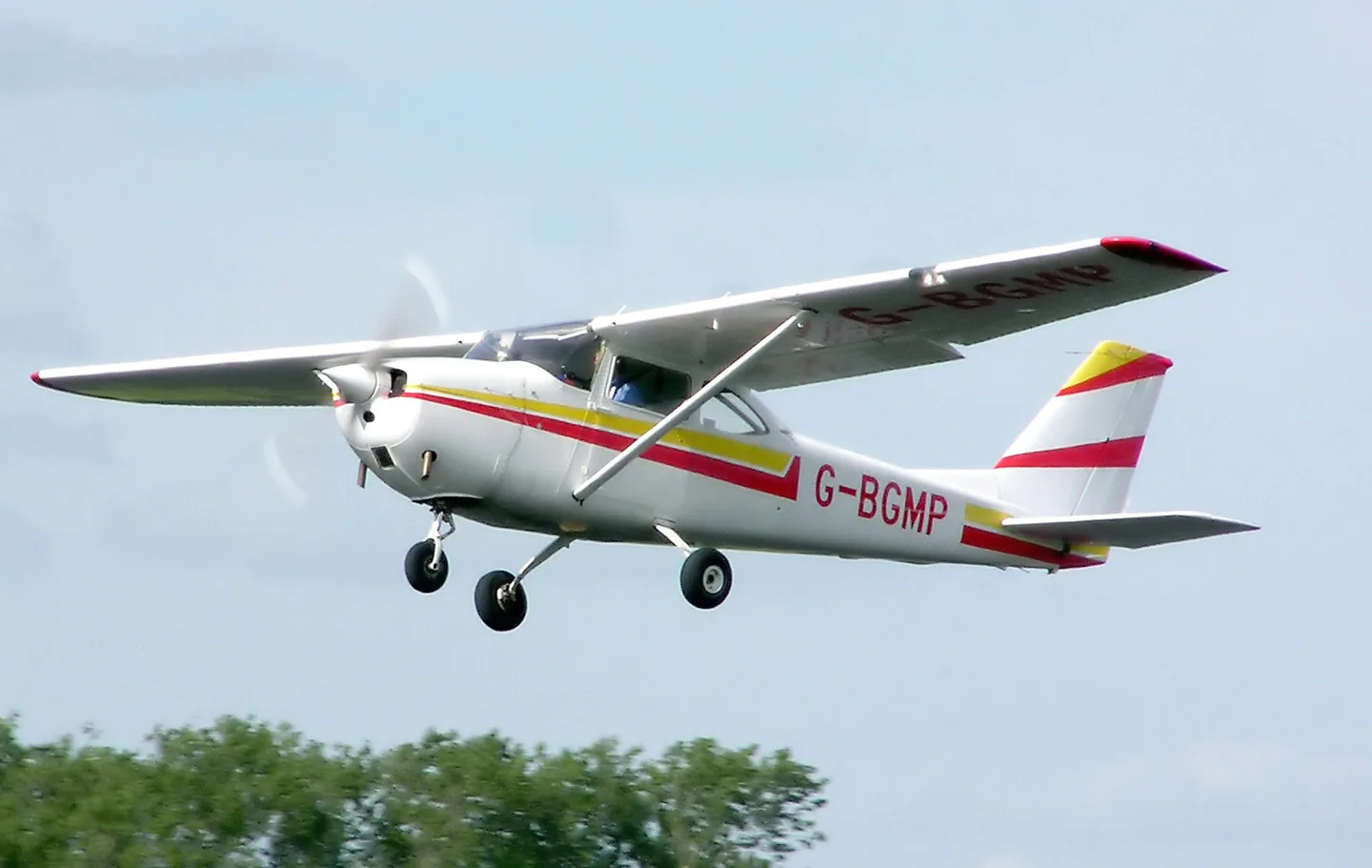
機型庫Cessna 172 Skyhawk
Cessna 172 SkyhawkAdrian Pingstone · Public domain · 1966 Reims F172G

Cessna 172 Skyhawk

Cable-operated yoke controls with airspeed-dependent resistance, pitch-trim relief and a stall-warning horn.
General aviationC172設定檔選項:27 個

瞭解飛機

The Skyhawk developed from the tailwheel Cessna 170, adopting tricycle landing gear. The first 172 flew in 1955. Its combination of a practical cabin, fixed undercarriage and straightforward layout helped make it a familiar aircraft for personal flying and instruction.

The 172's long history includes different engines, panels and equipment. That variety is especially visible in simulation: a conventional-instrument aircraft, a G1000-equipped version and an add-on with persistent maintenance systems offer different experiences despite sharing the same basic silhouette.

Cessna 172 Skyhawk (G1000)

Powerplant
Lycoming IO-360-L2A, 180 hp↗
Seats
4↗
Max takeoff weight
2,550 lb (1,157 kg)↗
Wingspan
36 ft 1 in (11.0 m)↗
Length
27 ft 2 in (8.28 m)↗
Never exceed (Vne)
163 KIAS↗
Max structural cruise (Vno)
129 KIAS↗
Maneuvering (Va)
105 KIAS at 2,550 lb↗
Stall, landing config (Vs0)
40 KCAS↗
Cruise
≈124 KTAS at 75% power↗
Service ceiling
14,000 ft↗
Usable fuel
53 US gal↗

在 AirframeDB 上了解這款航空器

A familiar shape that evolved

The 172 began with the tailwheel Cessna 170. Moving the third wheel to the nose helped create the aircraft that became familiar to generations of students. Its outline changed along the way: early examples had a straight fin, the swept fin arrived with the 172A, and the lowered rear fuselage and rear window followed with the 172D. A photograph of an early Skyhawk can therefore look surprisingly different from the training aircraft on a modern ramp.

Familiar controls, a different engine experience

Flying factory JT-A N688CS from San Marcos, Texas, Goyer immediately noticed how different the turbodiesel sounded. Its quieter whirr accompanied a climb that felt convincingly stronger than the earlier diesel Skyhawk the writer had evaluated. The cockpit also changed the pilot's relationship with the engine: one power lever requested output while electronic controls managed fuel and propeller settings. The report describes the Continental-powered JT-A and its Garmin NXi installation, rather than the conventional Lycoming-powered training aircraft that shares its silhouette.

Despite those changes, Goyer found the flight-control feel and most of the familiar Skyhawk flying manners intact. One difference appeared in landing: the demonstrator seemed inclined to float more when approach speed was not closely controlled. The writer suggested residual thrust as a possible explanation, explicitly as an interpretation.

Living with an early straight-tail 172

Davisson's account of Jim Landers's restored 1957 aircraft explains why an early 172 can feel different before it even leaves the ground. The low instrument panel and more upright seating create an unusually open view over the nose. He describes the six-cylinder Continental as smoother than the later Lycomings and finds the aircraft's familiar, approachable character already present in this early version. Landers had moved up from a Cessna 150 chiefly to gain useful space for travelling with his wife and their baggage.

That extra space did not mean treating every seat as routinely available. Operating in Arizona, Landers generally used the aircraft as a two-person tourer and took high density altitude seriously when deciding on a load. His account also includes the less glamorous side of ownership: an engine failure inside the crankcase led to a rebuild, and the polished finish required considerable labour.

A student’s view of the glass-panel Skyhawk

For Cox's 2009 review, student pilot Peggy Herrera offered a perspective quite different from a veteran test pilot's. She had been able to try a varied group of aircraft and was training in a recent, air-conditioned Skyhawk with Garmin G1000 instruments. What she appreciated most was the aircraft's unhurried response: gentle control behaviour, effective flaps and low speeds in the circuit left her time to understand what was happening. That mattered particularly while she was learning to land.

Her principal difficulty lay in the panel rather than the airframe. The G1000 initially felt overwhelming until its organisation began to make sense, and the tall instrument panel could restrict the view for a shorter pilot despite the adjustable seat. Cox set those observations alongside his own experience in numerous Skyhawks, including long trips, and described the model's appeal as a balance of useful qualities.

公開來源 34
  1. Cessna 172Research background · Wikipedia revision 1374422697 · retrieved 2026-09-12
  2. Microsoft Flight Simulator aircraft manuals
  3. MSFS 2024 FAQ and edition aircraft inventory
  4. MSFS 2020 FAQ and edition aircraft inventory
  5. Cessna 172 SP POH
  6. X-Plane 12 Desktop Manual
  7. X-Plane aircraft and avionics manuals
  8. X-Plane 11 Desktop Manual
  9. C172 DigitalOfficial developer / designated store catalogue · checked 2026-09-12
  10. Cessna 172: Everyman’s AirplaneAOPA Pilot, May 1992: a retrospective on the real Skyhawk.
  11. Cessna 172M DGS series XP12Official developer / designated store catalogue · checked 2026-09-12
  12. C172 NG AnalogOfficial developer / designated store catalogue · checked 2026-09-12
  13. Reality Expansion Pack · Default XP11/12 Cessna 172SPOfficial developer / designated store catalogue · checked 2026-09-12
  14. Turbodiesel Cessna 172 JT-AIsabel Goyer · 12 March 2018. Continental CD-155-powered factory JT-A, N688CS. Byline as currently published.
  15. Cessna C172 (1957) pilot report: Straight Tail TaleBudd Davisson, with owner Jim Landers · Undated hosted article about Jim Landers’s 1957 Cessna 172. Historical owner and writer observations; not current operating advice.
  16. 2009 Cessna 172S: Skyhawk in Year 53Peggy Herrera, interviewed by Bill Cox · 24 March 2009. Herrera’s training in a 2008 G1000-equipped Skyhawk, interviewed within Cox’s 172S review.
  17. C172 NG DIGITAL-airfoillabs-C172NGOfficial developer / designated-store reference · checked 2026-09-14
  18. C172 NG ANALOG XP12-airfoillabs-C172NGAOfficial developer / designated-store reference · checked 2026-09-14
  19. Cessna 172SP Skyhawk XP11-airfoillabs-C172SPOfficial developer / designated-store reference · checked 2026-09-14
  20. ICAO Doc 8643 — aircraft type designatorsPublic search data retrieved 2026-09-14; authority update 2026-09-03
  21. FAA JO 7360.1K — aircraft type designatorsActive FAA order; checked 2026-09-14
  22. C172 Amphibian current productProduct listing captured 2026-09-24; edition scope from the reviewed catalogue
  23. C172 Bushkit current productProduct listing captured 2026-09-24; edition scope from the reviewed catalogue
  24. C172 Taildragger current productProduct listing captured 2026-09-24; edition scope from the reviewed catalogue
  25. C172M current productProduct listing captured 2026-09-24; edition scope from the reviewed catalogue
  26. C172SP AS1000 improvement current productProduct listing captured 2026-09-24; edition scope from the reviewed catalogue
  27. FR172 Reims Rocket / R172 Hawk XP II current productProduct listing captured 2026-09-24; edition scope from the reviewed catalogue
  28. C172 MSFS2020 – CarenadoProduct listing captured 2026-09-23; edition scope from the reviewed catalogue
  29. C172 MSFS2024 – CarenadoProduct listing captured 2026-09-23; edition scope from the reviewed catalogue
  30. WBSim C172SP current changes and interface documentation scopeProduct listing captured 2026-09-24; edition scope from the reviewed catalogue
  31. C-172S, C-172R, C-172M/N Enhanced Flight ModelsProduct listing captured 2026-09-24; edition scope from the reviewed catalogue
  32. Cessna 172S POH; FAA TCDS 3A12紙質或存檔參考資料;無公開連結
  33. Cessna 172S POH紙質或存檔參考資料;無公開連結
  34. FAA TCDS 3A12紙質或存檔參考資料;無公開連結

設定檔如何建模

Cessna 172 Skyhawk G1000

Free + Pro
MSFS 2024MSFS 2020X-Plane 12X-Plane 11

The Skyhawk developed from the tailwheel Cessna 170, adopting tricycle landing gear. The first 172 flew in 1955. Its combination of a practical cabin, fixed undercarriage and straightforward layout helped make it a familiar aircraft for personal flying and instruction.

The factory starting point selects Cessna 172 Skyhawk G1000 across MSFS 2024, MSFS 2020, X-Plane 12, X-Plane 11.

Spring resistance builds with the selected airspeed response. A separate aerodynamic term adds speed-dependent control load.

Valid trim provides the configured pressure relief. Autopilot following is enabled for supported control references.

此確切修訂版尚未開放公開安裝。

Controls and trim

C172 manuals describe mechanical cables and linkages operating the primary controls and an elevator trim tab operated from the cockpit wheel. Published handling accounts describe greater elevator effort than aileron effort and hands-off stability after trimming. These are qualitative accounts, not one fixed ratio for every Skyhawk or loading condition. Engine upgrades, float kits, taildragger conversions and analog or glass panels retain their own simulator scope.

Cessna-authored 172S POH preserved by aircraft operator; verify avionics and revisionCessna 172M manufacturer POHCessna 172 SkyhawkCessna 172 Skyhawk

About the values

The gains are normalized profile settings. They describe the chosen effect balance; hand force depends on the device and its output limits. IAS references are tuning values rather than operating limits. Physical acceptance of this revision remains pending.

Master gain & control system

Master gain85%

施加於模型產出的一切、在裝置上限之前的最終整體輸出縮放。

調高: 一切(彈簧、載荷、效果)一同增強。

調低: 一切一同變柔。

設定理由: Scales overall profile strength while preserving effect balance, subject to device and output limits.

Forces

Spring strength82%

把搖桿拉回中央的基礎回中力。其他所有力都疊加在它之上。太低,正常飛行中搖桿會發軟;太高,它會與你的手較勁,並掩蓋疊加其上的細微提示。

調高: 更硬的回中,更抗手。

調低: 更軟的桿,只靠氣動載荷。

設定理由: Mechanical controls and published pitch-heavy handling motivate speed-dependent yoke resistance and a separately selected roll balance. The baseline spring is 0.82. Its low-speed blend reaches baseline strength at 55 KIAS.

Cessna-authored 172S POH preserved by aircraft operator; verify avionics and revisionCessna 172M manufacturer POHCessna 172 SkyhawkCessna 172 Skyhawk
Spring deadband4%

中央附近彈簧保持安靜的小中立區,讓靜止時的微小移動不會咔嗒作響。更寬更安穩但更松,更窄更精確但可能在中央附近抖動。

調高: 更安靜但更松的中央,曠量更大。

調低: 更緊的中央,靜止時可能抖動。

設定理由: Sets travel around the centre before the baseline spring resists. Smaller values engage it sooner.

Forces · Center starting force0

設定理由: Adds smoothly ramped resistance outside the centre deadband. Zero removes this preload.

Overall aerodynamic load80%

作用於兩條持續軸載荷的主縮放,在它們各自的獨立平衡之前施加。設定檔通常不動它,而是調校兩條軸載荷。

調高: 兩軸載荷一同加重。

調低: 兩軸一同減輕。

設定理由: The aerodynamic-load gain is 0.8 with an indicated-speed reference of 110 KIAS. This supplies speed-dependent loading alongside the spring.

Spring engagement full55 kt

彈簧達到全強度的空速。從起點到這裡,隨著氣流在操縱面上增強,回中逐漸變硬。

設定理由: Sets the IAS where the low-speed blend reaches baseline strength; high-speed stiffening also uses it.

Centre firmness vs speed15%

在偏轉載荷之外,回中本身隨速度變硬的程度。零則中央手感恆定;越大,巡航時回中越硬,起落航線上越松。

調高: 中央隨速度明顯變硬。

調低: 任何速度下中央手感恆定。

設定理由: The high-speed spring-stiffening gain is 0.15. It strengthens the permitted spring response above 55 KIAS, with the squared-speed ratio capped at 5.

Centre stiffening cap5

速度驅動的中央變硬上限,防止高速飛行把彈簧無限上緊。

調高: 高速允許更多總硬化。

調低: 硬化更早封頂。

設定理由: Limits the squared airspeed ratio used for high-speed spring stiffening; it is not a device-force cap.

Aileron load65%

由副翼偏轉和空速產生的持續橫滾載荷,獨立於俯仰調校。與升降舵載荷一起,決定評測中常說的操縱協調比。

調高: 橫滾力更重。

調低: 副翼更輕更靈。

設定理由: Roll and pitch aerodynamic scales are 0.65 and 1, respectively. They set the aerodynamic axis balance. No custom spring-travel curve is enabled.

Elevator load100%

由升降舵偏轉和空速產生的持續俯仰載荷,獨立於橫滾調校。這是決定機型俯仰重量的主槓桿。它不影響副翼、彈簧、配平或抖振力。

調高: 速度下持續俯仰力更重。

調低: 升降舵更輕,握持更省力。

設定理由: Scales pitch aerodynamic loading; pitch spring travel and trim responses are separate settings.

Max output force55%

每個穩態俯仰或橫滾力到達裝置前的上限,防止猛烈機動中砸擊或飽和硬體。

調高: 削波前更高的穩態力峰值。

調低: 更柔的上限;猛烈機動更早被抹平。

設定理由: Caps directed-force output. Native spring effects and device limits remain separate.

Forces · Center starting force transition0.05

設定理由: Sets the travel used to ramp in centre preload. Wider intervals make its onset more gradual.

Airspeed blendingTrue

啟用低速彈簧介入視窗(上面的起始/全強度節數)。關閉時彈簧在所有速度下恆定。

設定理由: Allows baseline spring strength to rise with indicated airspeed where the control law permits it.

Low-speed spring floor50%

在靜止、空速尚未產生氣動力之前,彈簧還剩多少。下限高,停機時搖桿結實;下限低,則是停放輕型飛機那種鋼索鬆弛的感覺。

調高: 停機和滑行時桿更結實。

調低: 停機時桿發軟,只隨速度甦醒。

設定理由: Sets low-speed spring strength as a fraction of baseline when blending is enabled. One keeps full strength.

Spring engagement start15 kt

彈簧從低速下限開始向全強度攀升的空速:起飛滑跑中操縱面"甦醒"的那一刻。

設定理由: Sets the IAS where the low-speed spring blend starts rising. This is a feel threshold, not a flight limit.

力回饋調校速度110

氣動載荷達到設計滿值的指示空速。它把整條載荷曲線錨定在飛機真實的速度範圍:172在110節就載滿,噴氣機要晚得多。

調高: 載荷來得更晚;桿輕到更高速度。

調低: 載荷來得更早,巡航更沉。

設定理由: Sets the IAS reference for aerodynamic loading. It is an estimate, not published cruise TAS or a flight limit.

Trim

Trim relief (elevator)30%

升降舵配平緩解持續俯仰力、移動桿的安定位置的強度。在100 %時,配平得當的飛機不需要保持壓力——正是真實飛行中"用配平消掉載荷"的流程。

調高: 配平消掉更多持續力;100 %時滿配平可完全抵消。

調低: 即使配平也仍要持續用力。

設定理由: The elevator trim tab supports pitch-load relief. A ground-adjustable rudder tab is not a pilot-operated aileron-trim signal. Pitch authority 0.3 provides load relief and permitted centre movement; roll authority is 0.

Cessna-authored 172S POH preserved by aircraft operator; verify avionics and revisionCessna 172M manufacturer POHCessna 172 SkyhawkCessna 172 Skyhawk
Trim relief (aileron)0%

橫滾配平的同類緩解。多數通航機型沒有真正的副翼配平,所以保持為零;有橫滾配平的機型獲得相應的值。

調高: 橫滾配平消掉更多持續力。

調低: 橫滾配平作用更小。

設定理由: Scales supported roll-trim relief and permitted centre movement. Zero removes roll response.

Effect gains · Ground

Runway rumble40%

由輪速和地面型別(鋪裝、草地、礫石)產生的滾動振動。

調高: 桿上更強的地面質感。

調低: 更平滑的滑行。

設定理由: Sets rolling texture strength, modified by speed, surface and undercarriage configuration.

Gear bumps25%

來自伸縮縫、車轍和粗糙地面的短促離散顛簸,為持續隆隆聲打上標點。

調高: 接縫與車轍的衝擊更清晰。

調低: 更柔的地面細節。

設定理由: Sets gear-bump texture during ground motion, separate from touchdown impact.

Effect gains · Airframe

Stick shaker50%

由飛機自身失速警告系統觸發的專用抖桿器振動。只有真有抖桿器的機型才有值;其餘全靠氣動抖振和喇叭。

調高: 更硬的抖桿器。

調低: 更含蓄的抖桿器。

設定理由: Sets triggered shaker strength; inactive while the shaker feature is disabled.

Stall buffet35%

接近失速及失速警告響起時的機體抖動:這副機翼宣告不滿的音量。斷失乾脆的機型抖振收斂,讓喇叭承擔警告。

調高: 更強的失速前顫抖。

調低: 更含蓄的機翼;警告交給喇叭。

設定理由: Sets stall-buffet strength. Zero removes the cue without changing simulator stalls or warnings.

Mach buffet0%

接近馬赫極限的跨音速抖振。對接近MMO的噴氣機有意義,對到不了那裡的活塞機和渦槳機為零。

調高: 接近馬赫極限時更強的跨音速抖振。

調低: 高馬赫下更平滑的飛行。

設定理由: Sets high-Mach buffet strength; onset and full-strength thresholds are separate.

Flap buffet18%

襟翼伸入氣流後機體的低頻振動,發生在它們真正做功的速度視窗內。

調高: 襟翼做功時更粗糙的飛行。

調低: 更柔的進近襟翼。

設定理由: Sets flap buffet at the configured position and speed gates. Flap movement texture is separate.

Gear buffet0%

可收放起落架懸在氣流中引起的機體鼓振。固定起落架機型為零,它們的機體外形從不改變。

調高: 放起落架時更多鼓振。

調低: 放起落架飛行更乾淨。

設定理由: Sets gear aerodynamic buffet; movement and ground-contact cues are separate.

Effect gains · Engine, mechanical & drag

Touchdown thump65%

機輪觸及跑道那一下的單次衝擊,按下沉率縮放:輕柔著陸是耳語,結實到達是一記悶響。

調高: 觸地時更硬的一擊。

調低: 更柔的到達。

設定理由: Sets landing-impact strength; landing telemetry and response shape determine the pulse.

Reverse rumble0%

反推或槳葉beta區工作時的滑跑振動。無反推機型為零。

調高: 反推下更粗糙的滑跑。

調低: 更含蓄的反推。

設定理由: Sets reverse-thrust vibration with valid reverser and engine conditions. Zero removes the cue.

Engine rumble20%

從慢車到全功率跟隨轉速的持續動力裝置振動——前方有東西在燒油的永恆提醒。

調高: 桿裡更多引擎。

調低: 更含蓄的引擎。

設定理由: Sets estimated engine vibration using configured telemetry and response, not measured cockpit vibration.

Flap motion12%

僅在模擬器報告襟翼舵面確實移動時的持續振動。它跟隨真實作動器的運動和故障,而非估算的計時器。

調高: 襟翼移動中更多振動。

調低: 更含蓄的襟翼行程。

設定理由: Sets texture from observed flap movement; a command without movement does not establish the cue.

Autopilot follow

AP follow authority10%

自動駕駛指令可以讓桿實際移動多遠。在MSFS中保持極小,因為移動的軸可能被讀回為飛行員輸入;零則完全停用跟隨。

調高: 自動駕駛讓你的桿移動得明顯更多。

調低: 幾乎察覺不到的跟隨。

設定理由: Sets admitted AP-follow gain, not a percentage of travel. Runtime ownership and input limits still apply.

Autopilot

Autopilot · Follow enabledTrue

Whether this feature is active in this profile.

設定理由: Following is on at 0.1 authority when a supported, valid autopilot control reference is available.

Autopilot · Neutral hold enabledFalse

Whether this feature is active in this profile.

設定理由: Permits centering hold during a supported AP state, separate from following a moving target.

Autopilot · Neutral hold strength0.6

設定理由: Sets admitted AP neutral-hold strength; inactive while neutral hold is disabled.

Stick feel

StickFeel · Trim feel enabledTrue

Whether this feature is active in this profile.

設定理由: Retained for compatibility and group membership. Trim relief, rather than this flag, controls centre movement.

StickFeel · Trim relief enabledTrue

Whether this feature is active in this profile.

設定理由: Allows trim relief with supported control law and valid telemetry. Axis authorities set its amount.

StickFeel · Force trim enabledFalse

Whether this feature is active in this profile.

設定理由: Enables local force trim, separate from aircraft-owned trim and add-on integration qualification.

StickFeel · G load enabledTrue

Whether this feature is active in this profile.

設定理由: Allows load-factor changes to modify permitted spring laws. Passive fly-by-wire feel can suppress it.

StickFeel · Rate damping enabledTrue

Whether this feature is active in this profile.

設定理由: Enables rate damping with the configured coefficients and control law.

Aero

Aero · Max flap index3

Where this effect reaches full strength (or has fully faded, for washouts).

調高: a more gradual build to a later peak.

調低: a quicker build.

設定理由: Sets the final flap index for detent normalization. UP plus three detents uses maximum index3.

Aero · Min flap index2

Where this effect begins fading in.

調高: the effect begins later.

調低: it begins earlier.

設定理由: Sets the first flap detent that admits buffet; this is a handle index, not degrees.

Aero · EnabledTrue

Whether this feature is active in this profile.

設定理由: Enables aerodynamic cues; each still needs nonzero strength and its simulator conditions.

Aero · Shaker enabledFalse

Whether this feature is active in this profile.

設定理由: Permits shaker at supported warning conditions; the switch does not establish aircraft equipment.

Spring response

SpringResponse · Travel enabledFalse

Whether this feature is active in this profile.

設定理由: Applies the configured pitch and roll spring travel curves.

SpringResponse · Output1

設定理由: Sets response at the second pitch-curve point; it is an endpoint only if its input position is full travel.

SpringResponse · Output1

設定理由: Sets response at the second roll-curve point; its input position and other points determine the travel law.

Ground

Ground · EnabledTrue

Whether this feature is active in this profile.

設定理由: Enables ground effects; each still needs its own strength and contact or motion telemetry.

Engine

Engine · EnabledTrue

Whether this feature is active in this profile.

設定理由: Enables engine cues with nonzero settings and valid running-engine telemetry.

Mechanical

Mechanical · EnabledTrue

Whether this feature is active in this profile.

設定理由: Enables accessory cues with configured strengths and observed accessory movement.

Mechanical · Gain0

The strength of this effect.

調高: a stronger effect.

調低: a weaker one.

設定理由: Sets texture from observed gear movement, separate from aerodynamic and touchdown effects.

全部設定檔設定
估算的設定檔設定
引數數值控制作用及原因
Spring strength0.82 Mechanical controls and published pitch-heavy handling motivate speed-dependent yoke resistance and a separately selected roll balance. The baseline spring is 0.82. Its low-speed blend reaches baseline strength at 55 KIAS.
Spring deadband0.045 Sets travel around the centre before the baseline spring resists. Smaller values engage it sooner.
Forces · Center starting force0 Adds smoothly ramped resistance outside the centre deadband. Zero removes this preload.
Force gain0.8 The aerodynamic-load gain is 0.8 with an indicated-speed reference of 110 KIAS. This supplies speed-dependent loading alongside the spring.
Master gain0.85 Scales overall profile strength while preserving effect balance, subject to device and output limits.
Spring full-strength speed55 ktSets the IAS where the low-speed blend reaches baseline strength; high-speed stiffening also uses it.
Airspeed spring stiffening0.15 The high-speed spring-stiffening gain is 0.15. It strengthens the permitted spring response above 55 KIAS, with the squared-speed ratio capped at 5.
Airspeed stiffening cap5 Limits the squared airspeed ratio used for high-speed spring stiffening; it is not a device-force cap.
Aileron force scale0.65 Roll and pitch aerodynamic scales are 0.65 and 1, respectively. They set the aerodynamic axis balance. No custom spring-travel curve is enabled.
Elevator force scale1 Scales pitch aerodynamic loading; pitch spring travel and trim responses are separate settings.
Maximum output force0.55 Caps directed-force output. Native spring effects and device limits remain separate.
Autopilot · Follow enabledTrue Following is on at 0.1 authority when a supported, valid autopilot control reference is available.
Autopilot · Follow authority0.1 Sets admitted AP-follow gain, not a percentage of travel. Runtime ownership and input limits still apply.
Autopilot · Neutral hold enabledFalse Permits centering hold during a supported AP state, separate from following a moving target.
Autopilot · Neutral hold strength0.6 Sets admitted AP neutral-hold strength; inactive while neutral hold is disabled.
StickFeel · Trim feel enabledTrue Retained for compatibility and group membership. Trim relief, rather than this flag, controls centre movement.
StickFeel · Trim relief enabledTrue Allows trim relief with supported control law and valid telemetry. Axis authorities set its amount.
Aero · Max flap index3 Sets the final flap index for detent normalization. UP plus three detents uses maximum index3.
Aero · Min flap index2 Sets the first flap detent that admits buffet; this is a handle index, not degrees.
Aero · Amplitude0.5 Sets triggered shaker strength; inactive while the shaker feature is disabled.
Forces · Center starting force transition0.05 Sets the travel used to ramp in centre preload. Wider intervals make its onset more gradual.
Dynamic-pressure blendTrue Allows baseline spring strength to rise with indicated airspeed where the control law permits it.
Minimum spring factor0.5 Sets low-speed spring strength as a fraction of baseline when blending is enabled. One keeps full strength.
Spring wake-up speed15 ktSets the IAS where the low-speed spring blend starts rising. This is a feel threshold, not a flight limit.
力回饋調校速度110 ktSets the IAS reference for aerodynamic loading. It is an estimate, not published cruise TAS or a flight limit.
SpringResponse · Travel enabledFalse Applies the configured pitch and roll spring travel curves.
SpringResponse · Output1 Sets response at the second pitch-curve point; it is an endpoint only if its input position is full travel.
SpringResponse · Output1 Sets response at the second roll-curve point; its input position and other points determine the travel law.
StickFeel · Elevator authority0.3 The elevator trim tab supports pitch-load relief. A ground-adjustable rudder tab is not a pilot-operated aileron-trim signal. Pitch authority 0.3 provides load relief and permitted centre movement; roll authority is 0.
StickFeel · Aileron authority0 Scales supported roll-trim relief and permitted centre movement. Zero removes roll response.
StickFeel · Force trim enabledFalse Enables local force trim, separate from aircraft-owned trim and add-on integration qualification.
StickFeel · G load enabledTrue Allows load-factor changes to modify permitted spring laws. Passive fly-by-wire feel can suppress it.
StickFeel · Rate damping enabledTrue Enables rate damping with the configured coefficients and control law.
Aero · EnabledTrue Enables aerodynamic cues; each still needs nonzero strength and its simulator conditions.
Aero · Gain0.35 Sets stall-buffet strength. Zero removes the cue without changing simulator stalls or warnings.
Aero · Gain0 Sets high-Mach buffet strength; onset and full-strength thresholds are separate.
Aero · Gain0.18 Sets flap buffet at the configured position and speed gates. Flap movement texture is separate.
Aero · Gain0 Sets gear aerodynamic buffet; movement and ground-contact cues are separate.
Aero · Shaker enabledFalse Permits shaker at supported warning conditions; the switch does not establish aircraft equipment.
Ground · EnabledTrue Enables ground effects; each still needs its own strength and contact or motion telemetry.
Ground · Gain0.4 Sets rolling texture strength, modified by speed, surface and undercarriage configuration.
Ground · Gain0.25 Sets gear-bump texture during ground motion, separate from touchdown impact.
Ground · Gain0.65 Sets landing-impact strength; landing telemetry and response shape determine the pulse.
Ground · Gain0 Sets reverse-thrust vibration with valid reverser and engine conditions. Zero removes the cue.
Engine · EnabledTrue Enables engine cues with nonzero settings and valid running-engine telemetry.
Engine · Gain0.2 Sets estimated engine vibration using configured telemetry and response, not measured cockpit vibration.
Mechanical · EnabledTrue Enables accessory cues with configured strengths and observed accessory movement.
Mechanical · Gain0.12 Sets texture from observed flap movement; a command without movement does not establish the cue.
Mechanical · Gain0 Sets texture from observed gear movement, separate from aerodynamic and touchdown effects.
公開來源 38
  1. Cessna 172Research background · Wikipedia revision 1374422697 · retrieved 2026-09-12
  2. Cessna-authored 172S POH preserved by aircraft operator; verify avionics and revisionCessna172S POH PDF p168(section7-6),p175(7-13),p40(2-4), table ; Cessna 172S POH PDF168 / printed7-6
  3. Cessna 172M manufacturer POHCessna172M POH PDF98/100/104, printed7-3/7-5/7-9,
  4. Cessna 172 SkyhawkCessna 172 Skyhawk
  5. Cessna 172 SkyhawkCessna 172 Skyhawk
  6. Microsoft Flight Simulator aircraft manuals
  7. MSFS 2024 FAQ and edition aircraft inventory
  8. MSFS 2020 FAQ and edition aircraft inventory
  9. Cessna 172 SP POH
  10. X-Plane 12 Desktop Manual
  11. X-Plane aircraft and avionics manuals
  12. X-Plane 11 Desktop Manual
  13. C172 DigitalOfficial developer / designated store catalogue · checked 2026-09-12
  14. Cessna 172: Everyman’s AirplaneAOPA Pilot, May 1992: a retrospective on the real Skyhawk.
  15. Cessna 172M DGS series XP12Official developer / designated store catalogue · checked 2026-09-12
  16. C172 NG AnalogOfficial developer / designated store catalogue · checked 2026-09-12
  17. Reality Expansion Pack · Default XP11/12 Cessna 172SPOfficial developer / designated store catalogue · checked 2026-09-12
  18. Turbodiesel Cessna 172 JT-AIsabel Goyer · 12 March 2018. Continental CD-155-powered factory JT-A, N688CS. Byline as currently published.
  19. Cessna C172 (1957) pilot report: Straight Tail TaleBudd Davisson, with owner Jim Landers · Undated hosted article about Jim Landers’s 1957 Cessna 172. Historical owner and writer observations; not current operating advice.
  20. 2009 Cessna 172S: Skyhawk in Year 53Peggy Herrera, interviewed by Bill Cox · 24 March 2009. Herrera’s training in a 2008 G1000-equipped Skyhawk, interviewed within Cox’s 172S review.
  21. C172 NG DIGITAL-airfoillabs-C172NGOfficial developer / designated-store reference · checked 2026-09-14
  22. C172 NG ANALOG XP12-airfoillabs-C172NGAOfficial developer / designated-store reference · checked 2026-09-14
  23. Cessna 172SP Skyhawk XP11-airfoillabs-C172SPOfficial developer / designated-store reference · checked 2026-09-14
  24. ICAO Doc 8643 — aircraft type designatorsPublic search data retrieved 2026-09-14; authority update 2026-09-03
  25. FAA JO 7360.1K — aircraft type designatorsActive FAA order; checked 2026-09-14
  26. C172 Amphibian current productProduct listing captured 2026-09-24; edition scope from the reviewed catalogue
  27. C172 Bushkit current productProduct listing captured 2026-09-24; edition scope from the reviewed catalogue
  28. C172 Taildragger current productProduct listing captured 2026-09-24; edition scope from the reviewed catalogue
  29. C172M current productProduct listing captured 2026-09-24; edition scope from the reviewed catalogue
  30. C172SP AS1000 improvement current productProduct listing captured 2026-09-24; edition scope from the reviewed catalogue
  31. FR172 Reims Rocket / R172 Hawk XP II current productProduct listing captured 2026-09-24; edition scope from the reviewed catalogue
  32. C172 MSFS2020 – CarenadoProduct listing captured 2026-09-23; edition scope from the reviewed catalogue
  33. C172 MSFS2024 – CarenadoProduct listing captured 2026-09-23; edition scope from the reviewed catalogue
  34. WBSim C172SP current changes and interface documentation scopeProduct listing captured 2026-09-24; edition scope from the reviewed catalogue
  35. C-172S, C-172R, C-172M/N Enhanced Flight ModelsProduct listing captured 2026-09-24; edition scope from the reviewed catalogue
  36. Cessna 172S POH; FAA TCDS 3A12紙質或存檔參考資料;無公開連結
  37. Cessna 172S POH紙質或存檔參考資料;無公開連結
  38. FAA TCDS 3A12紙質或存檔參考資料;無公開連結

社群與糾錯

如果你的真機經驗表明本頁有誤,請在此指正。

飛行員糾錯

飛過這款飛機?糾正本頁。

本頁基於引用資料構建,而真機經驗勝過任何引用。 請引用有誤的主張,並告訴我們真機的實際表現。糾錯 將交由維護者稽核,並納入本研究的下一次修訂。

機庫閒談

關於 Cessna 172 Skyhawk 的飛行與調校的公開討論(社群論壇)。上方的糾錯將私下送達維護者;機庫閒談是公開的。

Cessna 172 Skyhawk 還沒有機庫閒談。來做第一個吧。

社群

該機型的社群配置

該機型還沒有社群配置。 調出了自己的風格? 分享一個配置 它就會出現在這裡。