机型库Cessna Caravan family
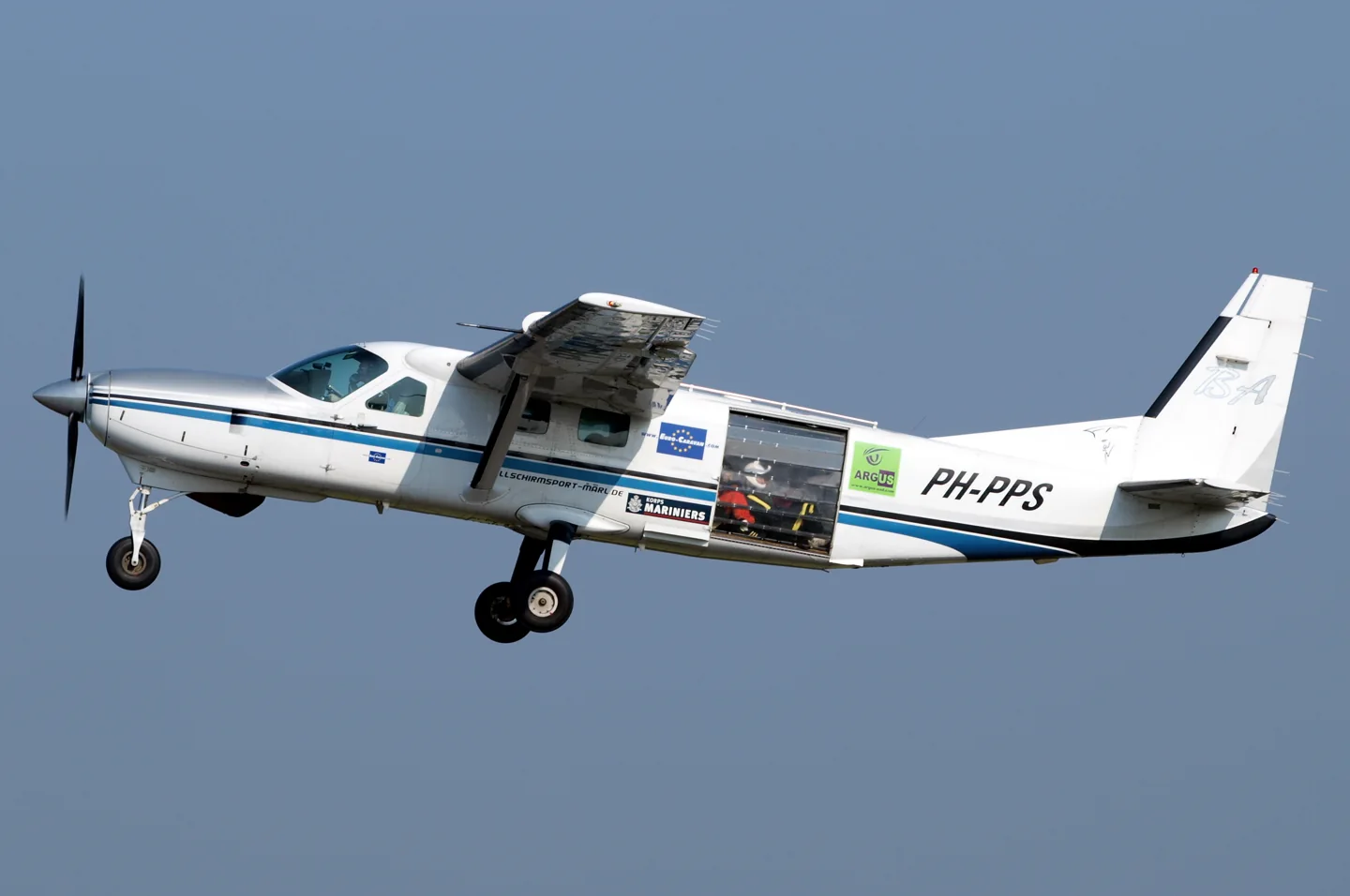
Cessna Caravan familyAlfvanBeem · CC0 · 208B Grand Caravan in the Netherlands, modified with roller door for parachuting operations; skydivers sitting on the cabin floor are visible inside the rear roller door

Cessna Caravan family

Mechanical yoke controls, roll spoilers and elevator servo tabs, with stronger roll than pitch in the cited Caravan account.
TurbopropC208配置文件选项:19 个

了解飞机

The Caravan programme began in the early 1980s, with the prototype flying in 1982. Its high wing, fixed gear and large cabin were organised around practical utility work. The longer 208B developed into the Grand Caravan as well as dedicated freight configurations.

Wheeled aircraft, cargo pods and amphibious floats give the family several recognisable forms. Simulator versions also differ sharply in cockpit philosophy, from modern glass panels to analogue conversions and new standalone aircraft. Each product has its own cockpit and systems description.

Aircraft / family

Propulsion
Single turboprop↗
Configuration
High wing · Utility cabin↗

Cessna 208 Caravan · Specifications (208 Caravan) · real aircraft; source units retained

Length
37 ft 7 in (11.46 m)↗
Wingspan
52 ft 1 in (15.87 m)↗
Height
14 ft 11 in (4.53 m)↗
Wing area
279 sq ft (25.96 m² )↗
Empty weight
4,730 lb (2,145 kg)↗
Max takeoff weight
8,000 lb (3,629 kg)↗
Powerplant
1 × Pratt & Whitney Canada PT6A -114A turboprop, 675 shp (503 kW)↗
Propellers
3-bladed McCauley constant speed, full feathering, reversible pitch↗
Cruise speed
186 kn (214 mph, 344 km/h) true air speed↗
Stall speed
61 kn (70 mph, 113 km/h) calibrated air speed↗

在 AirframeDB 上了解这款航空器

A utility turboprop grows into a family

Cessna launched the Caravan programme in 1981, flew the prototype in 1982 and began deliveries in 1985. The stretched, freight-focused 208B Super Cargomaster followed, with certification in 1986; the first production Grand Caravan was delivered in 1990. Passenger services, freight, government work and humanitarian flying became recurring uses for the family.

Glass cockpits and the Grand Caravan EX

The manufacturer’s timeline places standard G1000 avionics in 2008 and the start of Grand Caravan EX deliveries in 2013, with the PT6A-140 engine. G1000 NXi followed as standard equipment in 2017. These changes explain some of the differences between older Caravan accounts and later EX cockpits, alongside the choice of landplane or amphibious configuration.

From simulator preparation to the real aircraft

Horne prepared in a FlightSafety simulator before moving to the real Grand Caravan. The sessions introduced its glass cockpit and approach work, but the aircraft itself still made an impression: reaching the flight deck meant climbing a ladder, and the cockpit had the scale of a much larger working machine. The demonstration aircraft carried a cargo pod and TKS equipment.

Flying close to its maximum weight, he found that the ailerons and rudder asked for deliberate effort. Changes in configuration brought more trimming, while the stall exercises felt comparatively mild. Landing introduced the practical effect of the large propeller’s drag and the need to coordinate power carefully. His simulator preparation preceded the flight with Oliver.

A piston pilot meets the Grand Caravan EX

Hitchen approached the Grand Caravan EX with the expectations of a piston pilot and some apprehension about its size and turbine engine. Wilson took care of departure before handing over for airwork. The controls initially seemed heavy, and Hitchen repeatedly overshot headings as he adjusted to an aircraft with more momentum than his usual mount.

Familiarity softened that first impression: he came to find it responsive once he understood how much input it wanted. Wilson coached the descent, including the need to manage speed, and Hitchen made his first Caravan landing with the wind conveniently aligned with the runway. His humour about breaking his usual first-landing jinx gives the report its character. It remains an introduction under a demonstrator pilot’s guidance, with the pleasure of discovering that a large aircraft could become approachable.

Considering a Caravan after a legal career

Humphries was considering what aviation might become after retiring from legal practice. People had asked about flights to court appearances, and the Caravan suggested a possible combination of business transport and family use. Before the demonstration, he worked through a lengthy FlightSafety manual, trying to arrive with some understanding of an aircraft larger than his usual flying involved.

Allenbaugh’s guidance helped turn that preparation into an enjoyable flight. Humphries hand-flew throughout and was pleased by the roll response, the cockpit view and the comfortable ride through turbulence. Air conditioning had its own appeal in the Texas heat. Back on the ground, he was enthusiastic but still weighing the idea. He had not made a purchase decision or established a charter operation.

公开来源 15
  1. Cessna 208 CaravanResearch background · Wikipedia revision 1367834803 · retrieved 2026-09-12
  2. Microsoft Flight Simulator aircraft manuals
  3. MSFS 2024 FAQ and edition aircraft inventory
  4. MSFS 2020 FAQ and edition aircraft inventory
  5. Caravan Professional manual
  6. X-Plane aircraft and avionics manuals
  7. C208 DGSOfficial developer / designated store catalogue · checked 2026-09-12
  8. Caravan Professional - Amphibian & CargoOfficial developer / designated store catalogue · checked 2026-09-12
  9. Caravan Professional - PassengerOfficial developer / designated store catalogue · checked 2026-09-12
  10. Steam Gauge Overhaul - Analog CaravanOfficial developer / designated store catalogue · checked 2026-09-12
  11. Turbine Pilot: Cessna Caravan — Sky TruckThomas A. Horne · 1 March 2009
  12. A Caravan ExperienceSteve Hitchen · 5 March 2020
  13. CaravanScott Humphries · 23 August 2021
  14. Textron Aviation delivers 3,000th Cessna Caravan family aircraft13 January 2023 · manufacturer programme chronology
  15. ICAO Doc 8643 — aircraft type designatorsPublic search data retrieved 2026-09-14; authority update 2026-09-03

配置文件如何建模

Cessna 208B Grand Caravan

Free + Pro
MSFS 2024MSFS 2020X-Plane 12X-Plane 11

The Caravan programme began in the early 1980s, with the prototype flying in 1982. Its high wing, fixed gear and large cabin were organised around practical utility work. The longer 208B developed into the Grand Caravan as well as dedicated freight configurations.

The factory starting point selects Cessna 208B Grand Caravan across MSFS 2024, MSFS 2020, X-Plane 12, X-Plane 11.

Spring resistance builds with the selected airspeed response. A separate aerodynamic term adds speed-dependent control load.

Valid trim provides the configured pressure relief. Autopilot following is enabled for supported control references.

此确切修订版尚未开放公开安装。

Controls and trim

Cessna describes mechanical primary-control linkages, proportional roll spoilers and aileron servo tabs that reduce wheel effort. Published Caravan testing describes heavier roll than pitch in an older 208B and lighter controls after slowing from cruise in an EX. Those accounts supply qualitative family context. The information manual documents a stall-warning horn, not a mechanical stick shaker. Short-body, Grand Caravan, cargo and amphibious configurations remain distinct.

Operating ManualCarenado C208B Grand Caravan HD SeriesGrand Caravan EXCessna 208B Caravan I flight report, May 1989Cessna 208B G1000 Pilot's Operating HandbookA Caravan ExperienceCessna Caravan family reference

About the values

The gains are normalized profile settings. They describe the chosen effect balance; hand force depends on the device and its output limits. IAS references are tuning values rather than operating limits. Physical acceptance of this revision remains pending.

Master gain & control system

Master gain85%

施加于模型产出的一切、在设备上限之前的最终整体输出缩放。

调高: 一切(弹簧、载荷、效果)一同增强。

调低: 一切一同变柔。

设定理由: Scales overall profile strength while preserving effect balance, subject to device and output limits.

Forces

Spring strength58%

把摇杆拉回中央的基础回中力。其他所有力都叠加在它之上。太低,正常飞行中摇杆会发软;太高,它会与你的手较劲,并掩盖叠加其上的细微提示。

调高: 更硬的回中,更抗手。

调低: 更软的杆,只靠气动载荷。

设定理由: Mechanical links and servo-tab/roll-spoiler assistance motivate the selected speed-dependent yoke response; related flight reports support a qualitative roll-heavy balance. The baseline spring is 0.58. Its low-speed blend reaches baseline strength at 83 KIAS.

Operating ManualCarenado C208B Grand Caravan HD SeriesGrand Caravan EXCessna 208B Caravan I flight report, May 1989Cessna 208B G1000 Pilot's Operating HandbookA Caravan ExperienceCessna Caravan family reference
Spring deadband4%

中央附近弹簧保持安静的小中立区,让静止时的微小移动不会咔嗒作响。更宽更安稳但更松,更窄更精确但可能在中央附近抖动。

调高: 更安静但更松的中央,旷量更大。

调低: 更紧的中央,静止时可能抖动。

设定理由: Sets travel around the centre before the baseline spring resists. Smaller values engage it sooner.

Forces · Center starting force0

设定理由: Adds smoothly ramped resistance outside the centre deadband. Zero removes this preload.

Overall aerodynamic load90%

作用于两条持续轴载荷的主缩放,在它们各自的独立平衡之前施加。配置文件通常不动它,而是调校两条轴载荷。

调高: 两轴载荷一同加重。

调低: 两轴一同减轻。

设定理由: The aerodynamic-load gain is 0.9 with an indicated-speed reference of 150 KIAS. This supplies speed-dependent loading alongside the spring.

Spring engagement full83 kt

弹簧达到全强度的空速。从起点到这里,随着气流在操纵面上增强,回中逐渐变硬。

设定理由: Sets the IAS where the low-speed blend reaches baseline strength; high-speed stiffening also uses it.

Centre firmness vs speed25%

在偏转载荷之外,回中本身随速度变硬的程度。零则中央手感恒定;越大,巡航时回中越硬,起落航线上越松。

调高: 中央随速度明显变硬。

调低: 任何速度下中央手感恒定。

设定理由: The high-speed spring-stiffening gain is 0.25. It strengthens the permitted spring response above 83 KIAS, with the squared-speed ratio capped at 5.

Centre stiffening cap5

速度驱动的中央变硬上限,防止高速飞行把弹簧无限上紧。

调高: 高速允许更多总硬化。

调低: 硬化更早封顶。

设定理由: Limits the squared airspeed ratio used for high-speed spring stiffening; it is not a device-force cap.

Aileron load130%

由副翼偏转和空速产生的持续横滚载荷,独立于俯仰调校。与升降舵载荷一起,决定评测中常说的操纵协调比。

调高: 横滚力更重。

调低: 副翼更轻更灵。

设定理由: Roll and pitch aerodynamic scales are 1.3 and 1, respectively. They set the aerodynamic axis balance. No custom spring-travel curve is enabled.

Elevator load100%

由升降舵偏转和空速产生的持续俯仰载荷,独立于横滚调校。这是决定机型俯仰重量的主杠杆。它不影响副翼、弹簧、配平或抖振力。

调高: 速度下持续俯仰力更重。

调低: 升降舵更轻,握持更省力。

设定理由: Scales pitch aerodynamic loading; pitch spring travel and trim responses are separate settings.

Max output force60%

每个稳态俯仰或横滚力到达设备前的上限,防止猛烈机动中砸击或饱和硬件。

调高: 削波前更高的稳态力峰值。

调低: 更柔的上限;猛烈机动更早被抹平。

设定理由: Caps directed-force output. Native spring effects and device limits remain separate.

Forces · Center starting force transition0.05

设定理由: Sets the travel used to ramp in centre preload. Wider intervals make its onset more gradual.

Airspeed blendingTrue

启用低速弹簧介入窗口(上面的起始/全强度节数)。关闭时弹簧在所有速度下恒定。

设定理由: Allows baseline spring strength to rise with indicated airspeed where the control law permits it.

Low-speed spring floor25%

在静止、空速尚未产生气动力之前,弹簧还剩多少。下限高,停机时摇杆结实;下限低,则是停放轻型飞机那种钢索松弛的感觉。

调高: 停机和滑行时杆更结实。

调低: 停机时杆发软,只随速度苏醒。

设定理由: Sets low-speed spring strength as a fraction of baseline when blending is enabled. One keeps full strength.

Spring engagement start10 kt

弹簧从低速下限开始向全强度攀升的空速:起飞滑跑中操纵面"苏醒"的那一刻。

设定理由: Sets the IAS where the low-speed spring blend starts rising. This is a feel threshold, not a flight limit.

力反馈调校速度150

气动载荷达到设计满值的指示空速。它把整条载荷曲线锚定在飞机真实的速度范围:172在110节就载满,喷气机要晚得多。

调高: 载荷来得更晚;杆轻到更高速度。

调低: 载荷来得更早,巡航更沉。

设定理由: Sets the IAS reference for aerodynamic loading. It is an estimate, not published cruise TAS or a flight limit.

Trim

Trim relief (elevator)35%

升降舵配平缓解持续俯仰力、移动杆的安定位置的强度。在100 %时,配平得当的飞机不需要保持压力——正是真实飞行中"用配平消掉载荷"的流程。

调高: 配平消掉更多持续力;100 %时满配平可完全抵消。

调低: 即使配平也仍要持续用力。

设定理由: Pitch-trim relief remains a selected approximation of pressure reduction, separate from airframe length, cargo or amphibian equipment. Pitch authority 0.35 provides load relief and permitted centre movement; roll authority is 0.18.

Operating ManualCarenado C208B Grand Caravan HD SeriesGrand Caravan EXCessna 208B Caravan I flight report, May 1989Cessna 208B G1000 Pilot's Operating HandbookA Caravan ExperienceCessna Caravan family reference
Trim relief (aileron)18%

横滚配平的同类缓解。多数通航机型没有真正的副翼配平,所以保持为零;有横滚配平的机型获得相应的值。

调高: 横滚配平消掉更多持续力。

调低: 横滚配平作用更小。

设定理由: Scales supported roll-trim relief and permitted centre movement. Zero removes roll response.

Effect gains · Ground

Runway rumble42%

由轮速和地面类型(铺装、草地、砾石)产生的滚动振动。

调高: 杆上更强的地面质感。

调低: 更平滑的滑行。

设定理由: Sets rolling texture strength, modified by speed, surface and undercarriage configuration.

Gear bumps34%

来自伸缩缝、车辙和粗糙地面的短促离散颠簸,为持续隆隆声打上标点。

调高: 接缝与车辙的冲击更清晰。

调低: 更柔的地面细节。

设定理由: Sets gear-bump texture during ground motion, separate from touchdown impact.

Effect gains · Airframe

Stick shaker50%

由飞机自身失速警告系统触发的专用抖杆器振动。只有真有抖杆器的机型才有值;其余全靠气动抖振和喇叭。

调高: 更硬的抖杆器。

调低: 更含蓄的抖杆器。

设定理由: Sets triggered shaker strength; inactive while the shaker feature is disabled.

Stall buffet25%

接近失速及失速警告响起时的机体抖动:这副机翼宣告不满的音量。断失干脆的机型抖振收敛,让喇叭承担警告。

调高: 更强的失速前颤抖。

调低: 更含蓄的机翼;警告交给喇叭。

设定理由: Sets stall-buffet strength. Zero removes the cue without changing simulator stalls or warnings.

Mach buffet0%

接近马赫极限的跨音速抖振。对接近MMO的喷气机有意义,对到不了那里的活塞机和涡桨机为零。

调高: 接近马赫极限时更强的跨音速抖振。

调低: 高马赫下更平滑的飞行。

设定理由: Sets high-Mach buffet strength; onset and full-strength thresholds are separate.

Flap buffet20%

襟翼伸入气流后机体的低频振动,发生在它们真正做功的速度窗口内。

调高: 襟翼做功时更粗糙的飞行。

调低: 更柔的进近襟翼。

设定理由: Sets flap buffet at the configured position and speed gates. Flap movement texture is separate.

Gear buffet0%

可收放起落架悬在气流中引起的机体鼓振。固定起落架机型为零,它们的机体外形从不改变。

调高: 放起落架时更多鼓振。

调低: 放起落架飞行更干净。

设定理由: Sets gear aerodynamic buffet; movement and ground-contact cues are separate.

Effect gains · Engine, mechanical & drag

Touchdown thump65%

机轮触及跑道那一下的单次冲击,按下沉率缩放:轻柔着陆是耳语,结实到达是一记闷响。

调高: 触地时更硬的一击。

调低: 更柔的到达。

设定理由: Sets landing-impact strength; landing telemetry and response shape determine the pulse.

Reverse rumble40%

反推或桨叶beta区工作时的滑跑振动。无反推机型为零。

调高: 反推下更粗糙的滑跑。

调低: 更含蓄的反推。

设定理由: Sets reverse-thrust vibration with valid reverser and engine conditions. Zero removes the cue.

Engine rumble18%

从慢车到全功率跟随转速的持续动力装置振动——前方有东西在烧油的永恒提醒。

调高: 杆里更多发动机。

调低: 更含蓄的发动机。

设定理由: Sets estimated engine vibration using configured telemetry and response, not measured cockpit vibration.

Flap motion14%

仅在模拟器报告襟翼舵面确实移动时的持续振动。它跟随真实作动器的运动和故障,而非估算的计时器。

调高: 襟翼移动中更多振动。

调低: 更含蓄的襟翼行程。

设定理由: Sets texture from observed flap movement; a command without movement does not establish the cue.

Autopilot follow

AP follow authority5%

自动驾驶指令可以让杆实际移动多远。在MSFS中保持极小,因为移动的轴可能被读回为飞行员输入;零则完全禁用跟随。

调高: 自动驾驶让你的杆移动得明显更多。

调低: 几乎察觉不到的跟随。

设定理由: Sets admitted AP-follow gain, not a percentage of travel. Runtime ownership and input limits still apply.

Autopilot

Autopilot · Follow enabledTrue

Whether this feature is active in this profile.

设定理由: Following is on at 0.05 authority when a supported, valid autopilot control reference is available.

Autopilot · Neutral hold enabledFalse

Whether this feature is active in this profile.

设定理由: Permits centering hold during a supported AP state, separate from following a moving target.

Autopilot · Neutral hold strength0.6

设定理由: Sets admitted AP neutral-hold strength; inactive while neutral hold is disabled.

Stick feel

StickFeel · Trim feel enabledTrue

Whether this feature is active in this profile.

设定理由: Retained for compatibility and group membership. Trim relief, rather than this flag, controls centre movement.

StickFeel · Trim relief enabledTrue

Whether this feature is active in this profile.

设定理由: Allows trim relief with supported control law and valid telemetry. Axis authorities set its amount.

StickFeel · Force trim enabledFalse

Whether this feature is active in this profile.

设定理由: Enables local force trim, separate from aircraft-owned trim and add-on integration qualification.

StickFeel · G load enabledTrue

Whether this feature is active in this profile.

设定理由: Allows load-factor changes to modify permitted spring laws. Passive fly-by-wire feel can suppress it.

StickFeel · Rate damping enabledFalse

Whether this feature is active in this profile.

设定理由: Enables rate damping with the configured coefficients and control law.

Aero

Aero · Max flap index3

Where this effect reaches full strength (or has fully faded, for washouts).

调高: a more gradual build to a later peak.

调低: a quicker build.

设定理由: Sets the final flap index for detent normalization. UP plus three detents uses maximum index3.

Aero · Min flap index2

Where this effect begins fading in.

调高: the effect begins later.

调低: it begins earlier.

设定理由: Sets the first flap detent that admits buffet; this is a handle index, not degrees.

Aero · EnabledTrue

Whether this feature is active in this profile.

设定理由: Enables aerodynamic cues; each still needs nonzero strength and its simulator conditions.

Aero · Shaker enabledFalse

Whether this feature is active in this profile.

设定理由: Permits shaker at supported warning conditions; the switch does not establish aircraft equipment.

Spring response

SpringResponse · Travel enabledFalse

Whether this feature is active in this profile.

设定理由: Applies the configured pitch and roll spring travel curves.

SpringResponse · Output1

设定理由: Sets response at the second pitch-curve point; it is an endpoint only if its input position is full travel.

SpringResponse · Output1

设定理由: Sets response at the second roll-curve point; its input position and other points determine the travel law.

Ground

Ground · EnabledTrue

Whether this feature is active in this profile.

设定理由: Enables ground effects; each still needs its own strength and contact or motion telemetry.

Engine

Engine · EnabledTrue

Whether this feature is active in this profile.

设定理由: Enables engine cues with nonzero settings and valid running-engine telemetry.

Mechanical

Mechanical · EnabledTrue

Whether this feature is active in this profile.

设定理由: Enables accessory cues with configured strengths and observed accessory movement.

Mechanical · Gain0

The strength of this effect.

调高: a stronger effect.

调低: a weaker one.

设定理由: Sets texture from observed gear movement, separate from aerodynamic and touchdown effects.

全部配置文件设置
估算的配置文件设置
参数数值控制作用及原因
Spring strength0.58 Mechanical links and servo-tab/roll-spoiler assistance motivate the selected speed-dependent yoke response; related flight reports support a qualitative roll-heavy balance. The baseline spring is 0.58. Its low-speed blend reaches baseline strength at 83 KIAS.
Spring deadband0.04 Sets travel around the centre before the baseline spring resists. Smaller values engage it sooner.
Forces · Center starting force0 Adds smoothly ramped resistance outside the centre deadband. Zero removes this preload.
Force gain0.9 The aerodynamic-load gain is 0.9 with an indicated-speed reference of 150 KIAS. This supplies speed-dependent loading alongside the spring.
Master gain0.85 Scales overall profile strength while preserving effect balance, subject to device and output limits.
Spring full-strength speed83 ktSets the IAS where the low-speed blend reaches baseline strength; high-speed stiffening also uses it.
Airspeed spring stiffening0.25 The high-speed spring-stiffening gain is 0.25. It strengthens the permitted spring response above 83 KIAS, with the squared-speed ratio capped at 5.
Airspeed stiffening cap5 Limits the squared airspeed ratio used for high-speed spring stiffening; it is not a device-force cap.
Aileron force scale1.3 Roll and pitch aerodynamic scales are 1.3 and 1, respectively. They set the aerodynamic axis balance. No custom spring-travel curve is enabled.
Elevator force scale1 Scales pitch aerodynamic loading; pitch spring travel and trim responses are separate settings.
Maximum output force0.6 Caps directed-force output. Native spring effects and device limits remain separate.
Autopilot · Follow enabledTrue Following is on at 0.05 authority when a supported, valid autopilot control reference is available.
Autopilot · Follow authority0.05 Sets admitted AP-follow gain, not a percentage of travel. Runtime ownership and input limits still apply.
Autopilot · Neutral hold enabledFalse Permits centering hold during a supported AP state, separate from following a moving target.
Autopilot · Neutral hold strength0.6 Sets admitted AP neutral-hold strength; inactive while neutral hold is disabled.
StickFeel · Trim feel enabledTrue Retained for compatibility and group membership. Trim relief, rather than this flag, controls centre movement.
StickFeel · Trim relief enabledTrue Allows trim relief with supported control law and valid telemetry. Axis authorities set its amount.
Aero · Max flap index3 Sets the final flap index for detent normalization. UP plus three detents uses maximum index3.
Aero · Min flap index2 Sets the first flap detent that admits buffet; this is a handle index, not degrees.
Aero · Amplitude0.5 Sets triggered shaker strength; inactive while the shaker feature is disabled.
Forces · Center starting force transition0.05 Sets the travel used to ramp in centre preload. Wider intervals make its onset more gradual.
Dynamic-pressure blendTrue Allows baseline spring strength to rise with indicated airspeed where the control law permits it.
Minimum spring factor0.25 Sets low-speed spring strength as a fraction of baseline when blending is enabled. One keeps full strength.
Spring wake-up speed10 ktSets the IAS where the low-speed spring blend starts rising. This is a feel threshold, not a flight limit.
力反馈调校速度150 ktSets the IAS reference for aerodynamic loading. It is an estimate, not published cruise TAS or a flight limit.
SpringResponse · Travel enabledFalse Applies the configured pitch and roll spring travel curves.
SpringResponse · Output1 Sets response at the second pitch-curve point; it is an endpoint only if its input position is full travel.
SpringResponse · Output1 Sets response at the second roll-curve point; its input position and other points determine the travel law.
StickFeel · Elevator authority0.35 Pitch-trim relief remains a selected approximation of pressure reduction, separate from airframe length, cargo or amphibian equipment. Pitch authority 0.35 provides load relief and permitted centre movement; roll authority is 0.18.
StickFeel · Aileron authority0.18 Scales supported roll-trim relief and permitted centre movement. Zero removes roll response.
StickFeel · Force trim enabledFalse Enables local force trim, separate from aircraft-owned trim and add-on integration qualification.
StickFeel · G load enabledTrue Allows load-factor changes to modify permitted spring laws. Passive fly-by-wire feel can suppress it.
StickFeel · Rate damping enabledFalse Enables rate damping with the configured coefficients and control law.
Aero · EnabledTrue Enables aerodynamic cues; each still needs nonzero strength and its simulator conditions.
Aero · Gain0.25 Sets stall-buffet strength. Zero removes the cue without changing simulator stalls or warnings.
Aero · Gain0 Sets high-Mach buffet strength; onset and full-strength thresholds are separate.
Aero · Gain0.2 Sets flap buffet at the configured position and speed gates. Flap movement texture is separate.
Aero · Gain0 Sets gear aerodynamic buffet; movement and ground-contact cues are separate.
Aero · Shaker enabledFalse Permits shaker at supported warning conditions; the switch does not establish aircraft equipment.
Ground · EnabledTrue Enables ground effects; each still needs its own strength and contact or motion telemetry.
Ground · Gain0.42 Sets rolling texture strength, modified by speed, surface and undercarriage configuration.
Ground · Gain0.34 Sets gear-bump texture during ground motion, separate from touchdown impact.
Ground · Gain0.65 Sets landing-impact strength; landing telemetry and response shape determine the pulse.
Ground · Gain0.4 Sets reverse-thrust vibration with valid reverser and engine conditions. Zero removes the cue.
Engine · EnabledTrue Enables engine cues with nonzero settings and valid running-engine telemetry.
Engine · Gain0.18 Sets estimated engine vibration using configured telemetry and response, not measured cockpit vibration.
Mechanical · EnabledTrue Enables accessory cues with configured strengths and observed accessory movement.
Mechanical · Gain0.14 Sets texture from observed flap movement; a command without movement does not establish the cue.
Mechanical · Gain0 Sets texture from observed gear movement, separate from aerodynamic and touchdown effects.
公开来源 21
  1. Cessna 208 CaravanResearch background · Wikipedia revision 1367834803 · retrieved 2026-09-12
  2. Operating ManualCaravan Professional manual introduction, aircraft specifications, controls and hardware sections
  3. Carenado C208B Grand Caravan HD SeriesCessna Caravan family
  4. Grand Caravan EXCessna Caravan family
  5. Cessna 208B Caravan I flight report, May 1989Cessna Caravan family
  6. Cessna 208B G1000 Pilot's Operating HandbookCessna Caravan family
  7. A Caravan ExperienceSteve Hitchen · 5 March 2020
  8. Cessna Caravan family referenceCessna Caravan family
  9. Microsoft Flight Simulator aircraft manuals
  10. MSFS 2024 FAQ and edition aircraft inventory
  11. MSFS 2020 FAQ and edition aircraft inventory
  12. Caravan Professional manual
  13. X-Plane aircraft and avionics manuals
  14. C208 DGSOfficial developer / designated store catalogue · checked 2026-09-12
  15. Caravan Professional - Amphibian & CargoOfficial developer / designated store catalogue · checked 2026-09-12
  16. Caravan Professional - PassengerOfficial developer / designated store catalogue · checked 2026-09-12
  17. Steam Gauge Overhaul - Analog CaravanOfficial developer / designated store catalogue · checked 2026-09-12
  18. Turbine Pilot: Cessna Caravan — Sky TruckThomas A. Horne · 1 March 2009
  19. CaravanScott Humphries · 23 August 2021
  20. Textron Aviation delivers 3,000th Cessna Caravan family aircraft13 January 2023 · manufacturer programme chronology
  21. ICAO Doc 8643 — aircraft type designatorsPublic search data retrieved 2026-09-14; authority update 2026-09-03

社区与纠错

如果你的真机经验表明本页有误,请在此指正。

飞行员纠错

飞过这款飞机?纠正本页。

本页基于引用资料构建,而真机经验胜过任何引用。 请引用有误的主张,并告诉我们真机的实际表现。纠错 将交由维护者审核,并纳入本研究的下一次修订。

机库闲谈

关于 Cessna Caravan family 的飞行与调校的公开讨论(社区论坛)。上方的纠错将私下送达维护者;机库闲谈是公开的。

0 条回复 · 最近活动

FFB-Bridge
Hangar talk for the Cessna 208B Grand Caravan. How does the real one feel, and how close does the built-in profile get? Compare cockpit time, tuning tweaks, and community profiles here. Research page: Cessna 208B Grand C…
加入讨论
社区

该机型的社区配置

查看库中全部 1 个
飞机 个人资料 模拟器 硬件 Added ReviewsDiscussion下载 Open profile
Cessna Grand CaravanC208 Black Square Caravan Professional by Jasper_83 MSFS Moza AY210 暂无评价Start discussion261