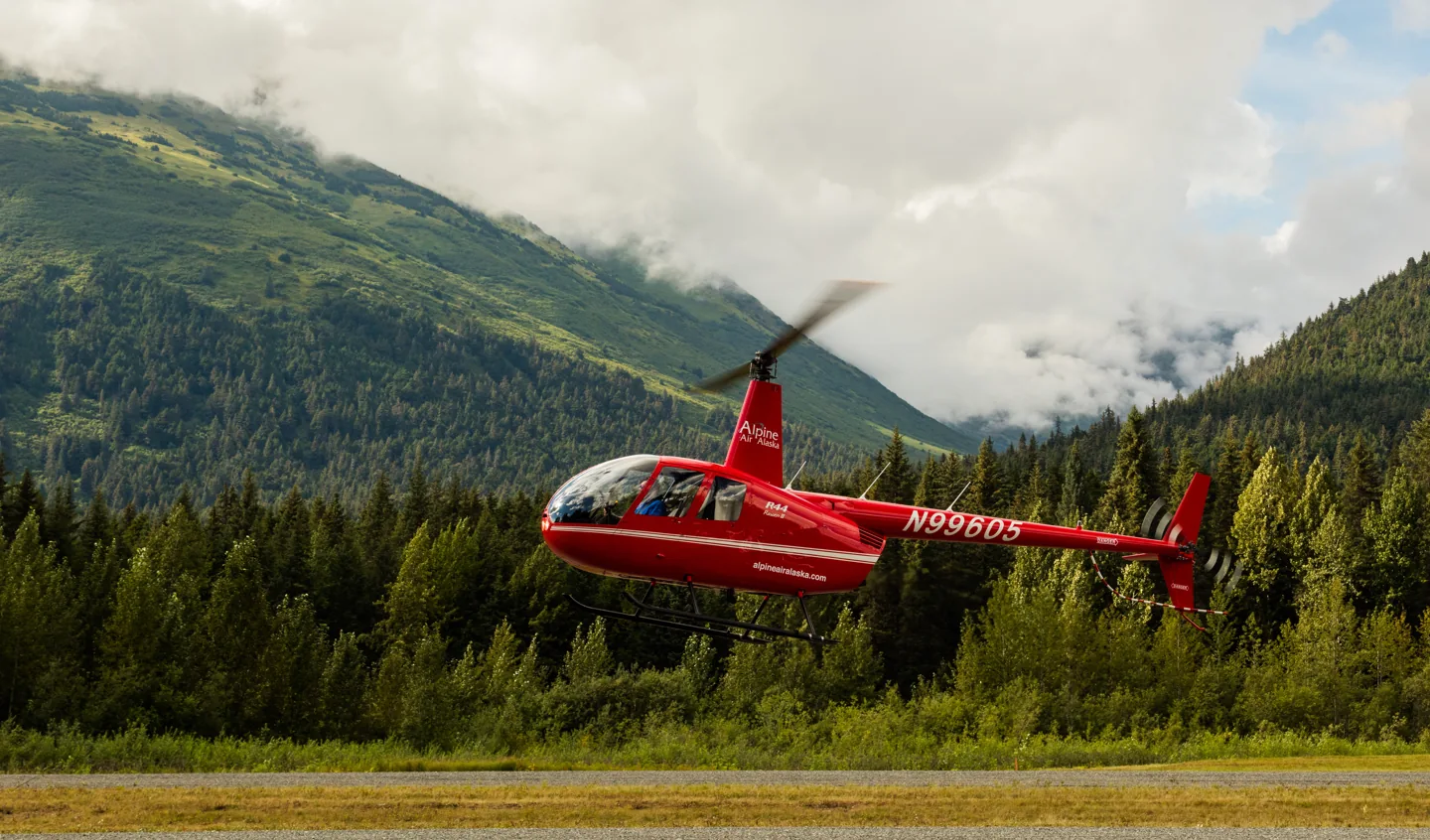
Robinson R44Diego Delso · CC BY-SA 4.0 · Robinson R44.

Robinson R44

A four-seat piston helicopter with a two-blade main rotor and conventional tail rotor.
HelicopterLiczba opcji profilu: 2

Poznaj maszynę

The R44 extends Robinson’s light-helicopter layout into a four-seat cabin. The Raven II uses a fuel-injected Lycoming IO-540 engine and retains the family’s two-blade main and tail rotors.

VSKYLABS represents the Raven II for X-Plane. Its documentation describes a cockpit designed for desktop and VR interaction, a native flight model and a separately maintained product for each supported simulator generation.

R44 Raven II; current manufacturer specification

Seats
4↗
Engine
Lycoming IO-540, six cylinders, fuel injection↗
Rated power
245 hp takeoff; 205 hp continuous↗
Maximum gross weight
2,500 lb (1,134 kg)↗
Approximate empty weight
1,505 lb (683 kg), oil and standard avionics included↗
Cruise at maximum gross weight
Up to 109 kt (202 km/h)↗
Maximum range
About 350 nm (650 km), no reserve↗
Maximum operating altitude
14,000 ft↗
Electrical system
28 V↗

Więcej o tym statku powietrznym w AirframeDB

Four seats, still a piston helicopter

Robinson developed the R44 during the 1980s, extending its light-helicopter concept to a four-seat cabin. The company history records FAA certification in 1992. The larger aircraft broadened the role beyond the two-seat R22 while retaining piston-engine power.

Why the Raven II name matters

The Raven II is the fuel-injected member of the family. Its IO-540 installation distinguishes it from the carbureted Raven I. Those model names matter when comparing performance or choosing a simulator aircraft: a family label alone does not establish the engine, equipment or control configuration.

Hydraulics shape the cyclic feel

The R44 II handbook describes hydraulic servos that remove main-rotor feedback from the cyclic and collective. The light normal control feel therefore belongs to the assisted system, rather than a direct reflection of rotor loads. Loss of assistance produces much heavier controls.

Friction and centering are different

The cyclic friction knob resists movement in both axes; the collective has its own friction lever. Pedals use direct push-pull controls and an elastomeric trim spring. A simulator centering spring is an interpretation of hardware support, not a measurement of these friction devices.

Governor and autopilot have separate roles

The governor adjusts throttle to help maintain engine RPM above 80 percent. Optional HeliSAS adds a cyclic centering tendency when SAS is engaged. An R44 profile therefore needs to distinguish the basic hydraulic controls from an aircraft fitted with that optional system.

Źródła publiczne 6
  1. VSKYLABS Aerospace Simulations Aircraft Center: VSKYLABS Robinson R44 Raven IIOfficial developer / designated-store reference · checked 2026-09-14
  2. VSKYLABS Robinson R44 Raven II. Advanced add-on for X-Plane Flight Simulator.Official developer / designated-store reference · checked 2026-09-14
  3. ICAO Doc 8643 — aircraft type designatorsPublic search data retrieved 2026-09-14; authority update 2026-09-03
  4. Robinson R44 Raven II / Clipper II specificationsR44 Raven II; manufacturer reference checked 12 October 2026
  5. Robinson Helicopter Company historyR44 Raven II; manufacturer reference checked 12 October 2026
  6. Robinson R44 II Pilot’s Operating HandbookR44 Raven II; manufacturer reference checked 12 October 2026

Jak odwzorowuje to profil

VSKYLABS Robinson R44 Raven II

Free + Pro
X-Plane 12VSKYLABS

The R44 extends Robinson’s light-helicopter layout into a four-seat cabin. The Raven II uses a fuel-injected Lycoming IO-540 engine and retains the family’s two-blade main and tail rotors.

This profile selects VSKYLABS Robinson R44 Raven II for X-Plane 12.

Hydraulic cyclic assistance motivates low supported centering. The spring stays independent of airspeed. Directed aerodynamic loading is omitted. Cyclic damping adds resistance to hardware motion.

The selected neutral remains separate from collective friction and governor operation. Local force trim is off. Autopilot following is off.

Controls and trim

The R44 uses hydraulically boosted cyclic control, with collective friction treated separately. Its two-blade rotor and piston governor have independently stated rotor and engine references. The manufacturer’s 408-rpm value is a 102-percent rotor condition.

VSKYLABS R44 Raven II operating handbookRobinson R44 Raven II POH section2 limitationsVSKYLABS Aerospace Simulations Aircraft Center: VSKYLABS Robinson R44 Raven II

The selected implementation

VSKYLABS models hydraulically boosted cyclic controls and a separate collective-friction control. Its cyclic friction is not modelled; the engine governor activates above 80 percent engine RPM.

VSKYLABS R44 Raven II operating handbookRobinson R44 Raven II POH section2 limitations

About the values

The gains are normalized profile settings. They describe the chosen effect balance; hand force depends on the device and its output limits. IAS references are tuning values rather than operating limits. Physical acceptance of this revision remains pending.

Wzmocnienie główne i układ sterowania

Master gain65%

Końcowy, ogólny mnożnik wyjścia stosowany do wszystkiego, co wytwarza model, przed ograniczeniem urządzenia.

Więcej: wszystko (sprężyna, obciążenia, efekty) staje się silniejsze jednocześnie.

Mniej: wszystko jednocześnie łagodnieje.

Dlaczego tutaj: Scales overall profile strength while preserving effect balance, subject to device and output limits.

Siły

Spring strength10%

Podstawowa siła centrująca, która ściąga drążek z powrotem do środka. Wszystkie inne siły nakładają się na nią. Zbyt niska, a drążek w normalnym locie jest wiotki; zbyt wysoka, a walczy z twoją ręką i zagłusza drobniejsze efekty nałożone na nią.

Więcej: mocniejsze centrowanie, które przez cały czas stawia opór twojej ręce.

Mniej: bardziej wiotki drążek, który opiera się wyłącznie na obciążeniu aerodynamicznym.

Dlaczego tutaj: Hydraulic cyclic assistance motivates low supported centering. The baseline spring is 0.1. Low-speed spring blending is off.

VSKYLABS R44 Raven II operating handbookRobinson R44 Raven II POH section2 limitationsVSKYLABS Aerospace Simulations Aircraft Center: VSKYLABS Robinson R44 Raven II
Spring deadband2%

Niewielka neutralna strefa wokół środka, w której sprężyna pozostaje nieaktywna, dzięki czemu drobne ruchy w spoczynku nie wywołują trzepotania. Szersza strefa jest spokojniejsza, ale luźniejsza; węższa jest precyzyjniejsza, ale drążek może podrygiwać wokół środka.

Więcej: spokojniejszy, lecz swobodniejszy środek z większym luzem.

Mniej: bardziej zwarty środek, który w spoczynku może trzepotać.

Dlaczego tutaj: A small quiet zone helps prevent the supported cyclic from chattering near neutral. This is a hardware tuning choice, not free play measured in the real R44 controls.

Overall aerodynamic load0%

Nadrzędny mnożnik dla obu utrzymujących się obciążeń osi, stosowany przed ich niezależnym wyważeniem. Profile zwykle zostawiają go bez zmian i zamiast tego dostrajają oba obciążenia osi.

Więcej: obie osie są mocniej obciążone.

Mniej: obie osie jednocześnie stają się lżejsze.

Dlaczego tutaj: The 0 gain omits sustained directed airspeed loading. Spring resistance remains independent.

Airspeed blendingFalse

Włącza okno stopniowego włączania sprężyny przy małej prędkości (węzły początku i pełnej siły powyżej). Po wyłączeniu sprężyna jest stała przy każdej prędkości.

Dlaczego tutaj: Airspeed blending is disabled for this implementation. The light supporting spring stays constant rather than imitating an airplane’s increasing surface load.

Low-speed spring floor55%

Jaka część sprężyny pozostaje na postoju, zanim prędkość zdąży wytworzyć jakąkolwiek siłę aerodynamiczną. Przy wysokiej dolnej granicy drążek na postoju pozostaje sztywny; przy niskiej jest luźny, z luzem linek jak w zaparkowanym lekkim statku powietrznym.

Więcej: sztywniejszy drążek na postoju i podczas kołowania.

Mniej: luźniejszy drążek na postoju, który ożywa dopiero wraz z prędkością.

Dlaczego tutaj: Stored for the common force model; it does not alter this profile while airspeed spring blending is disabled.

Spring engagement start10 kt

Prędkość, przy której sprężyna zaczyna rosnąć od dolnej granicy dla małej prędkości w stronę pełnej siły: stery „ożywają” podczas rozbiegu.

Dlaczego tutaj: Inactive while airspeed spring blending is disabled. This is not an R44 flight limitation.

Spring engagement full45 kt

Prędkość, przy której sprężyna osiąga pełną siłę. Między punktem początkowym a tym punktem centrowanie stopniowo sztywnieje w miarę narastania opływu powietrza wokół sterów.

Dlaczego tutaj: Inactive while airspeed spring blending is disabled. This value does not define translational lift.

Prędkość dostrajania siły105

Prędkość przyrządowa, przy której obciążenie aerodynamiczne osiąga zakładany pełny poziom. Zakotwicza całą krzywą obciążenia w rzeczywistym zakresie prędkości statku powietrznego: 172 nabiera pełnego obciążenia do 110 węzłów, odrzutowiec znacznie później.

Więcej: obciążenia pojawiają się później; drążek pozostaje lekki do wyższej prędkości.

Mniej: obciążenia pojawiają się wcześniej, a przelot wydaje się cięższy.

Dlaczego tutaj: The aerodynamic-load gain is zero, so this stored tuning reference does not create a forward-flight cyclic load. It is not the published cruise speed.

Centre firmness vs speed0%

Jak bardzo samo centrowanie sztywnieje wraz z prędkością, oprócz obciążeń od wychylenia. Zero utrzymuje stałe czucie środka; więcej sprawia, że drążek centruje się mocniej w przelocie i luźniej w kręgu nadlotniskowym.

Więcej: środek, który wyraźnie twardnieje wraz ze wzrostem prędkości.

Mniej: stałe czucie środka przy każdej prędkości.

Dlaczego tutaj: No extra centering stiffness is added with speed, consistent with the profile’s hydraulically assisted control interpretation.

Centre stiffening cap2

Górna granica zależnego od prędkości sztywnienia środka, aby bardzo szybki lot nie mógł napinać sprężyny bez ograniczeń.

Więcej: większe łączne usztywnienie dopuszczalne przy dużej prędkości.

Mniej: usztywnianie zostaje wcześniej ograniczone.

Dlaczego tutaj: Limits the squared airspeed ratio used for high-speed spring stiffening; it is not a device-force cap.

Aileron load100%

Utrzymujące się obciążenie przechylenia wynikające z wychylenia lotek i prędkości, wyważane niezależnie od pochylenia. Razem z obciążeniem steru wysokości wyznacza proporcję harmonii sterów, o której piszą recenzenci.

Więcej: większe siły przechylenia.

Mniej: lżejsze lotki, które wydają się szybsze.

Dlaczego tutaj: Roll and pitch aerodynamic scales are 1 and 1, respectively. These stored weights do not create directed aerodynamic loading while that term is inactive. No custom spring-travel curve is enabled.

Elevator load100%

Utrzymujące się obciążenie pochylenia wynikające z wychylenia steru wysokości i prędkości, wyważane niezależnie od przechylenia. To główny parametr decydujący o ciężarze pochylenia danego typu. Nie wpływa na siły lotek, sprężyny, trymera ani drgań.

Więcej: większe utrzymujące się siły pochylenia w locie.

Mniej: lżejszy ster wysokości, którego utrzymanie wymaga mniej siły mięśni.

Dlaczego tutaj: Scales pitch aerodynamic loading; pitch spring travel and trim responses are separate settings.

Max output force55%

Ograniczenie każdej ustalonej siły pochylenia lub przechylenia, zanim dotrze do urządzenia; chroni sprzęt przed gwałtownymi uderzeniami lub nasyceniem podczas mocnych manewrów.

Więcej: silniejsze szczytowe siły ustalone przed obcięciem.

Mniej: łagodniejszy limit; przy ostrych manewrach siły wcześniej się wypłaszczają.

Dlaczego tutaj: Caps directed-force output. Native spring effects and device limits remain separate.

Trymer

Trim relief (elevator)0%

Jak mocno trymer steru wysokości odciąża utrzymywaną siłę pochylenia i przesuwa punkt, w którym drążek się ustala. Przy 100% poprawnie wytrymowany statek powietrzny nie wymaga utrzymywania nacisku — tak jak w prawdziwym lataniu, gdzie obciążenie usuwa się trymerem.

Więcej: trymer usuwa większą część utrzymywanej siły pochylenia; przy 100% pełne wytrymowanie całkowicie ją znosi.

Mniej: nawet po wytrymowaniu nadal musisz utrzymywać siłę.

Dlaczego tutaj: Scales supported pitch-trim relief and permitted centre movement. Zero removes pitch response.

Trim relief (aileron)0%

To samo odciążenie dla trymera przechylenia. Większość typów lotnictwa ogólnego nie ma prawdziwego trymera lotek, więc wartość pozostaje zerowa; typy z trymerem przechylenia otrzymują odpowiednią wartość.

Więcej: trymer przechylenia usuwa więcej utrzymywanej siły przechylenia.

Mniej: trymer przechylenia działa słabiej.

Dlaczego tutaj: Scales supported roll-trim relief and permitted centre movement. Zero removes roll response.

Wzmocnienia efektów · Podłoże

Runway rumble0%

Wibracje toczenia zależne od prędkości kół i rodzaju nawierzchni: asfalt, trawa lub żwir pod podwoziem.

Więcej: wyraźniejsza faktura nawierzchni wyczuwalna w drążku.

Mniej: płynniejsze kołowanie.

Dlaczego tutaj: Rolling runway rumble is omitted for the skid-equipped R44.

Gear bumps0%

Krótkie, pojedyncze wstrząsy od szczelin dylatacyjnych, kolein i nierównej nawierzchni, przerywające ciągłe wibracje.

Więcej: ostrzejsze uderzenia od szczelin i kolein.

Mniej: łagodniejsze szczegóły nawierzchni.

Dlaczego tutaj: Wheel-style ground bumps are omitted for the skid landing gear; the separate touchdown cue remains available.

Wzmocnienia efektów · Płatowiec

Stall buffet0%

Drgania płatowca przy zbliżaniu się do przeciągnięcia i gdy aktywne jest ostrzeżenie o przeciągnięciu: jak głośno to skrzydło sygnalizuje, że coś mu nie odpowiada. Typy z wyraźnym, ostrym przeciągnięciem dostają umiarkowane drgania, a ostrzeżenie przekazuje sygnalizator dźwiękowy.

Więcej: wyraźniejsze drgania przy zbliżaniu się do przeciągnięcia.

Mniej: spokojniejsze skrzydło; ostrzeżenie przekazuje sygnalizator dźwiękowy.

Dlaczego tutaj: Sets stall-buffet strength. Zero removes the cue without changing simulator stalls or warnings.

Mach buffet0%

Drgania transoniczne przy zbliżaniu się do ograniczenia liczby Macha. Istotne dla odrzutowców w pobliżu MMO, zero dla samolotów tłokowych i turbośmigłowych, które nigdy tam nie docierają.

Więcej: silniejsze drgania transoniczne w pobliżu ograniczenia liczby Macha.

Mniej: spokojniejszy lot przy dużej liczbie Macha.

Dlaczego tutaj: Sets high-Mach buffet strength; onset and full-strength thresholds are separate.

Flap buffet0%

Niskoczęstotliwościowe wibracje płatowca przy klapach wypuszczonych w strumień powietrza, w zakresie prędkości, w którym faktycznie pracują w opływie.

Więcej: mniej spokojny lot przy klapach pracujących w opływie.

Mniej: spokojniejsze klapy w podejściu.

Dlaczego tutaj: Sets flap buffet at the configured position and speed gates. Flap movement texture is separate.

Gear buffet0%

Dudnienie płatowca od chowanego podwozia wypuszczonego w strumień powietrza. Zero dla typów z podwoziem stałym, w których kształt płatowca nigdy się nie zmienia.

Więcej: więcej dudnienia przy wypuszczonych kołach.

Mniej: czystszy lot z wypuszczonym podwoziem.

Dlaczego tutaj: Sets gear aerodynamic buffet; movement and ground-contact cues are separate.

Stick shaker50%

Osobne wibracje układu stick shaker ostrzegające o przeciągnięciu, wyzwalane przez własny system ostrzegania o przeciągnięciu statku powietrznego. Wartość otrzymują tylko typy z prawdziwym układem stick shaker; wszystkie pozostałe polegają na drganiach aerodynamicznych i sygnalizatorze dźwiękowym.

Więcej: mocniejsze wibracje układu stick shaker.

Mniej: subtelniejszy stick shaker.

Dlaczego tutaj: Sets triggered shaker strength; inactive while the shaker feature is disabled.

Wzmocnienia efektów · Silnik, mechanika i opór

Touchdown thump20%

Jednorazowe szarpnięcie w chwili zetknięcia kół z pasem startowym, skalowane prędkością opadania: miękkie przyziemienie ledwie szepcze, twarde wyraźnie uderza.

Więcej: mocniejsze szarpnięcie przy przyziemieniu.

Mniej: łagodniejsze przyziemienia.

Dlaczego tutaj: A restrained touchdown cue marks ground contact. Its amplitude is a simulator effect choice, not a measurement of forces through the real cyclic.

Reverse rumble0%

Wibracje podczas dobiegu, gdy pracuje ciąg wsteczny lub śmigła w zakresie beta. Zero dla typów bez ciągu wstecznego.

Więcej: bardziej niespokojny dobieg przy ciągu wstecznym.

Mniej: cichszy ciąg wsteczny.

Dlaczego tutaj: Sets reverse-thrust vibration with valid reverser and engine conditions. Zero removes the cue.

Engine rumble0%

Ciągłe wibracje zespołu napędowego zależne od obrotów, od biegu jałowego do pełnej mocy — stale obecne przypomnienie, że z przodu coś spala paliwo.

Więcej: silnik bardziej wyczuwalny w drążku.

Mniej: cichszy zespół napędowy.

Dlaczego tutaj: Sets estimated engine vibration using configured telemetry and response, not measured cockpit vibration.

Flap motion0%

Ciągłe wibracje tylko wtedy, gdy symulator zgłasza, że klapy faktycznie się przemieszczają. Efekt odwzorowuje rzeczywisty ruch siłowników i ich awarie, a nie szacowany licznik czasu.

Więcej: więcej wibracji podczas ruchu klap.

Mniej: cichsze przestawianie klap.

Dlaczego tutaj: The R44 has no airplane-style trailing-edge flaps, so this motion cue is disabled.

Podążanie za autopilotem

AP follow authority5%

Jak daleko polecenia autopilota mogą fizycznie przesunąć drążek. W MSFS utrzymywane na minimalnym poziomie, bo przesunięta oś może zostać odczytana jako działanie pilota; zero całkowicie wyłącza podążanie.

Więcej: autopilot widocznie wychyla twój drążek dalej.

Mniej: ledwo wyczuwalne podążanie.

Dlaczego tutaj: Sets admitted AP-follow gain, not a percentage of travel. Runtime ownership and input limits still apply.

Stick feel

StickFeel · Trim feel enabledFalse

Whether this feature is active in this profile.

Dlaczego tutaj: Retained for compatibility and group membership. Trim relief, rather than this flag, controls centre movement.

StickFeel · Trim relief enabledFalse

Whether this feature is active in this profile.

Dlaczego tutaj: Allows trim relief with supported control law and valid telemetry. Axis authorities set its amount.

StickFeel · G load enabledTrue

Whether this feature is active in this profile.

Dlaczego tutaj: Allows load-factor changes to modify permitted spring laws. Passive fly-by-wire feel can suppress it.

StickFeel · Rate damping enabledFalse

Whether this feature is active in this profile.

Dlaczego tutaj: Enables rate damping with the configured coefficients and control law.

Autopilot

Autopilot · Follow enabledFalse

Whether this feature is active in this profile.

Dlaczego tutaj: Autopilot following is off; the configured spring and load retain the hardware feel.

Autopilot · Neutral hold enabledFalse

Whether this feature is active in this profile.

Dlaczego tutaj: Permits centering hold during a supported AP state, separate from following a moving target.

Autopilot · Neutral hold strength0.6

Dlaczego tutaj: Sets admitted AP neutral-hold strength; inactive while neutral hold is disabled.

Aero

Aero · EnabledTrue

Whether this feature is active in this profile.

Dlaczego tutaj: Enables aerodynamic cues; each still needs nonzero strength and its simulator conditions.

Aero · Max flap index1

Where this effect reaches full strength (or has fully faded, for washouts).

Więcej: a more gradual build to a later peak.

Mniej: a quicker build.

Dlaczego tutaj: Sets the final flap index for detent normalization. UP plus three detents uses maximum index3.

Aero · Min flap index1

Where this effect begins fading in.

Więcej: the effect begins later.

Mniej: it begins earlier.

Dlaczego tutaj: Sets the first flap detent that admits buffet; this is a handle index, not degrees.

Aero · Shaker enabledFalse

Whether this feature is active in this profile.

Dlaczego tutaj: Permits shaker at supported warning conditions; the switch does not establish aircraft equipment.

Ground

Ground · EnabledTrue

Whether this feature is active in this profile.

Dlaczego tutaj: Enables ground effects; each still needs its own strength and contact or motion telemetry.

Engine

Engine · EnabledTrue

Whether this feature is active in this profile.

Dlaczego tutaj: Enables engine cues with nonzero settings and valid running-engine telemetry.

Mechanical

Mechanical · EnabledTrue

Whether this feature is active in this profile.

Dlaczego tutaj: Enables accessory cues with configured strengths and observed accessory movement.

Mechanical · Gain0

The strength of this effect.

Więcej: a stronger effect.

Mniej: a weaker one.

Dlaczego tutaj: The fixed skid undercarriage has no retracting-gear motion to represent.

Wszystkie ustawienia profilu
Szacowane ustawienia profilu
ParametrWartośćCo reguluje i dlaczego
Spring strength0.1 Hydraulic cyclic assistance motivates low supported centering. The baseline spring is 0.1. Low-speed spring blending is off.
Spring deadband0.02 Sets travel around the centre before the baseline spring resists. Smaller values engage it sooner.
Force gain0 The 0 gain omits sustained directed airspeed loading. Spring resistance remains independent.
Master gain0.65 Scales overall profile strength while preserving effect balance, subject to device and output limits.
Dynamic-pressure blendFalse Allows baseline spring strength to rise with indicated airspeed where the control law permits it.
Minimum spring factor0.55 Sets low-speed spring strength as a fraction of baseline when blending is enabled. One keeps full strength.
Spring wake-up speed10 ktSets the IAS where the low-speed spring blend starts rising. This is a feel threshold, not a flight limit.
Spring full-strength speed45 ktSets the IAS where the low-speed blend reaches baseline strength; high-speed stiffening also uses it.
Prędkość dostrajania siły105 ktSets the IAS reference for aerodynamic loading. It is an estimate, not published cruise TAS or a flight limit.
Airspeed spring stiffening0 Adds permitted spring resistance above the full-blend speed. Zero removes this high-speed increase.
Airspeed stiffening cap2 Limits the squared airspeed ratio used for high-speed spring stiffening; it is not a device-force cap.
Aileron force scale1 Roll and pitch aerodynamic scales are 1 and 1, respectively. These stored weights do not create directed aerodynamic loading while that term is inactive. No custom spring-travel curve is enabled.
Elevator force scale1 Scales pitch aerodynamic loading; pitch spring travel and trim responses are separate settings.
Maximum output force0.55 Caps directed-force output. Native spring effects and device limits remain separate.
StickFeel · Trim feel enabledFalse Retained for compatibility and group membership. Trim relief, rather than this flag, controls centre movement.
StickFeel · Trim relief enabledFalse Allows trim relief with supported control law and valid telemetry. Axis authorities set its amount.
StickFeel · Elevator authority0 Scales supported pitch-trim relief and permitted centre movement. Zero removes pitch response.
StickFeel · Aileron authority0 Scales supported roll-trim relief and permitted centre movement. Zero removes roll response.
StickFeel · Force trim enabledFalse The selected neutral remains separate from collective friction and governor operation. Local force trim is off. The stored latch parameters are inactive; the profile does not supply a local hold-where-left neutral.
StickFeel · G load enabledTrue Allows load-factor changes to modify permitted spring laws. Passive fly-by-wire feel can suppress it.
StickFeel · Rate damping enabledFalse Enables rate damping with the configured coefficients and control law.
Autopilot · Follow enabledFalse Autopilot following is off; the configured spring and load retain the hardware feel.
Autopilot · Follow authority0.05 Sets admitted AP-follow gain, not a percentage of travel. Runtime ownership and input limits still apply.
Autopilot · Neutral hold enabledFalse Permits centering hold during a supported AP state, separate from following a moving target.
Autopilot · Neutral hold strength0.6 Sets admitted AP neutral-hold strength; inactive while neutral hold is disabled.
Aero · EnabledTrue Enables aerodynamic cues; each still needs nonzero strength and its simulator conditions.
Aero · Gain0 Sets stall-buffet strength. Zero removes the cue without changing simulator stalls or warnings.
Aero · Gain0 Sets high-Mach buffet strength; onset and full-strength thresholds are separate.
Aero · Gain0 Sets flap buffet at the configured position and speed gates. Flap movement texture is separate.
Aero · Max flap index1 Sets the final flap index for detent normalization. UP plus three detents uses maximum index3.
Aero · Min flap index1 Sets the first flap detent that admits buffet; this is a handle index, not degrees.
Aero · Gain0 Sets gear aerodynamic buffet; movement and ground-contact cues are separate.
Aero · Shaker enabledFalse Permits shaker at supported warning conditions; the switch does not establish aircraft equipment.
Aero · Amplitude0.5 Sets triggered shaker strength; inactive while the shaker feature is disabled.
Ground · EnabledTrue Enables ground effects; each still needs its own strength and contact or motion telemetry.
Ground · Gain0 Sets rolling texture strength, modified by speed, surface and undercarriage configuration.
Ground · Gain0 Sets gear-bump texture during ground motion, separate from touchdown impact.
Ground · Gain0.2 Sets landing-impact strength; landing telemetry and response shape determine the pulse.
Ground · Gain0 Sets reverse-thrust vibration with valid reverser and engine conditions. Zero removes the cue.
Engine · EnabledTrue Enables engine cues with nonzero settings and valid running-engine telemetry.
Engine · Gain0 Sets estimated engine vibration using configured telemetry and response, not measured cockpit vibration.
Mechanical · EnabledTrue Enables accessory cues with configured strengths and observed accessory movement.
Mechanical · Gain0 Sets texture from observed flap movement; a command without movement does not establish the cue.
Mechanical · Gain0 Sets texture from observed gear movement, separate from aerodynamic and touchdown effects.
Źródła publiczne 8
  1. VSKYLABS Aerospace Simulations Aircraft Center: VSKYLABS Robinson R44 Raven IIOfficial developer / designated-store reference ·Official developer / designated-store reference · checked 2026-09-14
  2. VSKYLABS R44 Raven II operating handbookVSKYLABS R44 Raven II systems and limitations; simulator implementation
  3. Robinson R44 Raven II POH section2 limitationsManufacturer R44II POH section2 PDF4 printed2-2;
  4. VSKYLABS Robinson R44 Raven II. Advanced add-on for X-Plane Flight Simulator.Official developer / designated-store reference · checked 2026-09-14
  5. ICAO Doc 8643 — aircraft type designatorsPublic search data retrieved 2026-09-14; authority update 2026-09-03
  6. Robinson R44 Raven II / Clipper II specificationsR44 Raven II; manufacturer reference checked 12 October 2026
  7. Robinson Helicopter Company historyR44 Raven II; manufacturer reference checked 12 October 2026
  8. Robinson R44 II Pilot’s Operating HandbookR44 Raven II; manufacturer reference checked 12 October 2026

Społeczność i poprawki

Jeśli twój nalot na tym typie wskazuje, że na tej stronie jest błąd, popraw go tutaj.

Poprawki od pilotów

Latasz tym statkiem powietrznym? Popraw tę stronę.

Ta strona powstała na podstawie cytowanych źródeł, ale rzeczywisty nalot na tym typie jest cenniejszy niż cytat. Zacytuj twierdzenie, które wydaje się błędne, i opisz, jak zachowuje się prawdziwy statek powietrzny. Poprawki trafiają do opiekuna do weryfikacji i zasilają następną wersję tego opracowania.

Rozmowy w hangarze

Otwarta rozmowa na forum społeczności o lataniu statkiem powietrznym Robinson R44 i jego strojeniu. Poprawki powyżej trafiają prywatnie do opiekuna; rozmowy w hangarze są publiczne.

Nie ma jeszcze rozmów w hangarze o statku powietrznym Robinson R44. Rozpocznij pierwszą rozmowę.

Społeczność

Profile społeczności dla tego statku powietrznego

Nie ma jeszcze profili społeczności dla tego statku powietrznego. Masz własne strojenie? Udostępnij profil — pojawi się tutaj.