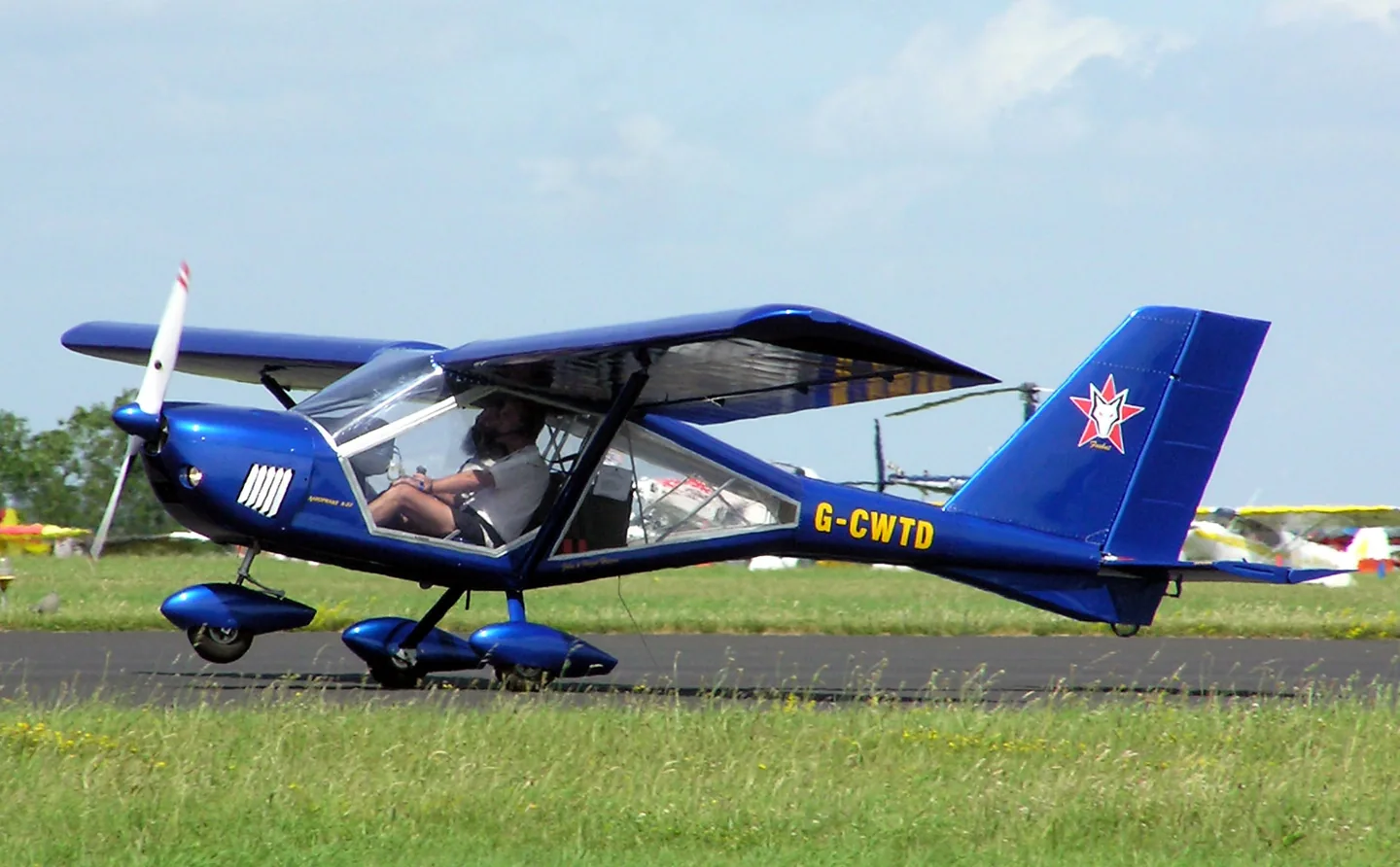
Aeroprakt A22Arpingstone · Public domain · Aeroprakt A22.

Aeroprakt A22

A high-wing light sport aircraft with a broad glazed cabin and tricycle landing gear.
General aviation3 opciones de perfil

Conoce el avión

The A22-LS is a Ukrainian light sport aircraft from Aeroprakt. Its high wing, wide cabin glazing and tricycle landing gear suit recreational flying and instruction, while the represented version uses a Rotax 912 ULS engine.

VSKYLABS supplies an analog cockpit and an optional simulated autopilot. Its documentation describes separate native X-Plane 11 and 12 products and an independent development approved by, but not affiliated with, Aeroprakt.

A-22LS; manufacturer published specification

Seats
2↗
Powerplant
Rotax 912 ULS or 912 iS, 100 hp↗
Maximum weight
1,323 lb (600 kg)↗
Cruise at 4,650 rpm
81 kt↗
Stall, flaps retracted
42 kt↗
Stall, full flaps
32 kt↗
Fuel capacity
24 US gal; 30 US gal optional↗
Undercarriage
Fixed tricycle; steerable nosewheel↗

Más sobre esta aeronave en AirframeDB

From the A22L to the heavier A22LS

The Foxbat family developed through several weight categories. Foxbat Australia records the 450 kg A22L as its early fleet mainstay, followed by the 600 kg, light-sport-compliant A22LS in 2009. A limited intermediate A22LSA used a 544 kg limit. Those suffixes identify meaningful versions, so an A22 family name alone is not enough to choose performance figures.

A working light aircraft with Ukrainian roots

Aeroprakt founders Yuriy Yakovlev and Oleg Litovchenko had worked at the Antonov design bureau. The Australian distributor describes a Kyiv factory supported by a company airfield, flying club and school. Its first Australian demonstrator arrived in 2002, and customer A22L deliveries followed in 2004.

Direct controls and full-span flaperons

Aeroprakt USA describes pushrod-operated aileron and elevator controls and full-span flaperons. Its account characterises the controls as light and the roll response as lively. That is useful qualitative guidance for the profile, but it does not supply a measured force-versus-speed curve.

Choose the cockpit as well as the aircraft

Aeroprakt offers either a central stick or paired yokes. The same aircraft family can therefore present different hand geometry, even before a simulator add-on chooses its cockpit. Hardware force scales remain a tuning decision rather than a dimension copied from the real controls.

A broad view and a simple airframe

The distributor describes an aluminium airframe with fabric on the control surfaces and lower wing surfaces. Extensive glazing and a broad cabin are part of its identity. The fixed landing gear separates ground texture from retractable-gear cues when explaining the simulator profile.

Fuentes públicas 6
  1. VSKYLABS Aerospace Simulations Aircraft Center: VSKYLABS Aeroprakt A22-LSOfficial developer / designated-store reference · checked 2026-09-14
  2. VSKYLABS Aeroprakt A22-LS. Comprehensive LSA simulation add-on for X-Plane Flight Simulator.Official developer / designated-store reference · checked 2026-09-14
  3. ICAO Doc 8643 — aircraft type designatorsPublic search data retrieved 2026-09-14; authority update 2026-09-03
  4. Aeroprakt A-22LS specificationsA-22LS manufacturer specification, checked 12 October 2026
  5. A22LS Foxbat construction and controlsDistributor description; handling language is qualitative
  6. Foxbat Australia: the A22 family in AustraliaDistributor first-hand history; distinguishes A22L, A22LSA and A22LS

Cómo lo modela el perfil

VSKYLABS Aeroprakt A22-LS

Free + Pro
X-Plane 12VSKYLABS

The A22-LS is a Ukrainian light sport aircraft from Aeroprakt. Its high wing, wide cabin glazing and tricycle landing gear suit recreational flying and instruction, while the represented version uses a Rotax 912 ULS engine.

This profile selects VSKYLABS Aeroprakt A22-LS for X-Plane 12.

Spring resistance builds with the selected airspeed response. A separate aerodynamic term adds speed-dependent control load.

Valid trim provides the configured pressure relief. Autopilot following is off.

Esta revisión exacta aún no está habilitada para su instalación pública.

Controls and trim

VSKYLABS documents light manual controls and ordinary pitch trim for its A22-LS. Its flap positions are 0, 10 and 20 degrees. The brake lever uses X-Plane's Wing Sweep assignment, which operates symmetric braking in this aircraft. The optional LSA autopilot has separate servo power; its inclusion does not establish a motorized control reference for Bridge.

Developer POH: hardware assignments, flight controls, brake lever and optional APVSKYLABS Aeroprakt A22-LS. Comprehensive LSA simulation add-on for X-Plane Flight Simulator.

The selected implementation

VSKYLABS A22-LS has Rotax, fixed tricycle gear and Wing Sweep brake assignment. Optional LSA AP and dummy throttle friction do not create control locks.

Developer POH: hardware assignments, flight controls, brake lever and optional AP

About the values

The gains are normalized profile settings. They describe the chosen effect balance; hand force depends on the device and its output limits. IAS references are tuning values rather than operating limits. Physical acceptance of this revision remains pending.

Master gain & control system

Master gain85%

La escala final de salida global aplicada a todo lo que produce el modelo, antes del tope del dispositivo.

Más: todo (muelle, cargas, efectos) se refuerza a la vez.

Menos: todo se suaviza a la vez.

Por qué aquí: Scales overall profile strength while preserving effect balance, subject to device and output limits.

Forces

Spring strength74%

La fuerza base de centrado que devuelve la palanca al centro. Todas las demás fuerzas se apilan sobre ella. Demasiado baja y la palanca se siente floja en vuelo normal; demasiado alta y lucha contra tu mano y enmascara las señales más pequeñas superpuestas.

Más: un centrado más firme que resiste más la mano.

Menos: una palanca más blanda que depende solo de la carga aerodinámica.

Por qué aquí: The A22-LS's light manual controls motivate an airspeed-dependent stick response while retaining the profile's own centering balance. The baseline spring is 0.74. Its low-speed blend reaches baseline strength at 45 KIAS.

Developer POH: hardware assignments, flight controls, brake lever and optional APVSKYLABS Aeroprakt A22-LS. Comprehensive LSA simulation add-on for X-Plane Flight Simulator.
Spring deadband4%

Una pequeña zona neutra alrededor del centro donde el muelle queda en silencio, para que los movimientos mínimos en reposo no traqueteen. Más ancha es más tranquila pero más suelta; más estrecha es más precisa pero puede vibrar en el centro.

Más: un centro más tranquilo pero más suelto, con más holgura.

Menos: un centro más apretado que puede vibrar en reposo.

Por qué aquí: Sets travel around the centre before the baseline spring resists. Smaller values engage it sooner.

Overall aerodynamic load80%

Una escala maestra sobre ambas cargas sostenidas de eje, aplicada antes de su equilibrio independiente. Los perfiles normalmente la dejan quieta y ajustan las dos cargas de eje.

Más: ambos ejes cargan más fuerte.

Menos: ambos ejes se aligeran a la vez.

Por qué aquí: The aerodynamic-load gain is 0.8 with an indicated-speed reference of 85 KIAS. This supplies speed-dependent loading alongside the spring.

Airspeed blendingTrue

Activa la ventana de acoplamiento del muelle a baja velocidad (nudos de inicio/pleno de arriba). Apagado, el muelle es constante a todas las velocidades.

Por qué aquí: Allows baseline spring strength to rise with indicated airspeed where the control law permits it.

Low-speed spring floor55%

Cuánto del muelle sobrevive con el avión parado, antes de que la velocidad pueda generar fuerza aerodinámica. Un suelo alto mantiene firme la palanca aparcada; uno bajo da la sensación suelta, de cables con holgura, de una avioneta estacionada.

Más: una palanca más firme aparcado y rodando.

Menos: una palanca floja aparcado que solo despierta con la velocidad.

Por qué aquí: Sets low-speed spring strength as a fraction of baseline when blending is enabled. One keeps full strength.

Spring engagement start10 kt

La velocidad a la que el muelle empieza a subir desde su suelo de baja velocidad hacia la fuerza plena: los mandos «cobrando vida» en la carrera de despegue.

Por qué aquí: Sets the IAS where the low-speed spring blend starts rising. This is a feel threshold, not a flight limit.

Spring engagement full45 kt

La velocidad a la que el muelle alcanza su fuerza plena. Entre el inicio y este punto, el centrado se endurece progresivamente a medida que el flujo de aire crece sobre los mandos.

Por qué aquí: Sets the IAS where the low-speed blend reaches baseline strength; high-speed stiffening also uses it.

Velocidad de ajuste de fuerza85

La velocidad indicada a la que la carga aerodinámica alcanza su nivel pleno de diseño. Ancla toda la curva de carga al rango real de velocidades del avión: un 172 carga hacia 110 nudos, un jet mucho después.

Más: las cargas llegan más tarde; la palanca sigue ligera hasta más velocidad.

Menos: las cargas llegan antes y el crucero pesa más.

Por qué aquí: Sets the IAS reference for aerodynamic loading. It is an estimate, not published cruise TAS or a flight limit.

Centre firmness vs speed15%

Cuánto se endurece el propio centrado con la velocidad, además de las cargas por deflexión. Cero mantiene constante la sensación de centro; más hace que la palanca centre más duro en crucero y más suelta en el circuito.

Más: un centro que endurece claramente con la velocidad.

Menos: una sensación de centro constante a cualquier velocidad.

Por qué aquí: The high-speed spring-stiffening gain is 0.15. It strengthens the permitted spring response above 45 KIAS, with the squared-speed ratio capped at 5.

Centre stiffening cap5

El límite superior del endurecimiento de centro por velocidad, para que el vuelo muy rápido no pueda tensar el muelle sin freno.

Más: más endurecimiento total permitido a alta velocidad.

Menos: el endurecimiento se corta antes.

Por qué aquí: Limits the squared airspeed ratio used for high-speed spring stiffening; it is not a device-force cap.

Aileron load64%

La carga sostenida de alabeo por deflexión de alerones y velocidad, equilibrada con independencia del cabeceo. Junto con la carga del timón de profundidad fija la relación de armonía de mandos de la que hablan las reseñas.

Más: esfuerzos de alabeo más pesados.

Menos: alerones más ligeros y vivos.

Por qué aquí: Roll and pitch aerodynamic scales are 0.64 and 0.82, respectively. They set the aerodynamic axis balance. No custom spring-travel curve is enabled.

Elevator load82%

La carga sostenida de cabeceo por deflexión del timón de profundidad y velocidad, equilibrada con independencia del alabeo. Es la palanca principal detrás del peso de cabeceo de un tipo. No toca alerones, muelle, compensador ni fuerzas de bataneo.

Más: esfuerzos sostenidos de cabeceo más pesados a velocidad.

Menos: una profundidad más ligera, con menos músculo que sostener.

Por qué aquí: Scales pitch aerodynamic loading; pitch spring travel and trim responses are separate settings.

Max output force55%

Un tope sobre cada fuerza estable de cabeceo o alabeo antes de llegar al dispositivo, protegiendo contra golpes o saturación del hardware en maniobras fuertes.

Más: picos de fuerza estable más altos antes del recorte.

Menos: un techo más suave; las maniobras duras se aplanan antes.

Por qué aquí: Caps directed-force output. Native spring effects and device limits remain separate.

Trim

Trim relief (elevator)30%

Con qué fuerza el compensador de profundidad alivia el esfuerzo de cabeceo mantenido y desplaza dónde se asienta la palanca. Al 100 %, un avión bien compensado no necesita presión mantenida: el flujo de trabajo de compensar la carga del vuelo real.

Más: el compensador quita más esfuerzo mantenido; al 100 %, compensado del todo lo anula.

Menos: sigues sosteniendo esfuerzo aun compensado.

Por qué aquí: Ordinary pitch trim supports pitch pressure relief; an in-flight aileron-trim mechanism is not established in the selected A22-LS documentation. Pitch authority 0.3 provides load relief and permitted centre movement; roll authority is 0.

Developer POH: hardware assignments, flight controls, brake lever and optional APVSKYLABS Aeroprakt A22-LS. Comprehensive LSA simulation add-on for X-Plane Flight Simulator.
Trim relief (aileron)0%

El mismo alivio para el compensador de alabeo. La mayoría de los tipos de aviación general no tienen compensador de alerones real, así que se queda a cero; los tipos con compensador de alabeo reciben un valor acorde.

Más: el compensador de alabeo quita más esfuerzo mantenido.

Menos: el compensador de alabeo hace menos.

Por qué aquí: Scales supported roll-trim relief and permitted centre movement. Zero removes roll response.

Effect gains · Ground

Runway rumble40%

Vibración de rodadura según la velocidad de las ruedas y el tipo de superficie: asfalto, hierba o grava bajo el tren.

Más: una textura de superficie más fuerte en la palanca.

Menos: un rodaje más liso.

Por qué aquí: Sets rolling texture strength, modified by speed, surface and undercarriage configuration.

Gear bumps25%

Golpes cortos y discretos de juntas de dilatación, surcos y superficie irregular, que puntúan el retumbo continuo.

Más: golpes más nítidos de juntas y surcos.

Menos: detalles de suelo más suaves.

Por qué aquí: Sets gear-bump texture during ground motion, separate from touchdown impact.

Effect gains · Airframe

Stall buffet35%

Sacudida de la célula al acercarse a la pérdida y mientras suena el aviso: cuán fuerte anuncia esta ala que está incómoda. Los tipos con entrada en pérdida seca reciben bataneo modesto y dejan que la bocina lleve el aviso.

Más: un temblor previo a la pérdida más fuerte.

Menos: un ala más discreta; la bocina lleva el aviso.

Por qué aquí: Sets stall-buffet strength. Zero removes the cue without changing simulator stalls or warnings.

Mach buffet0%

Bataneo transónico al acercarse al límite de Mach. Significativo para jets cerca de MMO, cero para pistones y turbohélices que nunca llegan.

Más: un bataneo transónico más fuerte cerca del límite de Mach.

Menos: un vuelo más liso a Mach alto.

Por qué aquí: Sets high-Mach buffet strength; onset and full-strength thresholds are separate.

Flap buffet0%

Vibración de baja frecuencia de la célula con los flaps extendidos al flujo, en la ventana de velocidad donde realmente trabajan el aire.

Más: un vuelo más áspero con flaps trabajando.

Menos: flaps de aproximación más suaves.

Por qué aquí: Sets flap buffet at the configured position and speed gates. Flap movement texture is separate.

Gear buffet0%

Tamborileo de la célula por el tren retráctil colgando en la corriente. Cero para tipos de tren fijo, donde la célula nunca cambia de forma.

Más: más tamborileo con el tren fuera.

Menos: un vuelo con tren fuera más limpio.

Por qué aquí: Sets gear aerodynamic buffet; movement and ground-contact cues are separate.

Stick shaker50%

El zumbido dedicado del stick shaker de pérdida, disparado por el propio sistema de aviso del avión. Solo los tipos con shaker real reciben un valor; el resto confía en el bataneo aerodinámico y la bocina.

Más: un shaker más duro.

Menos: un shaker más discreto.

Por qué aquí: Sets triggered shaker strength; inactive while the shaker feature is disabled.

Effect gains · Engine, mechanical & drag

Touchdown thump65%

El golpe único cuando las ruedas tocan la pista, escalado por la velocidad vertical: un aterrizaje fino susurra, una llegada firme golpea.

Más: un golpe más duro en la toma.

Menos: llegadas más suaves.

Por qué aquí: Sets landing-impact strength; landing telemetry and response shape determine the pulse.

Reverse rumble0%

Vibración de rodadura mientras trabajan la reversa o las hélices en rango beta. Cero para tipos sin reversa.

Más: un rodaje más áspero con reversa.

Menos: una reversa más discreta.

Por qué aquí: Sets reverse-thrust vibration with valid reverser and engine conditions. Zero removes the cue.

Engine rumble12%

Vibración continua del grupo motopropulsor siguiendo las RPM entre ralentí y plena potencia, el recordatorio siempre presente de que algo quema combustible delante.

Más: más motor en la palanca.

Menos: un motor más discreto.

Por qué aquí: Sets estimated engine vibration using configured telemetry and response, not measured cockpit vibration.

Flap motion12%

Vibración continua solo mientras el simulador informa de que las superficies de flap se mueven realmente. Sigue el movimiento y las averías reales del actuador, no un temporizador estimado.

Más: más vibración con los flaps en movimiento.

Menos: recorridos de flap más discretos.

Por qué aquí: Sets texture from observed flap movement; a command without movement does not establish the cue.

Autopilot follow

AP follow authority10%

Cuánto pueden mover físicamente la palanca las órdenes del piloto automático. Se mantiene minúsculo en MSFS, donde un eje movido puede leerse de vuelta como entrada del piloto; cero desactiva el seguimiento por completo.

Más: el piloto automático mueve tu palanca visiblemente más.

Menos: un seguimiento apenas perceptible.

Por qué aquí: Sets admitted AP-follow gain, not a percentage of travel. Runtime ownership and input limits still apply.

Stick feel

StickFeel · Trim feel enabledFalse

Whether this feature is active in this profile.

Por qué aquí: Retained for compatibility and group membership. Trim relief, rather than this flag, controls centre movement.

StickFeel · Trim relief enabledTrue

Whether this feature is active in this profile.

Por qué aquí: Allows trim relief with supported control law and valid telemetry. Axis authorities set its amount.

StickFeel · Force trim enabledFalse

Whether this feature is active in this profile.

Por qué aquí: Enables local force trim, separate from aircraft-owned trim and add-on integration qualification.

StickFeel · G load enabledTrue

Whether this feature is active in this profile.

Por qué aquí: Allows load-factor changes to modify permitted spring laws. Passive fly-by-wire feel can suppress it.

StickFeel · Rate damping enabledTrue

Whether this feature is active in this profile.

Por qué aquí: Enables rate damping with the configured coefficients and control law.

Autopilot

Autopilot · Follow enabledFalse

Whether this feature is active in this profile.

Por qué aquí: Autopilot following is off; the configured spring and load retain the hardware feel.

Autopilot · Neutral hold enabledFalse

Whether this feature is active in this profile.

Por qué aquí: Permits centering hold during a supported AP state, separate from following a moving target.

Autopilot · Neutral hold strength0.6

Por qué aquí: Sets admitted AP neutral-hold strength; inactive while neutral hold is disabled.

Aero

Aero · EnabledTrue

Whether this feature is active in this profile.

Por qué aquí: Enables aerodynamic cues; each still needs nonzero strength and its simulator conditions.

Aero · Max flap index2

Where this effect reaches full strength (or has fully faded, for washouts).

Más: a more gradual build to a later peak.

Menos: a quicker build.

Por qué aquí: Sets the final flap index for detent normalization. UP plus three detents uses maximum index3.

Aero · Min flap index2

Where this effect begins fading in.

Más: the effect begins later.

Menos: it begins earlier.

Por qué aquí: Sets the first flap detent that admits buffet; this is a handle index, not degrees.

Aero · Shaker enabledFalse

Whether this feature is active in this profile.

Por qué aquí: Permits shaker at supported warning conditions; the switch does not establish aircraft equipment.

Ground

Ground · EnabledTrue

Whether this feature is active in this profile.

Por qué aquí: Enables ground effects; each still needs its own strength and contact or motion telemetry.

Engine

Engine · EnabledTrue

Whether this feature is active in this profile.

Por qué aquí: Enables engine cues with nonzero settings and valid running-engine telemetry.

Mechanical

Mechanical · EnabledTrue

Whether this feature is active in this profile.

Por qué aquí: Enables accessory cues with configured strengths and observed accessory movement.

Mechanical · Gain0

The strength of this effect.

Más: a stronger effect.

Menos: a weaker one.

Por qué aquí: Sets texture from observed gear movement, separate from aerodynamic and touchdown effects.

Todos los ajustes del perfil
Ajustes estimados del perfil
ParámetroValorQué controla y por qué
Spring strength0.74 The A22-LS's light manual controls motivate an airspeed-dependent stick response while retaining the profile's own centering balance. The baseline spring is 0.74. Its low-speed blend reaches baseline strength at 45 KIAS.
Spring deadband0.04 Sets travel around the centre before the baseline spring resists. Smaller values engage it sooner.
Force gain0.8 The aerodynamic-load gain is 0.8 with an indicated-speed reference of 85 KIAS. This supplies speed-dependent loading alongside the spring.
Master gain0.85 Scales overall profile strength while preserving effect balance, subject to device and output limits.
Dynamic-pressure blendTrue Allows baseline spring strength to rise with indicated airspeed where the control law permits it.
Minimum spring factor0.55 Sets low-speed spring strength as a fraction of baseline when blending is enabled. One keeps full strength.
Spring wake-up speed10 ktSets the IAS where the low-speed spring blend starts rising. This is a feel threshold, not a flight limit.
Spring full-strength speed45 ktSets the IAS where the low-speed blend reaches baseline strength; high-speed stiffening also uses it.
Velocidad de ajuste de fuerza85 ktSets the IAS reference for aerodynamic loading. It is an estimate, not published cruise TAS or a flight limit.
Airspeed spring stiffening0.15 The high-speed spring-stiffening gain is 0.15. It strengthens the permitted spring response above 45 KIAS, with the squared-speed ratio capped at 5.
Airspeed stiffening cap5 Limits the squared airspeed ratio used for high-speed spring stiffening; it is not a device-force cap.
Aileron force scale0.64 Roll and pitch aerodynamic scales are 0.64 and 0.82, respectively. They set the aerodynamic axis balance. No custom spring-travel curve is enabled.
Elevator force scale0.82 Scales pitch aerodynamic loading; pitch spring travel and trim responses are separate settings.
Maximum output force0.55 Caps directed-force output. Native spring effects and device limits remain separate.
StickFeel · Trim feel enabledFalse Retained for compatibility and group membership. Trim relief, rather than this flag, controls centre movement.
StickFeel · Trim relief enabledTrue Allows trim relief with supported control law and valid telemetry. Axis authorities set its amount.
StickFeel · Elevator authority0.3 Ordinary pitch trim supports pitch pressure relief; an in-flight aileron-trim mechanism is not established in the selected A22-LS documentation. Pitch authority 0.3 provides load relief and permitted centre movement; roll authority is 0.
StickFeel · Aileron authority0 Scales supported roll-trim relief and permitted centre movement. Zero removes roll response.
StickFeel · Force trim enabledFalse Enables local force trim, separate from aircraft-owned trim and add-on integration qualification.
StickFeel · G load enabledTrue Allows load-factor changes to modify permitted spring laws. Passive fly-by-wire feel can suppress it.
StickFeel · Rate damping enabledTrue Enables rate damping with the configured coefficients and control law.
Autopilot · Follow enabledFalse Autopilot following is off; the configured spring and load retain the hardware feel.
Autopilot · Follow authority0.1 Sets admitted AP-follow gain, not a percentage of travel. Runtime ownership and input limits still apply.
Autopilot · Neutral hold enabledFalse Permits centering hold during a supported AP state, separate from following a moving target.
Autopilot · Neutral hold strength0.6 Sets admitted AP neutral-hold strength; inactive while neutral hold is disabled.
Aero · EnabledTrue Enables aerodynamic cues; each still needs nonzero strength and its simulator conditions.
Aero · Gain0.35 Sets stall-buffet strength. Zero removes the cue without changing simulator stalls or warnings.
Aero · Gain0 Sets high-Mach buffet strength; onset and full-strength thresholds are separate.
Aero · Gain0 Sets flap buffet at the configured position and speed gates. Flap movement texture is separate.
Aero · Max flap index2 Sets the final flap index for detent normalization. UP plus three detents uses maximum index3.
Aero · Min flap index2 Sets the first flap detent that admits buffet; this is a handle index, not degrees.
Aero · Gain0 Sets gear aerodynamic buffet; movement and ground-contact cues are separate.
Aero · Shaker enabledFalse Permits shaker at supported warning conditions; the switch does not establish aircraft equipment.
Aero · Amplitude0.5 Sets triggered shaker strength; inactive while the shaker feature is disabled.
Ground · EnabledTrue Enables ground effects; each still needs its own strength and contact or motion telemetry.
Ground · Gain0.4 Sets rolling texture strength, modified by speed, surface and undercarriage configuration.
Ground · Gain0.25 Sets gear-bump texture during ground motion, separate from touchdown impact.
Ground · Gain0.65 Sets landing-impact strength; landing telemetry and response shape determine the pulse.
Ground · Gain0 Sets reverse-thrust vibration with valid reverser and engine conditions. Zero removes the cue.
Engine · EnabledTrue Enables engine cues with nonzero settings and valid running-engine telemetry.
Engine · Gain0.12 Sets estimated engine vibration using configured telemetry and response, not measured cockpit vibration.
Mechanical · EnabledTrue Enables accessory cues with configured strengths and observed accessory movement.
Mechanical · Gain0.12 Sets texture from observed flap movement; a command without movement does not establish the cue.
Mechanical · Gain0 Sets texture from observed gear movement, separate from aerodynamic and touchdown effects.
Fuentes públicas 7
  1. VSKYLABS Aerospace Simulations Aircraft Center: VSKYLABS Aeroprakt A22-LSOfficial developer / designated-store reference ·Official developer / designated-store reference · checked 2026-09-14
  2. Developer POH: hardware assignments, flight controls, brake lever and optional APDeveloper POH: hardware assignments, flight controls, brake lever and optional AP
  3. VSKYLABS Aeroprakt A22-LS. Comprehensive LSA simulation add-on for X-Plane Flight Simulator.Official developer / designated-store reference ·Official developer / designated-store reference · checked 2026-09-14
  4. ICAO Doc 8643 — aircraft type designatorsPublic search data retrieved 2026-09-14; authority update 2026-09-03
  5. Aeroprakt A-22LS specificationsA-22LS manufacturer specification, checked 12 October 2026
  6. A22LS Foxbat construction and controlsDistributor description; handling language is qualitative
  7. Foxbat Australia: the A22 family in AustraliaDistributor first-hand history; distinguishes A22L, A22LSA and A22LS

Comunidad y correcciones

Si tu experiencia en el tipo dice que esta página se equivoca, corrígela aquí.

Correcciones de pilotos

¿Vuelas esta aeronave? Corrige esta página.

Esta página se construye con referencias citadas, y la experiencia real en el tipo vale más que una cita. Cita la afirmación errónea y cuéntanos qué hace la aeronave real. Las correcciones van al mantenedor para revisión y alimentan la próxima revisión de esta investigación.

Charla de hangar

Conversación abierta sobre volar y ajustar el Aeroprakt A22, en el foro de la comunidad. Las correcciones de arriba van en privado al mantenedor; la charla de hangar es pública.

Aún no hay charla de hangar sobre el Aeroprakt A22. Sé quien la empiece.

Comunidad

Perfiles de la comunidad para esta aeronave

Aún no hay perfiles de la comunidad para esta aeronave. ¿Lo ajustaste a tu manera? Comparte un perfil y aparecerá aquí.