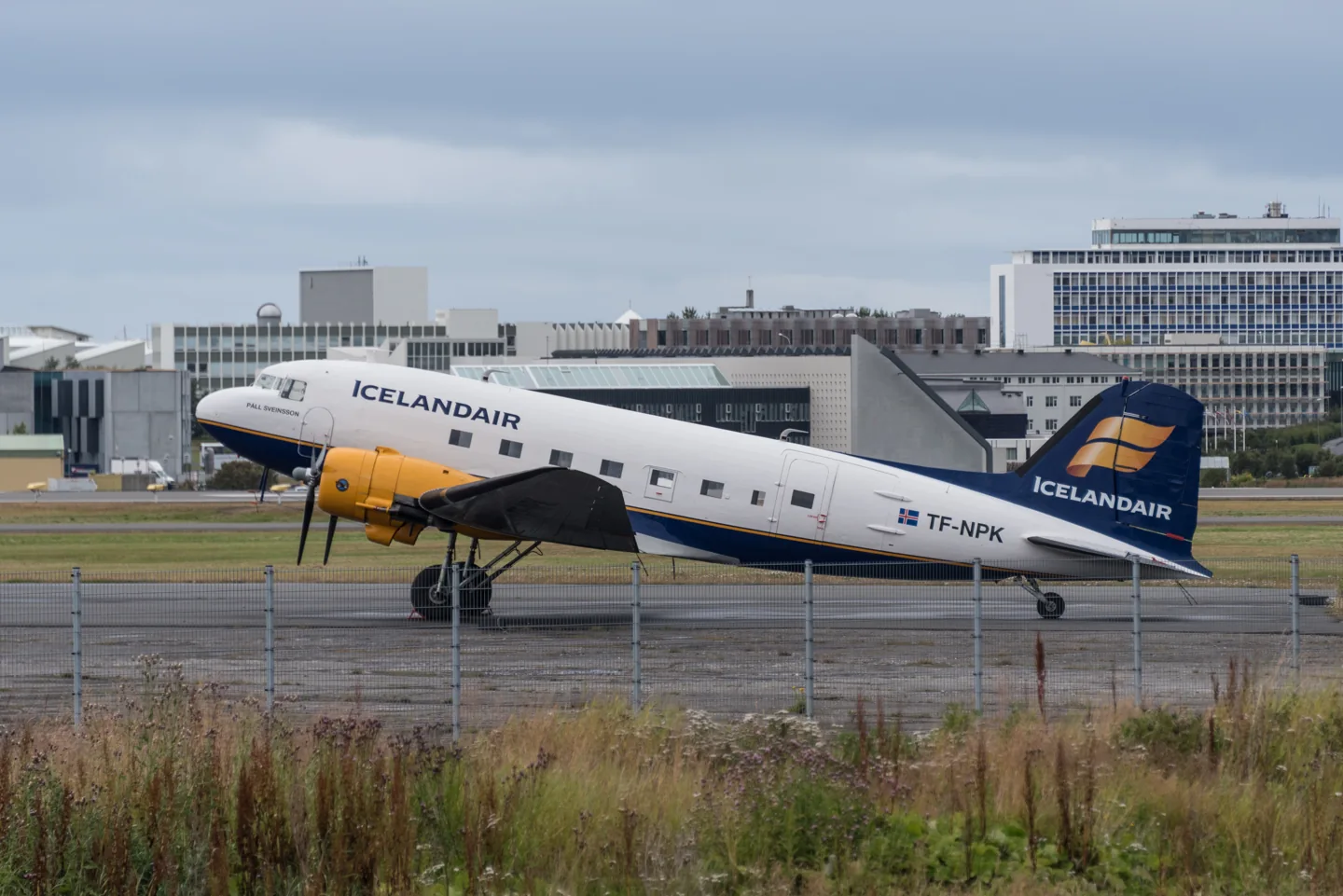
Douglas DC-3Gordon Leggett · CC BY-SA 4.0 · Douglas DC-3.

Douglas DC-3

A twin-radial airliner that helped make practical passenger transport a regular business.
VintageВариантов профиля: 9

Знакомство с воздушным судном

The DC-3 developed from Douglas's earlier DC-2 and sleeper-transport work. Its low-wing metal airframe, retractable main gear and two radial engines became a familiar sight on airline routes. Military derivatives expanded the design's influence during the Second World War.

Civilian survivors have carried passengers and freight with a wide range of later equipment. In simulation, a vintage cockpit with a Sperry system and a modernised navigation installation are different interpretations of that long life. Their manuals explain which period and equipment the virtual aircraft represents.

Aircraft / family

Propulsion
Twin piston↗
Configuration
Airliner / freighter · Tailwheel↗

Douglas DC-3 · Specifications (DC-3A-S1C3G) · real aircraft; source units retained

Length
64 ft 5 in (19.7 m)↗
Wingspan
95 ft 0 in (29.0 m)↗
Height
16 ft 9 in (5.16 m) (level attitude) 23 ft 6 in↗
Wing area
987 sq ft (91.7 m² )↗
Empty weight
16,865 lb (7,650 kg)↗
Gross weight
25,200 lb (11,431 kg) payload w/full fuel, 3,446 lb↗
Powerplant
2 × Pratt & Whitney R-1830-S1C3G Twin Wasp 14-cyl. air-cooled two row radial piston engine, 1,200 hp (890 kW) each↗
Propellers
3-bladed Hamilton Standard 23E50 series, 11 ft 6 in (3.5 m) diameter hydraulically controlled constant speed, feathering↗
Maximum speed
223 kn (257 mph, 413 km/h) at 8,500 ft (2,590 m)↗
Cruise speed
183 kn (211 mph, 339 km/h)↗

Подробнее об этом воздушном судне на AirframeDB

Learning the aeroplane that shared his home airport

Schiff’s introduction to the DC-3 brought him back to the airport where he had first learned to fly. Santa Monica also happened to be the birthplace of the aircraft he was now training in. Jan Aarvik and his family supplied both the aeroplane and the instruction, turning a long-held ambition into a very personal encounter with aviation history.

The first takeoff demanded a new perspective: raising the tail made the nose seem alarmingly close to the ground. In flight, substantial control forces made good trimming welcome and gave Schiff fresh respect for the crews who had worked these aircraft on airline schedules. Smaller details stayed with him too, including the open-window airflow and oil on his shirt.

Bringing a retired airliner home through winter

Lamb’s purchase of a retired Ariana DC-3 became a long winter journey shared first with his wife Barbara. Weather and delays disrupted the plan, and she eventually returned home to their children while he continued with Iranian pilot Mohammed Hassani. The recollection includes the improvised arrangements and admitted shortcomings that accompanied the delivery, as well as its excitement.

In Europe, maintenance and additional ferry fuel prepared the aircraft for the Atlantic crossing. A later heater failure made the journey across the cold northern route particularly uncomfortable, with blankets providing what comfort they could. Help from airport staff and an engineer became part of the story of getting home. By the time Lamb reached Canada, the purchased transport had acquired personal significance through the people and difficulties encountered along the way.

A young copilot watches experience at work in fog

As a young copilot, Sohn watched Captain Bill Robbins work through a difficult arrival in fog. Repeated attempts to find a usable view of the runway gave him time to study how the captain combined instrument flying with knowledge of the surrounding ground. A fence line and differently shaped hay bales became memorable details in the effort to recognise their position.

The crew eventually landed, then dealt with the practical business of obtaining a renewed departure clearance. Years later, Sohn’s attention also turned to the people sitting behind them. He wondered what the passengers had made of the repeated manoeuvring and the limited explanation they received. The recollection therefore looks beyond the satisfaction of completing an arrival, adding a more reflective passenger perspective to a formative cockpit memory.

Открытые источники 12
  1. Douglas DC-3Research background · Wikipedia revision 1373845698 · retrieved 2026-09-12
  2. DC-3 Operations Manual
  3. Microsoft Flight Simulator aircraft manuals
  4. MSFS 2024 FAQ and edition aircraft inventory
  5. MSFS 2020 FAQ and edition aircraft inventory
  6. Flying the DC-3Barry Schiff · 5 June 1994
  7. DC-3 ferry flight from KabulJack Lamb · retrospective account; chronology conflicts
  8. Bill Robbins and the Hay BalesRandy L. Sohn · 1999 recollection of a 1961 flight
  9. VSKYLABS DC-3C Airliner. Highly-Engineered DC-3C simulation add-on for X-Plane.Official developer / designated-store reference · checked 2026-09-14
  10. VSKYLABS Aerospace Simulations Aircraft Center: VSKYLABS DC-3C AirlinerOfficial developer / designated-store reference · checked 2026-09-14
  11. ICAO Doc 8643 — aircraft type designatorsPublic search data retrieved 2026-09-14; authority update 2026-09-03
  12. LES Douglas DC-3 v2, X-AviationProduct listing captured 2026-09-23; edition scope from the reviewed catalogue

Как профиль это моделирует

Douglas DC-3 Civil Airliner Skis

Free + Pro
MSFS 2020MSFS 2024X-Plane 12

A twin-radial airliner that helped make practical passenger transport a regular business.

Spring resistance builds with the selected airspeed response. A separate aerodynamic term adds speed-dependent control load.

Valid trim provides the configured pressure relief. Autopilot following is off.

Эта точная редакция пока не доступна для публичной установки.

Aircraft and configuration

The documented ski/wheel projection adds drag; gear and flap accessories are hydraulic, with three-axis trim tabs.

Manual fabric-covered primary controls. Accessory hydraulics operate gear/flaps and AP, not irreversible pilot primary controls.

dc 3c aircraft controls.htmlVSKYLABS Aerospace Simulations Aircraft Center: VSKYLABS DC-3C Airlinerdc 3c landing gears skis.html

About the values

Strengths are normalized hardware-feel settings. They set the effect balance; hand force depends on the device and its limits. The IAS reference is a tuning value.

Общее усиление и система управления

Master gain85%

Итоговый общий масштаб вывода, применяемый ко всему, что выдает модель, до ограничения устройства.

Больше: все (пружина, нагрузки, эффекты) одновременно усиливается.

Меньше: все одновременно становится мягче.

Почему так: Scales overall profile strength while preserving effect balance, subject to device and output limits.

Усилия

Spring strength74%

Базовое центрирующее усилие, которое возвращает джойстик в центр. Все остальные усилия накладываются на него. Слишком низкое — и джойстик кажется вялым в обычном полете; слишком высокое — и он сопротивляется руке и заглушает более слабые эффекты, наложенные поверх.

Больше: более жесткое центрирование, постоянно сопротивляющееся руке.

Меньше: более вялый джойстик, опирающийся только на аэродинамическую нагрузку.

Почему так: This profile uses reversible-control loading for Douglas DC-3. The baseline spring is 0.74. Its low-speed blend reaches baseline strength at 45 KIAS.

Overall aerodynamic load80%

Общий множитель для обеих постоянных нагрузок по осям, применяемый до их независимой балансировки. Обычно профили его не трогают и вместо этого настраивают нагрузки двух осей.

Больше: обе оси нагружаются сильнее.

Меньше: обе оси одновременно становятся легче.

Почему так: The aerodynamic-load gain is 0.8 with an indicated-speed reference of 150 KIAS. This supplies speed-dependent loading alongside the spring.

Elevator load100%

Постоянная нагрузка по тангажу от отклонения руля высоты и скорости, балансируемая независимо от крена. Это главный регулятор тяжести тангажа у данного типа. Он не затрагивает усилия элеронов, пружины, триммера и бафтинга.

Больше: более тяжелые постоянные усилия по тангажу на скорости.

Меньше: более легкий руль высоты, который требует меньше сил для удержания.

Почему так: Scales pitch aerodynamic loading; pitch spring travel and trim responses are separate settings.

Aileron load72%

Постоянная нагрузка по крену от отклонения элеронов и скорости, балансируемая независимо от тангажа. Вместе с нагрузкой руля высоты она задает соотношение усилий по осям (гармонию управления), о котором пишут обозреватели.

Больше: более тяжелые усилия по крену.

Меньше: более легкие элероны, которые кажутся более быстрыми.

Почему так: Roll and pitch aerodynamic scales are 0.72 and 1, respectively. They set the aerodynamic axis balance. No custom spring-travel curve is enabled.

Max output force55%

Ограничение каждого постоянного усилия по тангажу или крену до того, как оно дойдет до устройства; защищает оборудование от ударов и насыщения при энергичных маневрах.

Больше: более сильные пиковые постоянные усилия до срезания.

Меньше: более мягкий предел; при резких маневрах усилие раньше перестает расти.

Почему так: Caps directed-force output. Native spring effects and device limits remain separate.

Скорость настройки усилия150

Приборная скорость, на которой аэродинамическая нагрузка достигает расчетного полного уровня. Она привязывает всю кривую нагрузки к реальному диапазону скоростей воздушного судна: у 172 нагрузка набирается к 110 узлам, у реактивного самолета — намного позже.

Больше: нагрузки приходят позже; джойстик остается легким до более высокой скорости.

Меньше: нагрузки приходят раньше, и в крейсерском полете управление тяжелее.

Почему так: Sets the IAS reference for aerodynamic loading. It is an estimate, not published cruise TAS or a flight limit.

Spring deadband4%

Небольшая нейтральная зона вокруг центра, в которой пружина не действует, чтобы мелкие движения в покое не вызывали дребезга. Шире — спокойнее, но свободнее; уже — точнее, но джойстик может подергиваться около центра.

Больше: более спокойный, но более свободный центр с большим люфтом.

Меньше: более плотный центр, который может дребезжать в покое.

Почему так: Sets travel around the centre before the baseline spring resists. Smaller values engage it sooner.

Airspeed blendingTrue

Включает окно нарастания пружины на малой скорости (начальная и полная скорость в узлах, см. выше). Если выключено, пружина постоянна на всех скоростях.

Почему так: Allows baseline spring strength to rise with indicated airspeed where the control law permits it.

Low-speed spring floor55%

Какая доля пружины сохраняется на стоянке, пока скорость еще не создала никакого аэродинамического усилия. Высокий минимум оставляет джойстик на стоянке упругим; низкий дает свободные ощущения провисших тросов, как у легкого самолета на стоянке.

Больше: более упругий джойстик на стоянке и при рулении.

Меньше: более свободно болтающийся джойстик на стоянке, который оживает только с ростом скорости.

Почему так: Sets low-speed spring strength as a fraction of baseline when blending is enabled. One keeps full strength.

Spring engagement start10 kt

Скорость, на которой пружина начинает расти от минимума на малой скорости к полной силе: органы управления «оживают» на разбеге.

Почему так: Sets the IAS where the low-speed spring blend starts rising. This is a feel threshold, not a flight limit.

Spring engagement full45 kt

Скорость, на которой пружина достигает полной силы. Между начальной скоростью и этой точкой центрирование постепенно становится жестче по мере усиления обтекания рулей.

Почему так: Sets the IAS where the low-speed blend reaches baseline strength; high-speed stiffening also uses it.

Centre firmness vs speed15%

Насколько само центрирование становится жестче со скоростью, в дополнение к нагрузкам от отклонения. Ноль сохраняет ощущения в центре постоянными; большее значение делает центр джойстика жестче в крейсерском полете и мягче при полете по кругу.

Больше: центр заметно становится жестче с ростом скорости.

Меньше: постоянные ощущения в центре на любой скорости.

Почему так: The high-speed spring-stiffening gain is 0.15. It strengthens the permitted spring response above 45 KIAS, with the squared-speed ratio capped at 5.

Centre stiffening cap5

Верхний предел скоростного ужесточения центра, чтобы очень быстрый полет не мог затягивать пружину без ограничений.

Больше: на большой скорости допускается большее общее ужесточение.

Меньше: ужесточение ограничивается раньше.

Почему так: Limits the squared airspeed ratio used for high-speed spring stiffening; it is not a device-force cap.

Триммер

Trim relief (elevator)30%

Насколько сильно триммер руля высоты снимает удерживаемое усилие по тангажу и смещает положение, в котором устанавливается джойстик. При 100% правильно оттриммированное воздушное судно не требует удерживающего давления — как в реальном полете, где нагрузку снимают триммером.

Больше: триммер снимает большую часть удерживаемого усилия по тангажу; при 100% полное триммирование сводит его к нулю.

Меньше: даже после триммирования приходится удерживать усилие.

Почему так: The profile uses the trim behaviour configured below. Pitch authority 0.3 provides load relief and permitted centre movement; roll authority is 0.17.

Trim relief (aileron)17%

Такая же разгрузка для триммера крена. У большинства типов авиации общего назначения нет настоящего триммера элеронов, поэтому здесь остается ноль; типы с триммером крена получают соответствующее значение.

Больше: триммер крена снимает больше удерживаемого усилия по крену.

Меньше: триммер крена действует слабее.

Почему так: Scales supported roll-trim relief and permitted centre movement. Zero removes roll response.

Усиление эффектов · Земля

Runway rumble24%

Вибрация при качении по поверхности в зависимости от скорости колес и типа покрытия: асфальт, трава или гравий под шасси.

Больше: более выраженная фактура покрытия в джойстике.

Меньше: более плавное руление.

Почему так: Manual primary-control loading and ski contact remain estimates; accessory hydraulics do not establish powered primary controls or water-contact behavior.

Gear bumps18%

Короткие отдельные толчки от деформационных швов, колеи и неровного покрытия, прерывающие непрерывную тряску.

Больше: более резкие удары от стыков и колеи.

Меньше: более мягкие детали покрытия.

Почему так: Sets gear-bump texture during ground motion, separate from touchdown impact.

Усиление эффектов · Планер

Stall buffet35%

Тряска планера при приближении к сваливанию и пока активна сигнализация сваливания: насколько громко это крыло сообщает, что ему плохо. Типы с четким сваливанием получают умеренный бафтинг и оставляют предупреждение звуковой сирене.

Больше: более сильная тряска перед сваливанием.

Меньше: более спокойное крыло; предупреждает звуковая сирена.

Почему так: Sets stall-buffet strength. Zero removes the cue without changing simulator stalls or warnings.

Mach buffet0%

Трансзвуковой бафтинг при приближении к ограничению по числу М. Имеет смысл для реактивных самолетов вблизи MMO; ноль для поршневых и турбовинтовых, которые туда никогда не добираются.

Больше: более сильный трансзвуковой бафтинг вблизи ограничения по числу М.

Меньше: более плавный полет на больших числах М.

Почему так: Sets high-Mach buffet strength; onset and full-strength thresholds are separate.

Flap buffet0%

Низкочастотная вибрация планера при выпущенных в поток закрылках, в том диапазоне скоростей, где они действительно работают в потоке.

Больше: более тряский полет, когда закрылки работают в потоке.

Меньше: более плавный заход с выпущенными закрылками.

Почему так: Sets flap buffet at the configured position and speed gates. Flap movement texture is separate.

Gear buffet0%

Дробная вибрация планера от выпущенного в поток убираемого шасси. Ноль для типов с неубираемым шасси, у которых форма планера никогда не меняется.

Больше: сильнее дробная вибрация с выпущенными колесами.

Меньше: более чистый полет с выпущенным шасси.

Почему так: Sets gear aerodynamic buffet; movement and ground-contact cues are separate.

Stick shaker50%

Отдельное дрожание вибратора штурвала при сваливании, запускаемое собственной системой предупреждения о сваливании воздушного судна. Значение получают только типы с настоящим вибратором штурвала; все остальные полагаются на аэродинамический бафтинг и звуковую сирену.

Больше: более сильное дрожание вибратора штурвала.

Меньше: более слабый вибратор штурвала.

Почему так: Sets triggered shaker strength; inactive while the shaker feature is disabled.

Усиление эффектов · Двигатель, механика и сопротивление

Touchdown thump32%

Разовый толчок при касании колесами ВПП, зависящий от вертикальной скорости снижения: мягкая посадка едва ощутима, жесткая отдается ударом.

Больше: более сильный толчок при касании.

Меньше: более мягкие посадки.

Почему так: Sets landing-impact strength; landing telemetry and response shape determine the pulse.

Reverse rumble0%

Вибрация на пробеге при работе реверса тяги или винтов в бета-режиме. Ноль для типов без реверса.

Больше: более тряский пробег на реверсе.

Меньше: более тихий реверс.

Почему так: Sets reverse-thrust vibration with valid reverser and engine conditions. Zero removes the cue.

Engine rumble12%

Непрерывная вибрация силовой установки, следующая за оборотами от малого газа до полной мощности, — постоянное напоминание о том, что впереди что-то сжигает топливо.

Больше: двигатель сильнее ощущается в джойстике.

Меньше: более тихая силовая установка.

Почему так: Sets estimated engine vibration using configured telemetry and response, not measured cockpit vibration.

Flap motion12%

Непрерывная вибрация, только пока симулятор сообщает, что закрылки действительно движутся. Она следует за реальным движением приводов и отказами, а не за расчетным таймером.

Больше: сильнее вибрация, пока закрылки движутся.

Меньше: более тихое движение закрылков.

Почему так: Sets texture from observed flap movement; a command without movement does not establish the cue.

Следование за автопилотом

AP follow authority10%

Насколько далеко команды автопилота могут физически перемещать джойстик. В MSFS значение минимально, потому что смещенная ось может считываться обратно как ввод пилота; ноль полностью отключает следование.

Больше: автопилот заметно дальше отклоняет ваш джойстик.

Меньше: едва ощутимое следование.

Почему так: Sets admitted AP-follow gain, not a percentage of travel. Runtime ownership and input limits still apply.

Stick feel

StickFeel · Trim feel enabledFalse

Whether this feature is active in this profile.

Почему так: Retained for compatibility and group membership. Trim relief, rather than this flag, controls centre movement.

StickFeel · Trim relief enabledTrue

Whether this feature is active in this profile.

Почему так: Allows trim relief with supported control law and valid telemetry. Axis authorities set its amount.

StickFeel · Force trim enabledFalse

Whether this feature is active in this profile.

Почему так: Enables local force trim, separate from aircraft-owned trim and add-on integration qualification.

StickFeel · G load enabledTrue

Whether this feature is active in this profile.

Почему так: Allows load-factor changes to modify permitted spring laws. Passive fly-by-wire feel can suppress it.

StickFeel · Rate damping enabledTrue

Whether this feature is active in this profile.

Почему так: Enables rate damping with the configured coefficients and control law.

Autopilot

Autopilot · Follow enabledFalse

Whether this feature is active in this profile.

Почему так: Autopilot following is off; the configured spring and load retain the hardware feel.

Autopilot · Neutral hold enabledFalse

Whether this feature is active in this profile.

Почему так: Permits centering hold during a supported AP state, separate from following a moving target.

Autopilot · Neutral hold strength0.6

Почему так: Sets admitted AP neutral-hold strength; inactive while neutral hold is disabled.

Aero

Aero · EnabledTrue

Whether this feature is active in this profile.

Почему так: Enables aerodynamic cues; each still needs nonzero strength and its simulator conditions.

Aero · Max flap index3

Where this effect reaches full strength (or has fully faded, for washouts).

Больше: a more gradual build to a later peak.

Меньше: a quicker build.

Почему так: Sets the final flap index for detent normalization. UP plus three detents uses maximum index3.

Aero · Min flap index2

Where this effect begins fading in.

Больше: the effect begins later.

Меньше: it begins earlier.

Почему так: Sets the first flap detent that admits buffet; this is a handle index, not degrees.

Aero · Shaker enabledFalse

Whether this feature is active in this profile.

Почему так: Permits shaker at supported warning conditions; the switch does not establish aircraft equipment.

Ground

Ground · EnabledTrue

Whether this feature is active in this profile.

Почему так: Enables ground effects; each still needs its own strength and contact or motion telemetry.

Engine

Engine · EnabledTrue

Whether this feature is active in this profile.

Почему так: Enables engine cues with nonzero settings and valid running-engine telemetry.

Mechanical

Mechanical · EnabledTrue

Whether this feature is active in this profile.

Почему так: Enables accessory cues with configured strengths and observed accessory movement.

Mechanical · Gain0.025

The strength of this effect.

Больше: a stronger effect.

Меньше: a weaker one.

Почему так: Sets texture from observed gear movement, separate from aerodynamic and touchdown effects.

Все настройки профиля
Оценочные настройки профиля
ПараметрЗначениеЧто регулирует и почему
Spring strength0.74 This profile uses reversible-control loading for Douglas DC-3. The baseline spring is 0.74. Its low-speed blend reaches baseline strength at 45 KIAS.
Force gain0.8 The aerodynamic-load gain is 0.8 with an indicated-speed reference of 150 KIAS. This supplies speed-dependent loading alongside the spring.
Elevator force scale1.0 Scales pitch aerodynamic loading; pitch spring travel and trim responses are separate settings.
Aileron force scale0.72 Roll and pitch aerodynamic scales are 0.72 and 1, respectively. They set the aerodynamic axis balance. No custom spring-travel curve is enabled.
Maximum output force0.55 Caps directed-force output. Native spring effects and device limits remain separate.
StickFeel · Elevator authority0.3 The profile uses the trim behaviour configured below. Pitch authority 0.3 provides load relief and permitted centre movement; roll authority is 0.17.
StickFeel · Aileron authority0.17 Scales supported roll-trim relief and permitted centre movement. Zero removes roll response.
Скорость настройки усилия150 ktSets the IAS reference for aerodynamic loading. It is an estimate, not published cruise TAS or a flight limit.
Ground · Gain0.24 Manual primary-control loading and ski contact remain estimates; accessory hydraulics do not establish powered primary controls or water-contact behavior.
Spring deadband0.04 Sets travel around the centre before the baseline spring resists. Smaller values engage it sooner.
Master gain0.85 Scales overall profile strength while preserving effect balance, subject to device and output limits.
Dynamic-pressure blendTrue Allows baseline spring strength to rise with indicated airspeed where the control law permits it.
Minimum spring factor0.55 Sets low-speed spring strength as a fraction of baseline when blending is enabled. One keeps full strength.
Spring wake-up speed10 ktSets the IAS where the low-speed spring blend starts rising. This is a feel threshold, not a flight limit.
Spring full-strength speed45 ktSets the IAS where the low-speed blend reaches baseline strength; high-speed stiffening also uses it.
Airspeed spring stiffening0.15 The high-speed spring-stiffening gain is 0.15. It strengthens the permitted spring response above 45 KIAS, with the squared-speed ratio capped at 5.
Airspeed stiffening cap5 Limits the squared airspeed ratio used for high-speed spring stiffening; it is not a device-force cap.
StickFeel · Trim feel enabledFalse Retained for compatibility and group membership. Trim relief, rather than this flag, controls centre movement.
StickFeel · Trim relief enabledTrue Allows trim relief with supported control law and valid telemetry. Axis authorities set its amount.
StickFeel · Force trim enabledFalse Enables local force trim, separate from aircraft-owned trim and add-on integration qualification.
StickFeel · G load enabledTrue Allows load-factor changes to modify permitted spring laws. Passive fly-by-wire feel can suppress it.
StickFeel · Rate damping enabledTrue Enables rate damping with the configured coefficients and control law.
Autopilot · Follow enabledFalse Autopilot following is off; the configured spring and load retain the hardware feel.
Autopilot · Follow authority0.1 Sets admitted AP-follow gain, not a percentage of travel. Runtime ownership and input limits still apply.
Autopilot · Neutral hold enabledFalse Permits centering hold during a supported AP state, separate from following a moving target.
Autopilot · Neutral hold strength0.6 Sets admitted AP neutral-hold strength; inactive while neutral hold is disabled.
Aero · EnabledTrue Enables aerodynamic cues; each still needs nonzero strength and its simulator conditions.
Aero · Gain0.35 Sets stall-buffet strength. Zero removes the cue without changing simulator stalls or warnings.
Aero · Gain0 Sets high-Mach buffet strength; onset and full-strength thresholds are separate.
Aero · Gain0 Sets flap buffet at the configured position and speed gates. Flap movement texture is separate.
Aero · Max flap index3 Sets the final flap index for detent normalization. UP plus three detents uses maximum index3.
Aero · Min flap index2 Sets the first flap detent that admits buffet; this is a handle index, not degrees.
Aero · Gain0 Sets gear aerodynamic buffet; movement and ground-contact cues are separate.
Aero · Shaker enabledFalse Permits shaker at supported warning conditions; the switch does not establish aircraft equipment.
Aero · Amplitude0.5 Sets triggered shaker strength; inactive while the shaker feature is disabled.
Ground · EnabledTrue Enables ground effects; each still needs its own strength and contact or motion telemetry.
Ground · Gain0.18 Sets gear-bump texture during ground motion, separate from touchdown impact.
Ground · Gain0.32 Sets landing-impact strength; landing telemetry and response shape determine the pulse.
Ground · Gain0 Sets reverse-thrust vibration with valid reverser and engine conditions. Zero removes the cue.
Engine · EnabledTrue Enables engine cues with nonzero settings and valid running-engine telemetry.
Engine · Gain0.12 Sets estimated engine vibration using configured telemetry and response, not measured cockpit vibration.
Mechanical · EnabledTrue Enables accessory cues with configured strengths and observed accessory movement.
Mechanical · Gain0.12 Sets texture from observed flap movement; a command without movement does not establish the cue.
Mechanical · Gain0.025 Sets texture from observed gear movement, separate from aerodynamic and touchdown effects.
Открытые источники 14
  1. Douglas DC-3Research background · Wikipedia revision 1373845698 · retrieved 2026-09-12
  2. DC-3 Operations Manual
  3. Microsoft Flight Simulator aircraft manuals
  4. MSFS 2024 FAQ and edition aircraft inventory
  5. MSFS 2020 FAQ and edition aircraft inventory
  6. Flying the DC-3Barry Schiff · 5 June 1994
  7. DC-3 ferry flight from KabulJack Lamb · retrospective account; chronology conflicts
  8. Bill Robbins and the Hay BalesRandy L. Sohn · 1999 recollection of a 1961 flight
  9. VSKYLABS DC-3C Airliner. Highly-Engineered DC-3C simulation add-on for X-Plane.Official developer / designated-store reference · checked 2026-09-14
  10. VSKYLABS Aerospace Simulations Aircraft Center: VSKYLABS DC-3C AirlinerOfficial developer / designated-store reference · checked 2026-09-14
  11. ICAO Doc 8643 — aircraft type designatorsPublic search data retrieved 2026-09-14; authority update 2026-09-03
  12. LES Douglas DC-3 v2, X-AviationProduct listing captured 2026-09-23; edition scope from the reviewed catalogue
  13. dc 3c aircraft controls.htmlDouglas DC-3 Civil Airliner Skis
  14. dc 3c landing gears skis.htmlDouglas DC-3 Civil Airliner Skis

Сообщество и исправления

Если ваш опыт полетов на этом типе говорит о том, что на странице что-то не так, исправьте это здесь.

Исправления от пилотов

Летаете на этом воздушном судне? Исправьте эту страницу.

Эта страница составлена по цитируемым источникам, но реальный опыт полетов на этом типе важнее любой цитаты. Процитируйте утверждение, которое кажется вам ошибочным, и расскажите, как ведет себя настоящее воздушное судно. Исправления направляются сопровождающему проекта на проверку и учитываются в следующей редакции этого исследования.

Разговоры в ангаре

Открытое обсуждение полетов и настройки Douglas DC-3 на форуме сообщества. Исправления выше конфиденциально отправляются сопровождающему проекта, а разговоры в ангаре публичны.

Разговоров в ангаре о Douglas DC-3 пока нет. Станьте первым.

Сообщество

Профили сообщества для этого воздушного судна

Для этого воздушного судна пока нет профилей сообщества. Настроили по-своему? Поделитесь профилем — и он появится здесь.